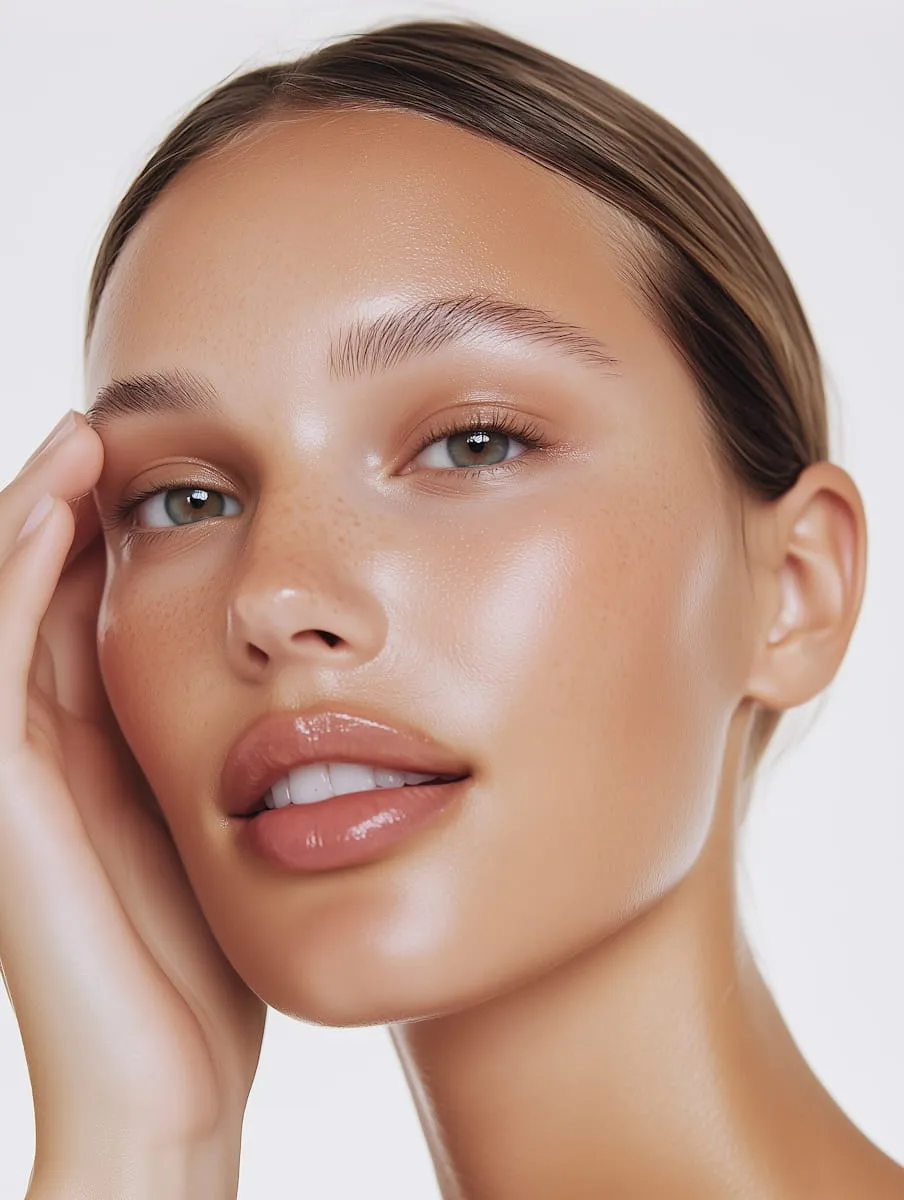
Eye shape detector: what is my eye shape?
Upload a straight-on selfie. We measure the tilt, opening, and spacing of your eyes and draw every line on your photo, then you answer two quick mirror checks a photo can't make. No photo? Take the 5-question quiz.
Runs in your browser. Nothing is uploaded.
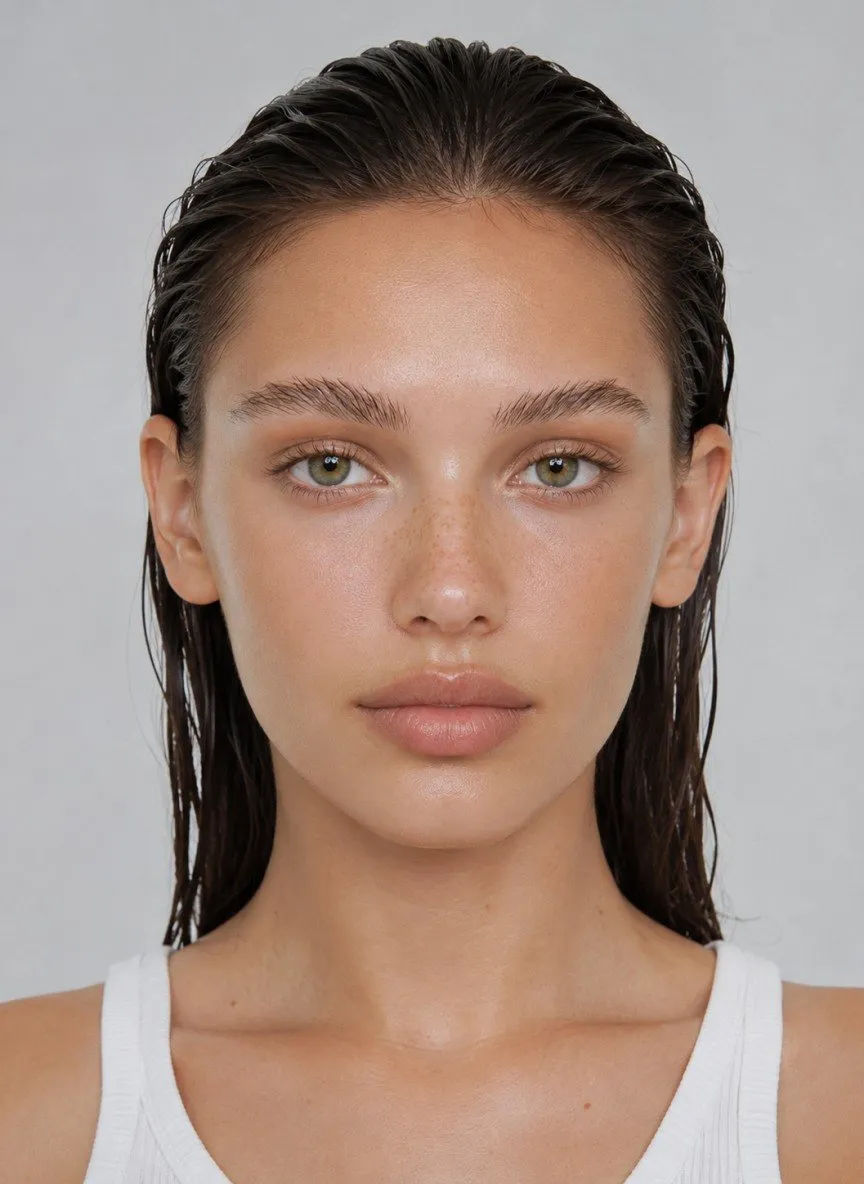
Find your eye shape from one photo
We find the corners, lids, and iris of each eye, measure how they tilt, how tall the opening is for its width, and how far apart your eyes sit, then ask about your lid and depth.
Measuring your eyes
- Finding your face
- Tracing your lids and iris
- Measuring tilt, opening, and spacing
Loading the face model (first time only)…
We couldn’t find a face
Try a brighter, straight-on photo with your whole face visible and your eyes open.
We couldn’t open that photo
Try another photo. JPG, PNG and HEIC all work.
Something went wrong
Check your connection and try again.
Your eye shape
Almond
measured from your photo from your answers
Close up
Your eyes, measured
Left in the photo
- Tilt
- Opening
- Width
Between your eyes
- Gap
- In eye widths
Right in the photo
- Tilt
- Opening
- Width
Millimeters use your iris as a ruler: adult irises average about 11.7 mm across, so expect these to be off by a millimeter or so.
Your eye shape
Almond
From your answers. For measured tilt and spacing, .
The eye shapes
Each shape has its own guide with eyeliner, eyeshadow, lashes, brows, and glasses that suit it. See all eye shapes side by side, with the mirror test and a comparison table.
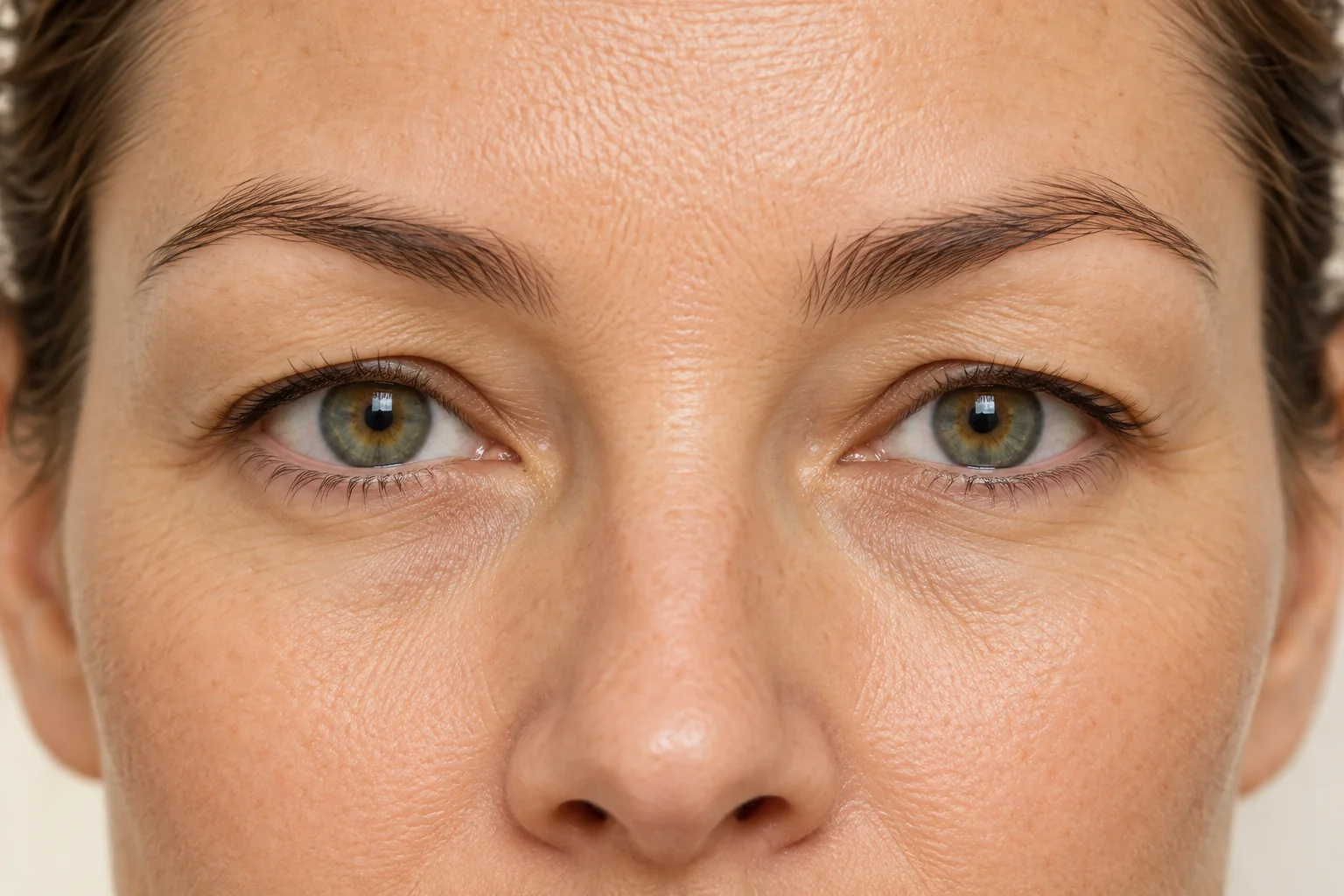
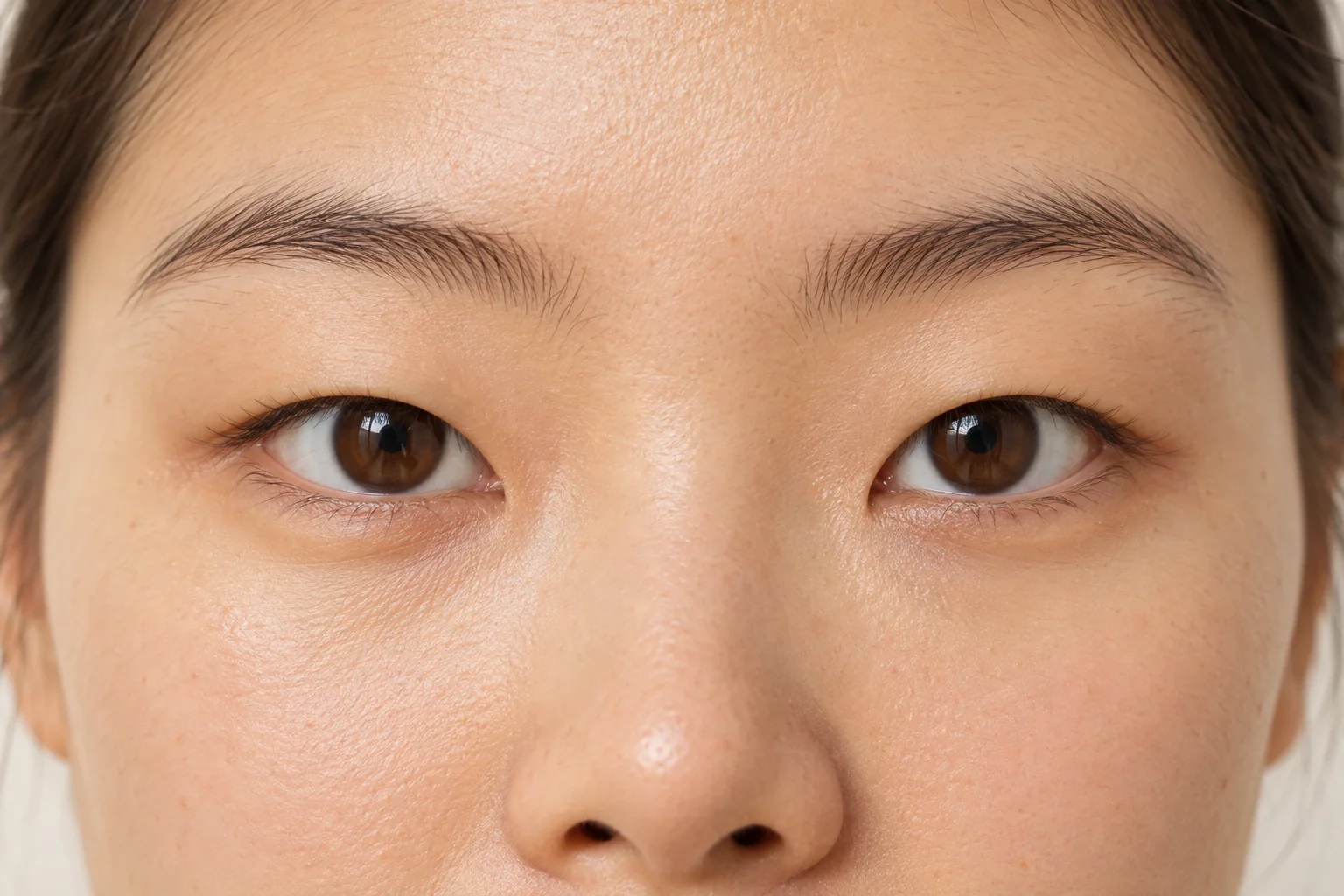
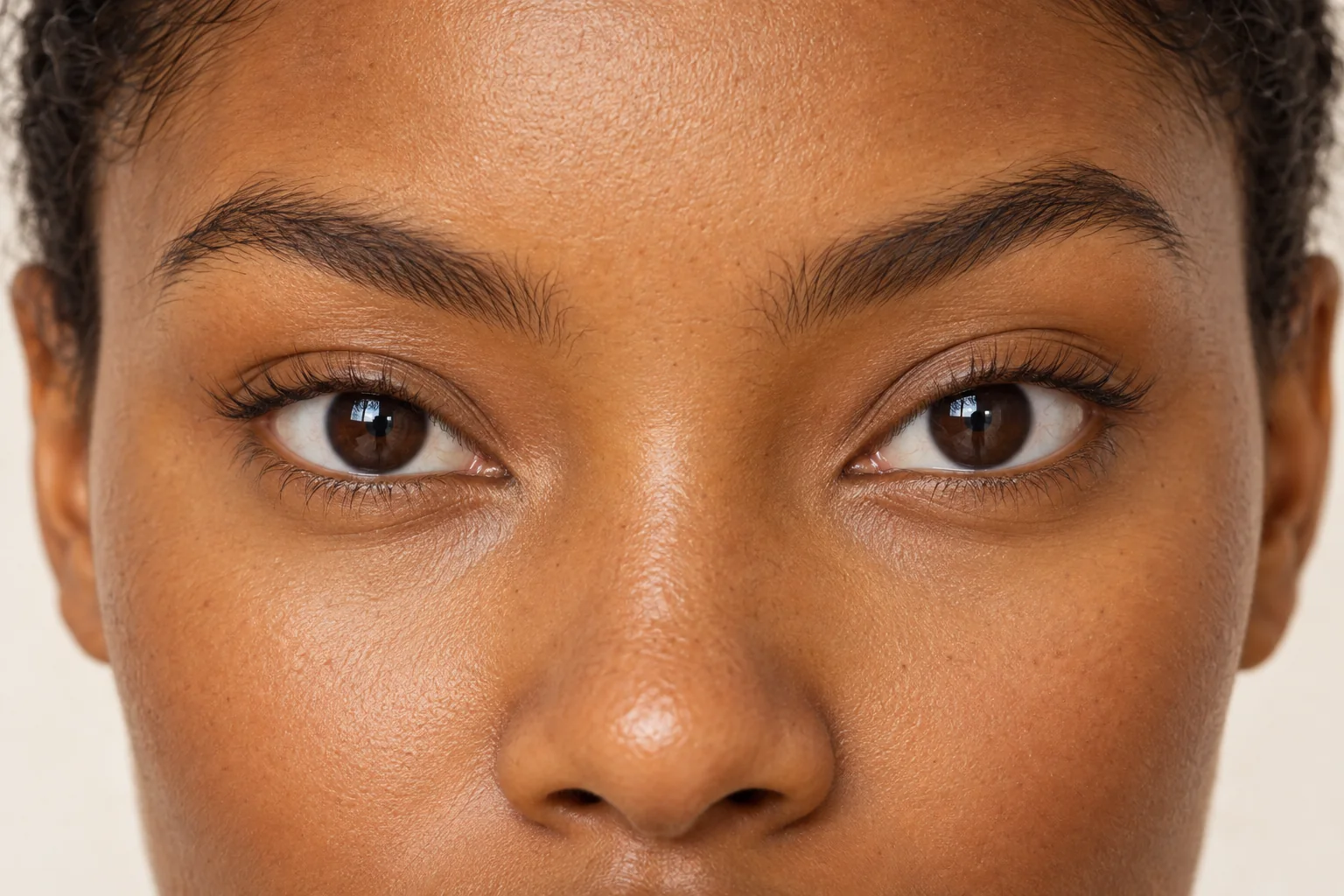
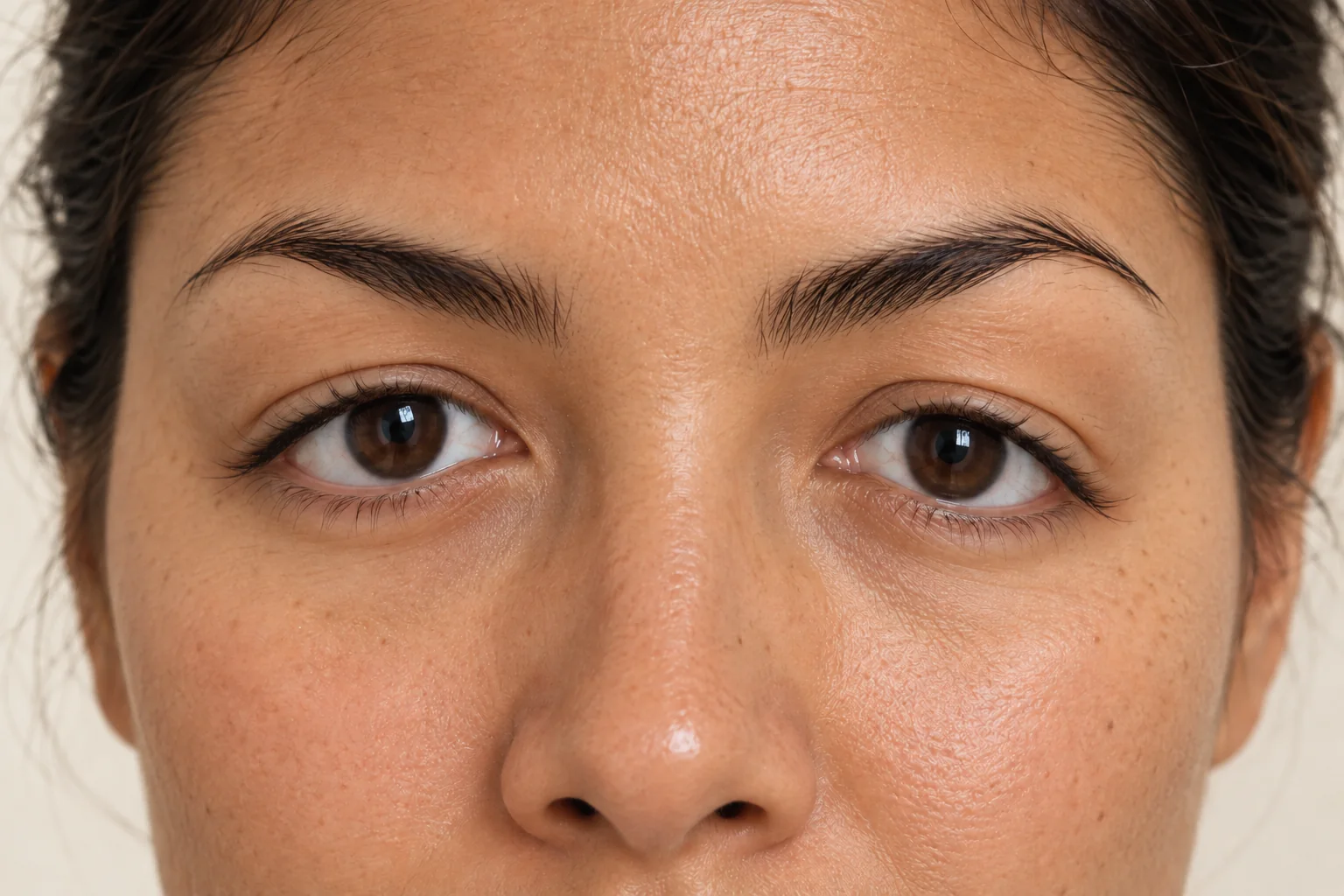
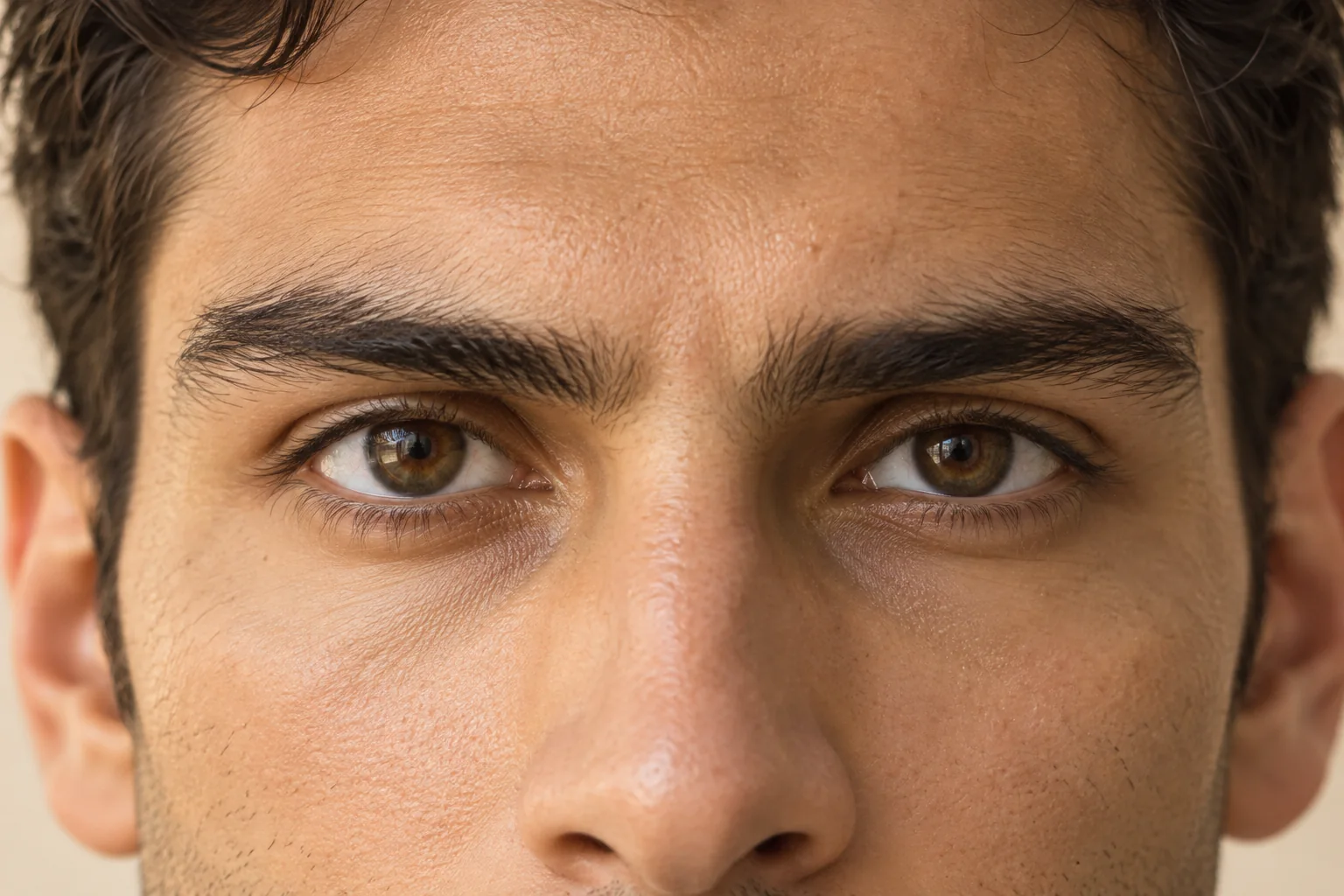
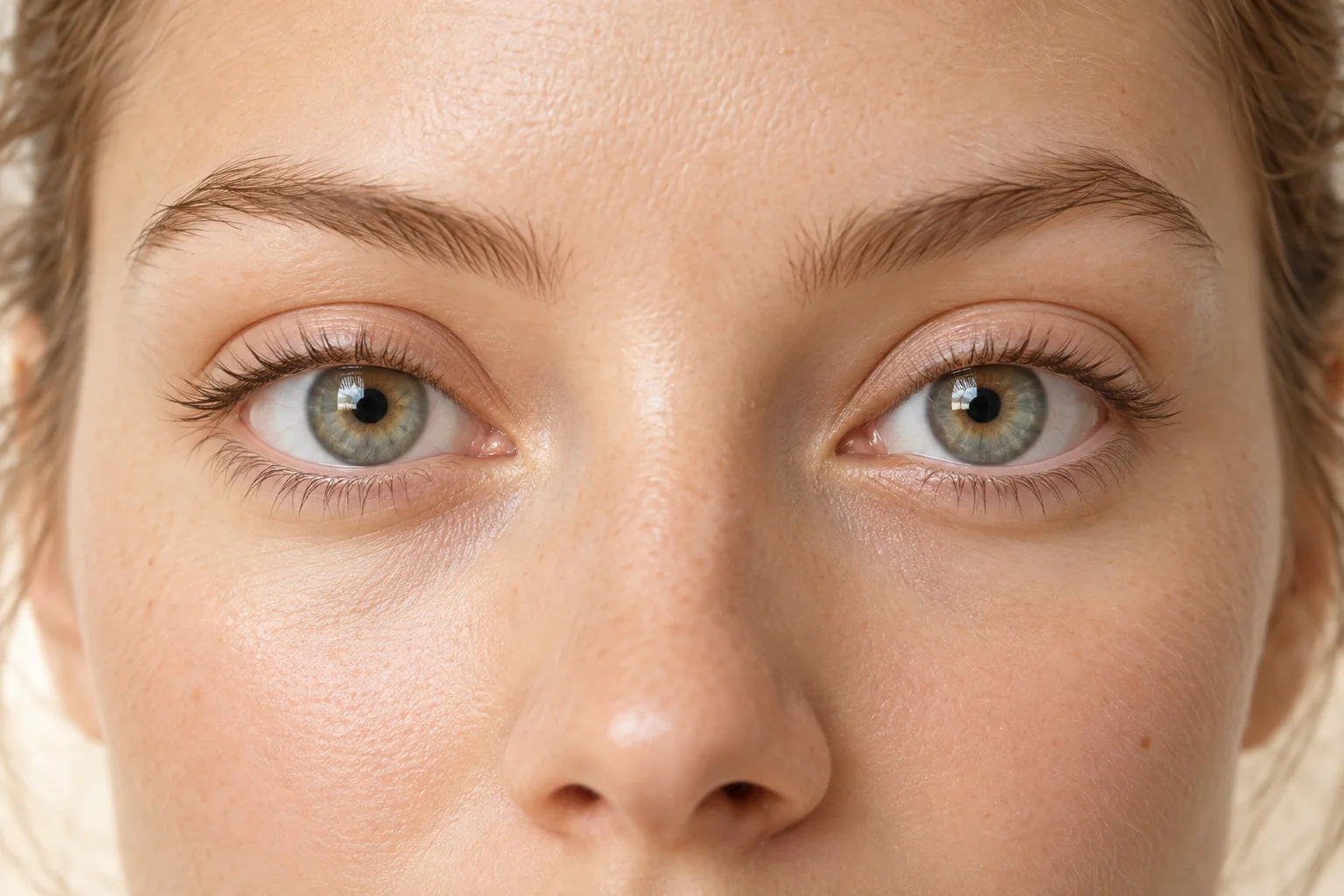
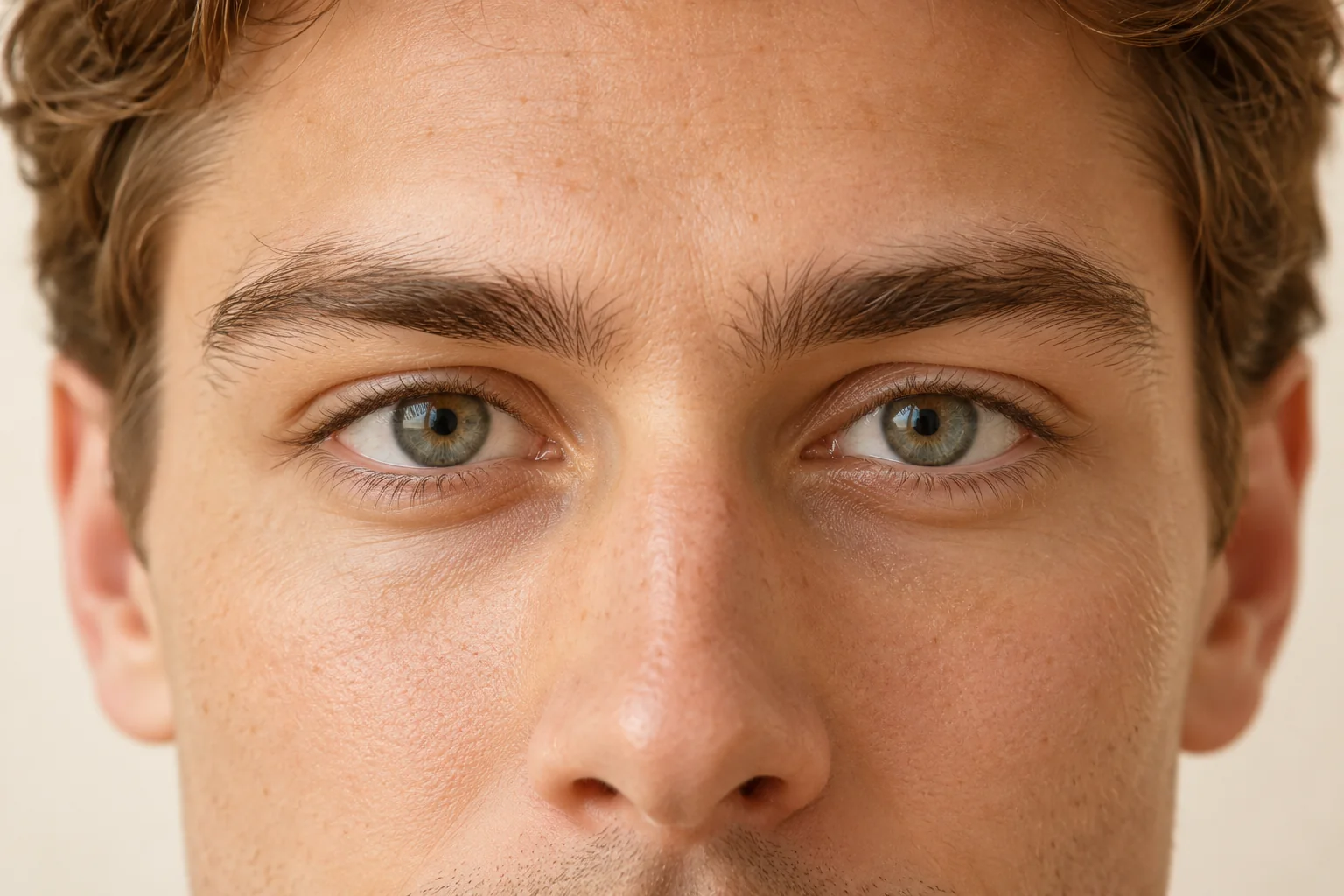
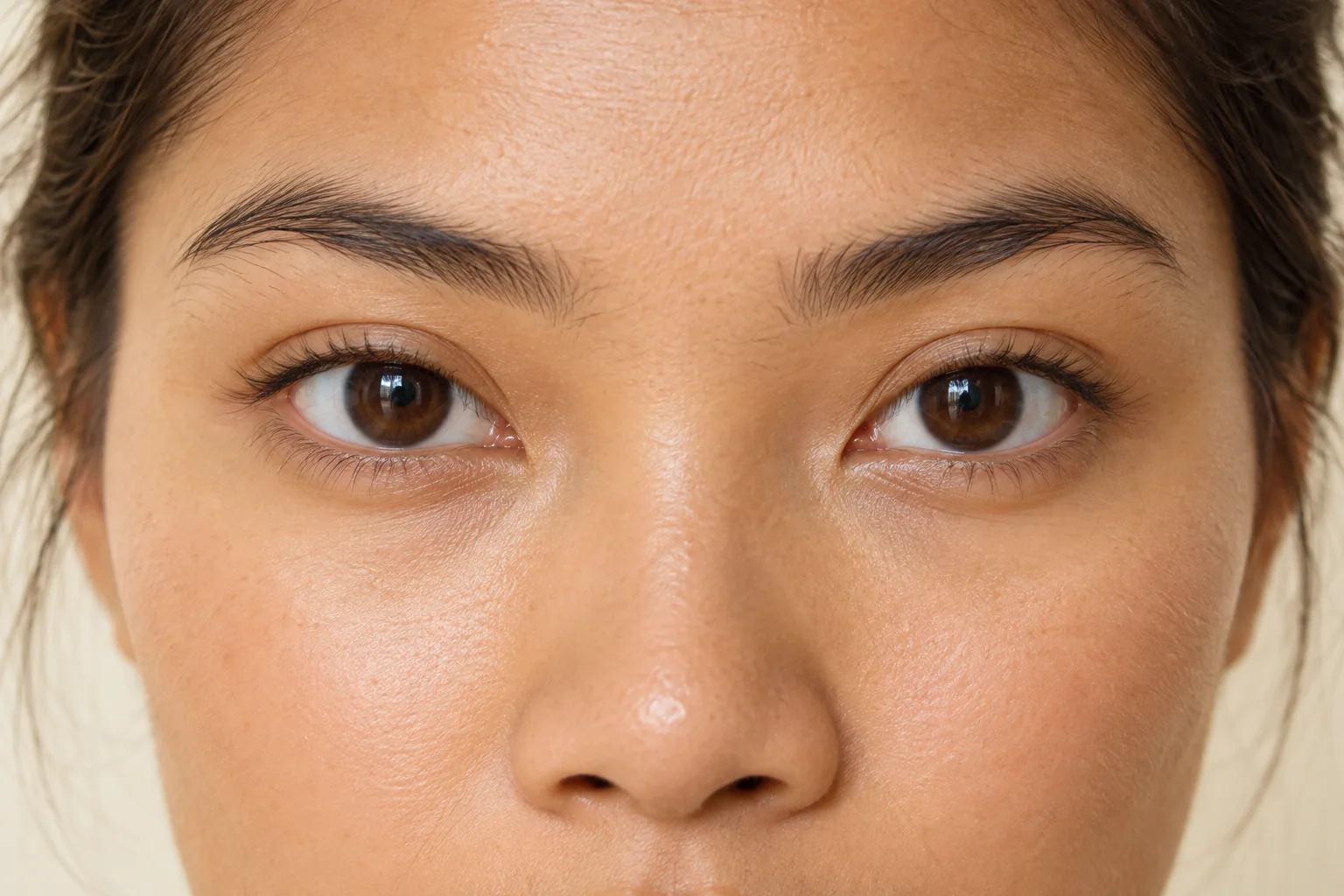
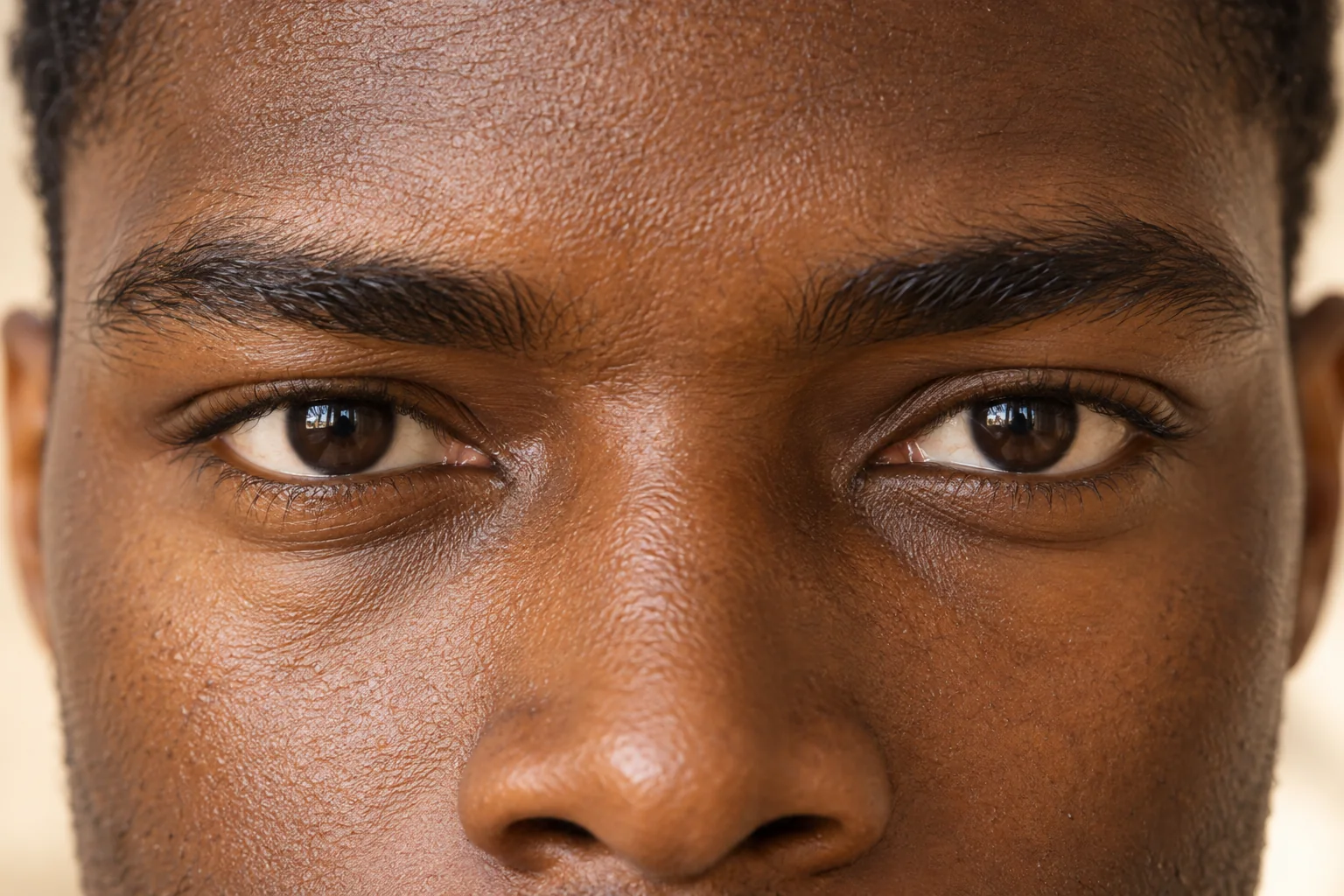
How the eye shape detector works
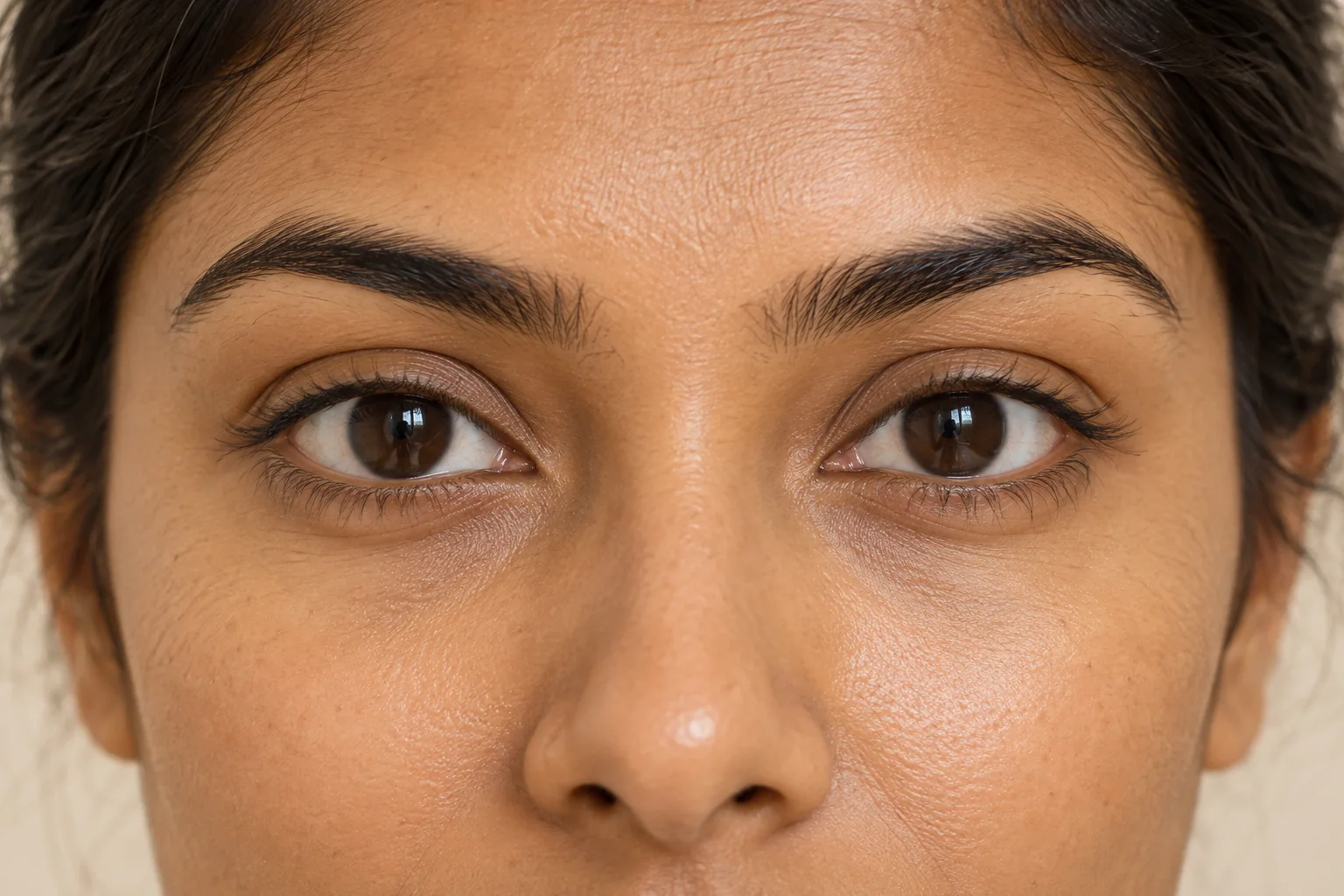
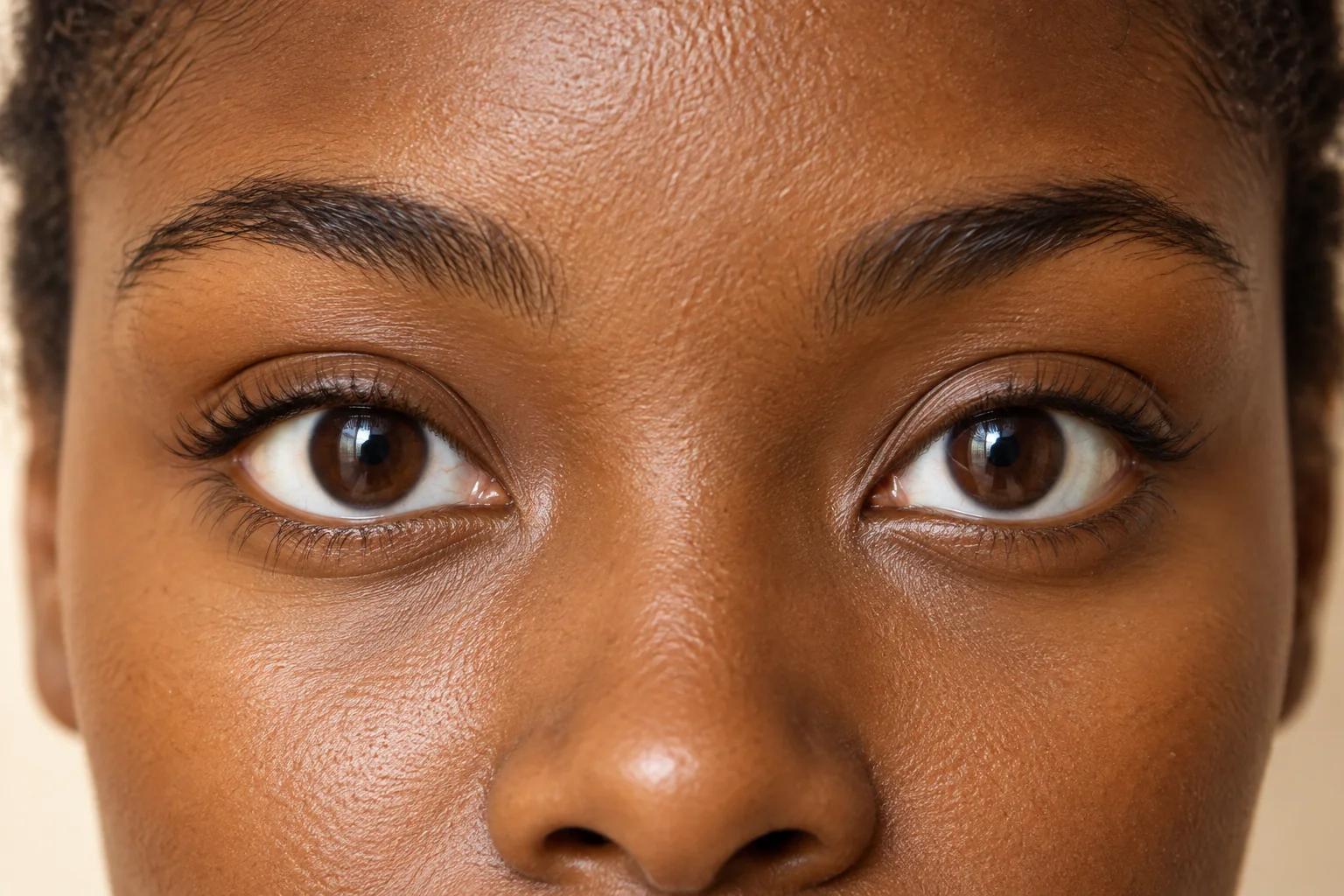
A face model running in your browser places 478 points on your face, including the corners and lid margins of each eye and the edge of each iris. We level the photo on the line down the middle of your face, so a tilted head doesn’t tilt your eyes, then measure three things from those points:
- Tilt: the angle of the line from each inner corner to its outer corner, against the level. Above +5 degrees reads upturned, below 0 reads downturned, and in between is level, on the tilt rounded to a tenth of a degree. These are the three classes of a published classification of canthal tilt (Lee, Choung, and Choung, 2020), and the canthal tilt calculator uses the same bands.
- Opening: the height of each eye, measured square to its corner line, divided by its width. Under0.40 reads almond, and 0.40 or more reads round. We also check where the lower lid crosses your iris, because white showing below it is part of a round eye.
- Spacing: the gap between your inner corners, divided by the average width of your eyes. Under1.10 reads close-set and over 1.35 reads wide-set. The face model marks each inner corner where the white of the eye ends, a little outside the pink corner you would measure from in a mirror, so its gap reads a bit wider than a ruler’s; the bands allow for that.
Millimeters come from your iris, which is close to the same size in most adults: about 11.7 mm across on average (Rüfer et al., 2005). Measured adults have eyes about 26 to 28 mm wide, about 8.4 mm tall when open, and 29 to 33 mm apart at the inner corners (Fry et al., 2017), so you can set your numbers next to theirs.
What a photo can and can’t tell
A straight-on photo is good at angles and proportions, so tilt, opening, and spacing come from your photo. It is poor at depth and folds. Whether a fold of skin covers your crease (hooded) or there is no crease at all (monolid) depends on light and shadow a flat photo can’t separate, and how far your eyes sit back under your brow (deep-set or protruding) only shows from the side. So the detector asks you those two questions and marks which parts of your result came from your answers.
If your tilt is positive, your opening is almond, and you say your eyes sit back under your brow, your result also notes the hunter eyes pattern.
How to take a photo for the eye shape test
- Hold the camera at eye level, at arm’s length or further, and look straight into the lens.
- Keep your chin level. Tipping it down makes your eyes look more upturned and tipping it up makes them look less; in one study a 15 degree change moved the outer corners by about 2 mm (Vaca et al., 2021).
- Relax your face. A smile pushes your lower lids up and makes eyes read narrower and more almond.
- Take off glasses and pull your hair away from your eyes and brows.
- Face soft daylight, so your lids and lashes are clear.
Curious about the rest of your face? The face shape detector measures its outline, and the attractiveness test scores your proportions, symmetry, and eye tilt together. The skin around your eyes changes faster than their shape: the GoodSkin app scores 14 skin traits from one selfie, including wrinkles and puffiness.
Frequently asked questions
What is my eye shape?
Your eye shape is a reading on five scales: the opening (almond or round), the lid (crease, hooded, or monolid), the tilt (up, down, or level), the depth, and the spacing. The detector measures the opening, tilt, and spacing from your photo and asks you about the lid and depth.
How accurate is the eye shape detector?
On a sharp, straight-on photo the face model places the corners and lids of your eyes within a few pixels, and the tilt and ratios are exact for those points. Camera angle matters most: tipping your chin up or down can move the tilt by a few degrees, so take the photo level and at eye height.
Can a photo tell if I have hooded eyes?
Not reliably. A fold of skin and an open lid look alike in a flat photo, and lighting changes how a crease shows. That is why the detector asks you, with a drawing of each answer, instead of guessing.
What is canthal tilt, and what is a normal one?
Canthal tilt is the angle of the line from the inner corner of your eye to the outer corner. Most adults have a small positive tilt; in one photo study the average was about 2 to 3 degrees in white adults, about 6 in Latino adults, and about 8 in East Asian adults. The detector reads above +5 degrees as upturned and below 0 as downturned.
Is my photo uploaded?
No. The face model runs in your browser, so your photo is measured on your device and never sent anywhere. The result card is drawn on your device too.
More free tools
Your best skin starts with one scan
Download GoodSkin, take a selfie in good light, and see where your skin stands today.


Scan with your phone camera