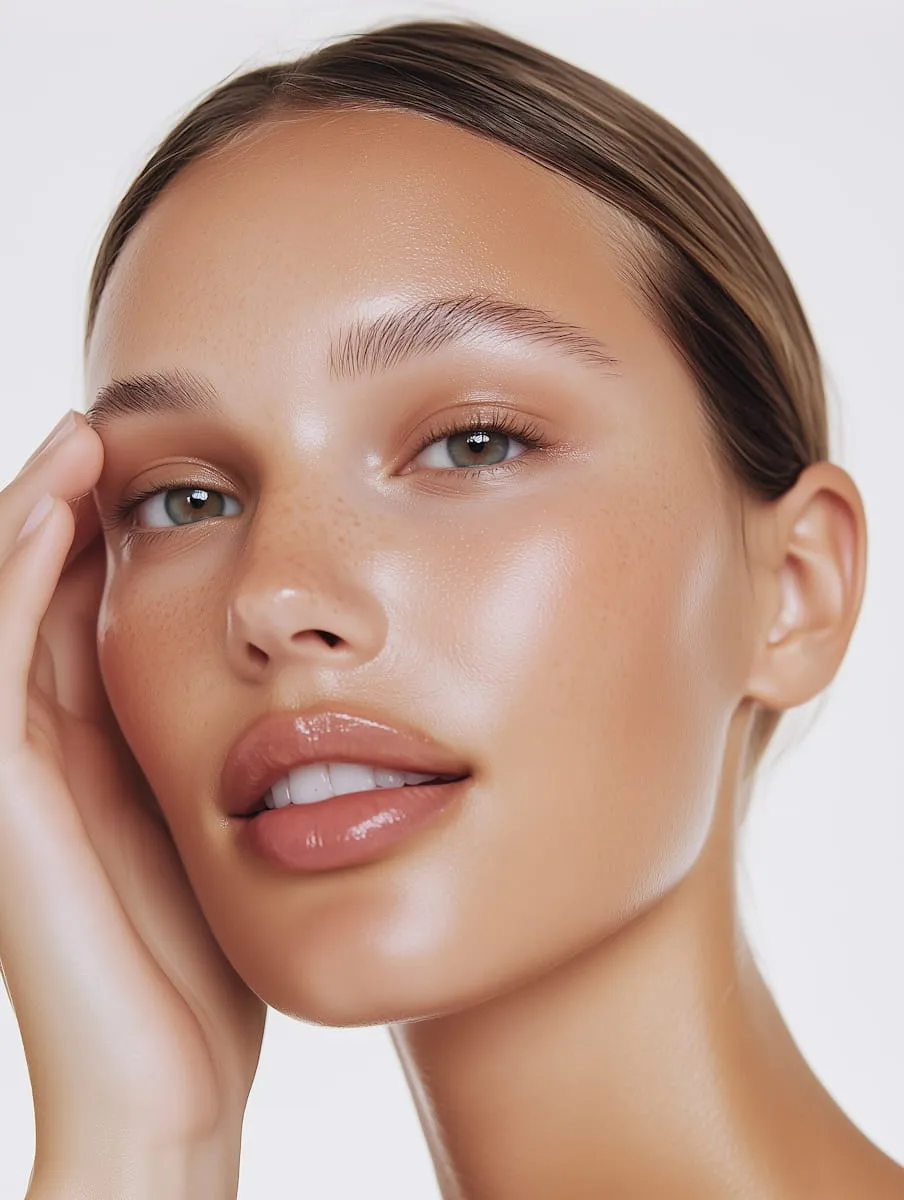
Eye shape guide
Eye shapes: the 10 types and how to find yours
Every eye has five readings: the shape of the opening, the lid, the tilt, the depth, and the spacing. The ten eye shapes are the ends of those five scales, which is why most people have two or three of them at once.
Your eye shape is five readings, not one
Most charts list eye shapes as if you have to pick one. In practice they answer five different questions, and you have an answer to each. Hooded is about the lid and almond is about the opening, so "hooded almond eyes" is a complete description, not a contradiction. Work out each reading and you have your eye shape.
- 01
Opening Almond or round?
Almond eyes are about three times as wide as tall, with the lids cutting across the iris. Round eyes are taller, with the whole iris showing.
AlmondRoundThe detector measures this from a photo - 02
Lid Crease, hood, or monolid?
Most lids show a crease with some lid space. Hooded lids have a fold of skin that covers the crease; monolids have no crease at all.
HoodedMonolidA mirror check: the detector asks you - 03
Tilt Up, down, or level?
A small upward tilt is the norm. Upturned eyes climb clearly toward the temples; downturned eyes slope down.
UpturnedDownturnedThe detector measures this from a photo - 04
Depth Set back or forward?
Deep-set eyes sit back under the brow bone, with the lids in shadow. Protruding eyes sit forward of it, with large, rounded lids.
Deep-setProtrudingA mirror check: the detector asks you - 05
Spacing Close or wide?
Compare the gap between your eyes with the width of one eye. Less is close-set; more is wide-set.
Close-setWide-setThe detector measures this from a photo
All eye shapes, with photos and diagrams
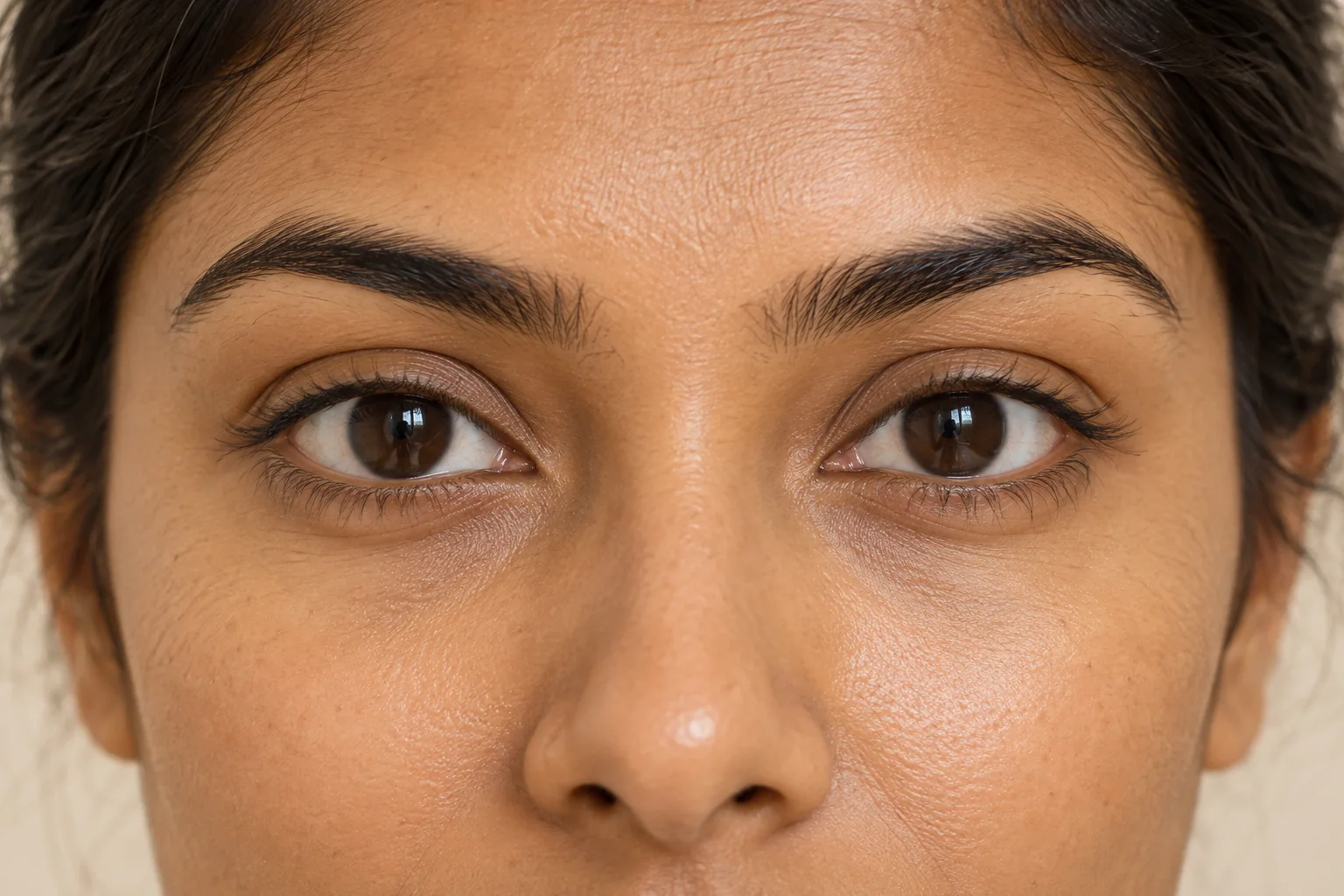
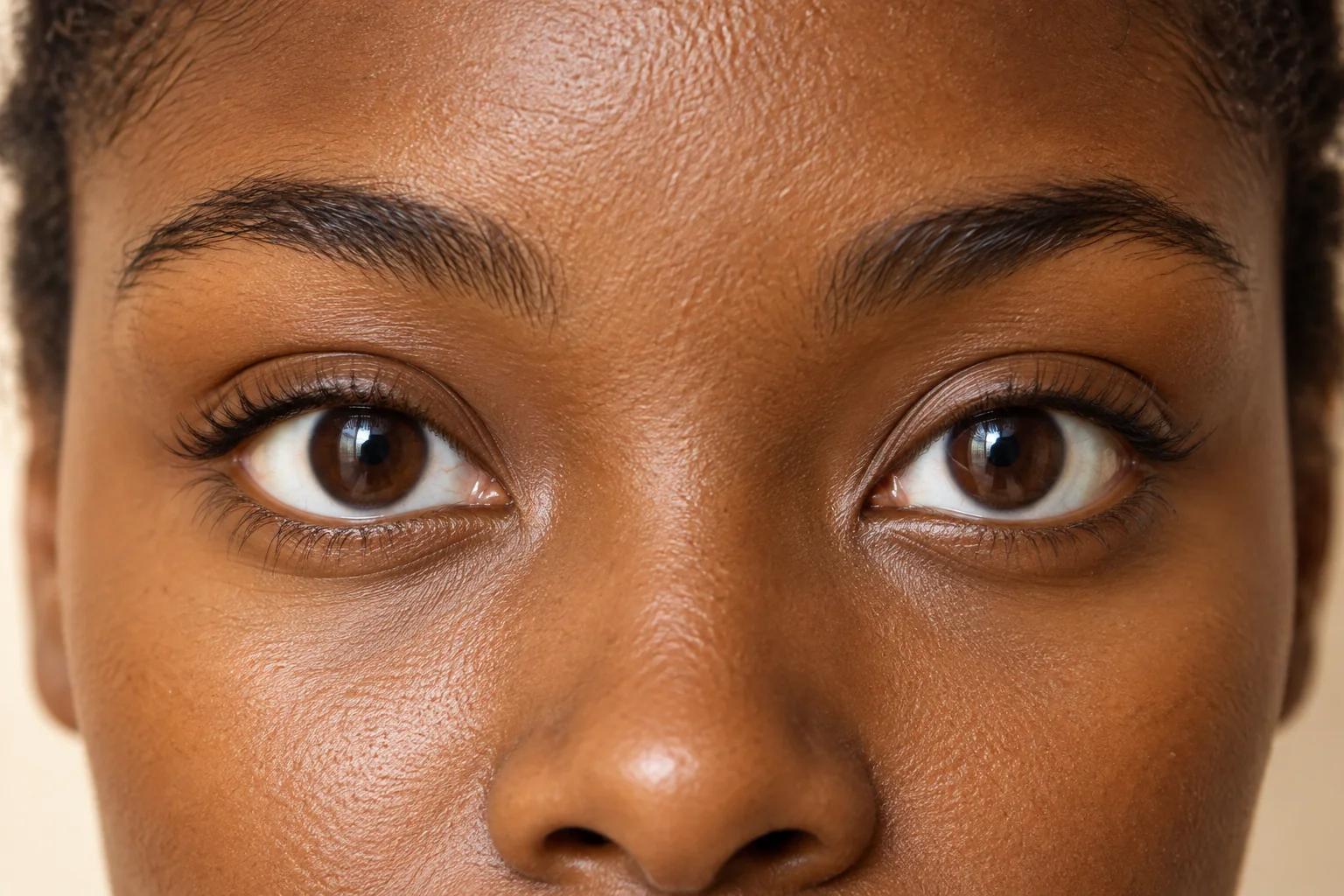
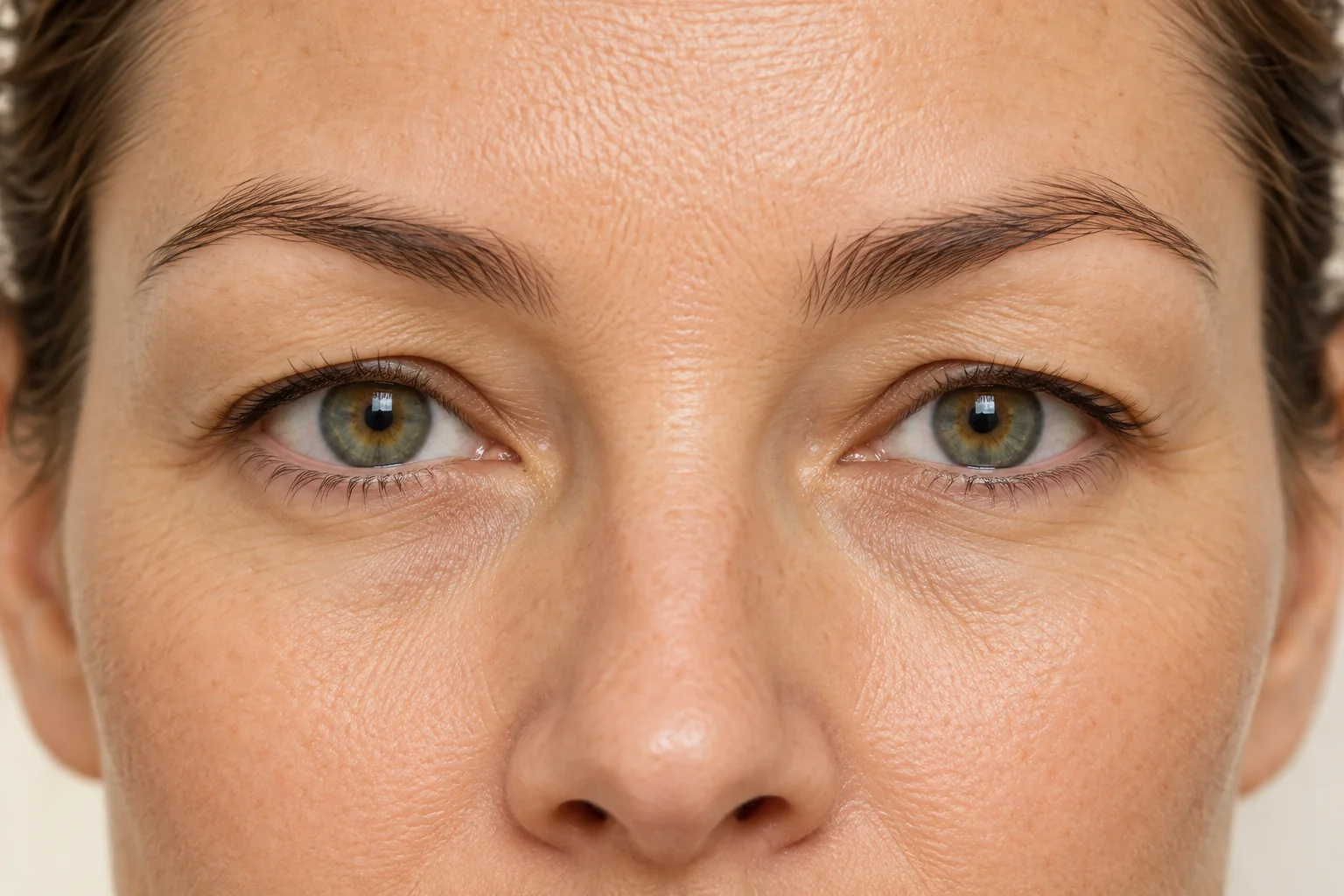
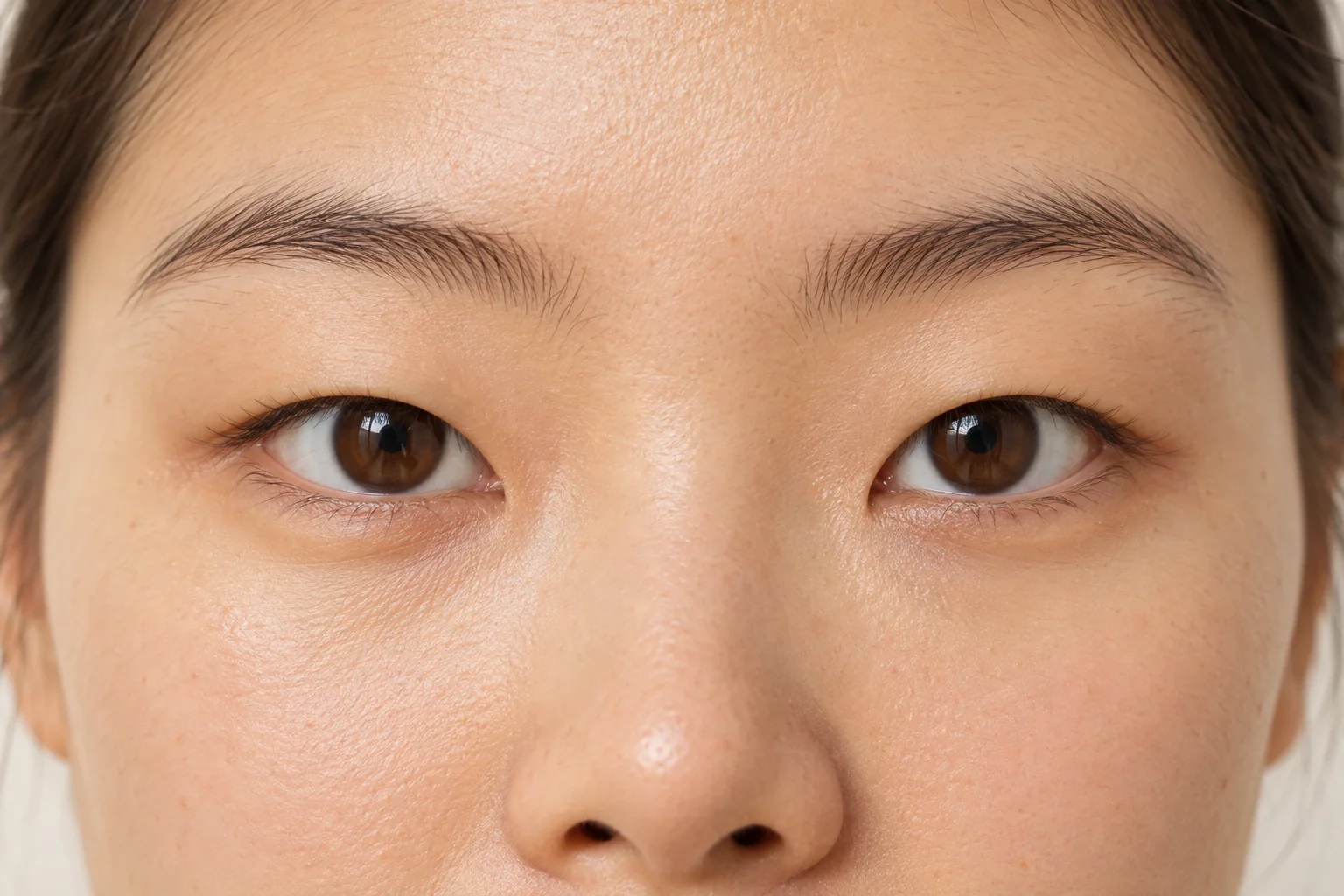
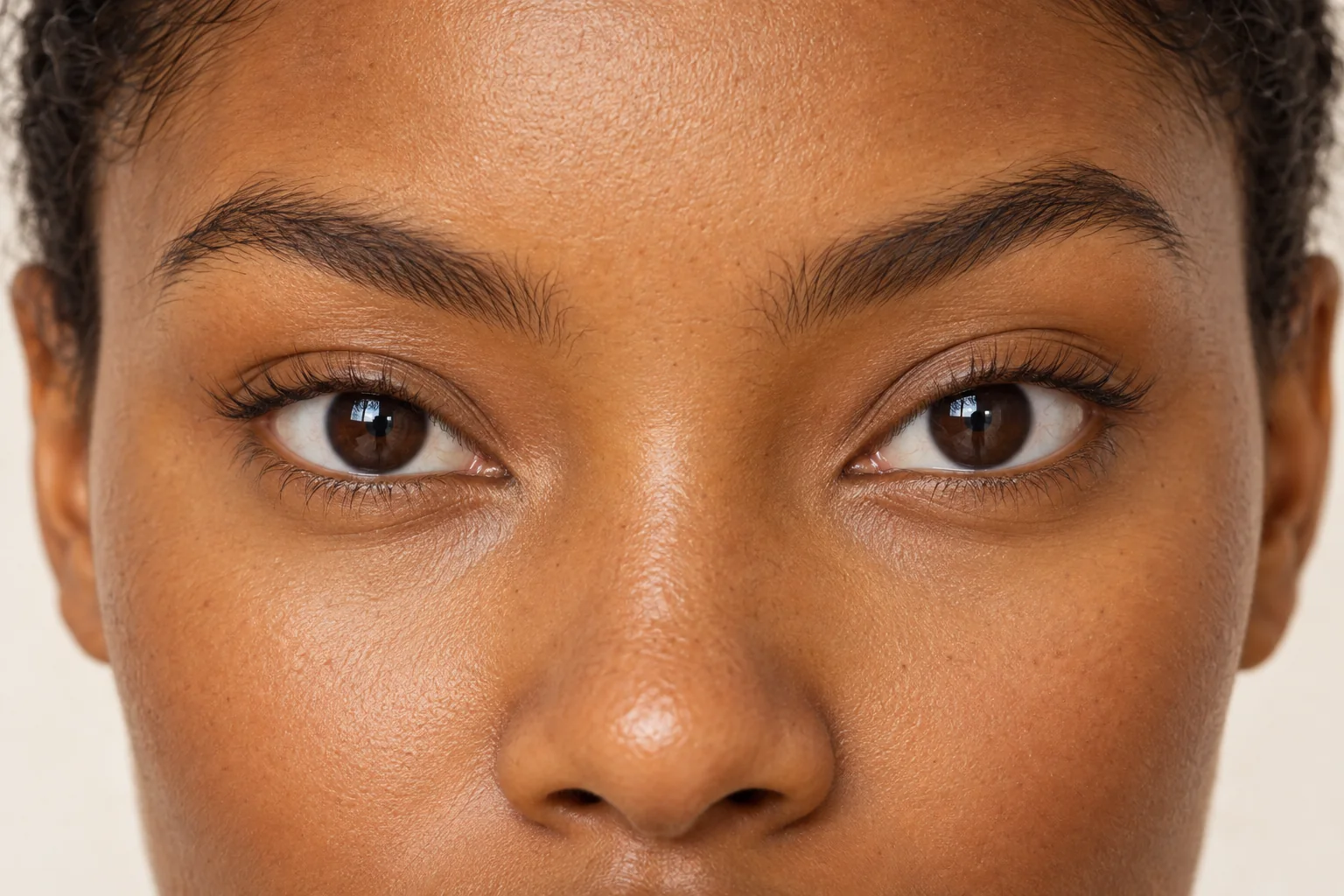
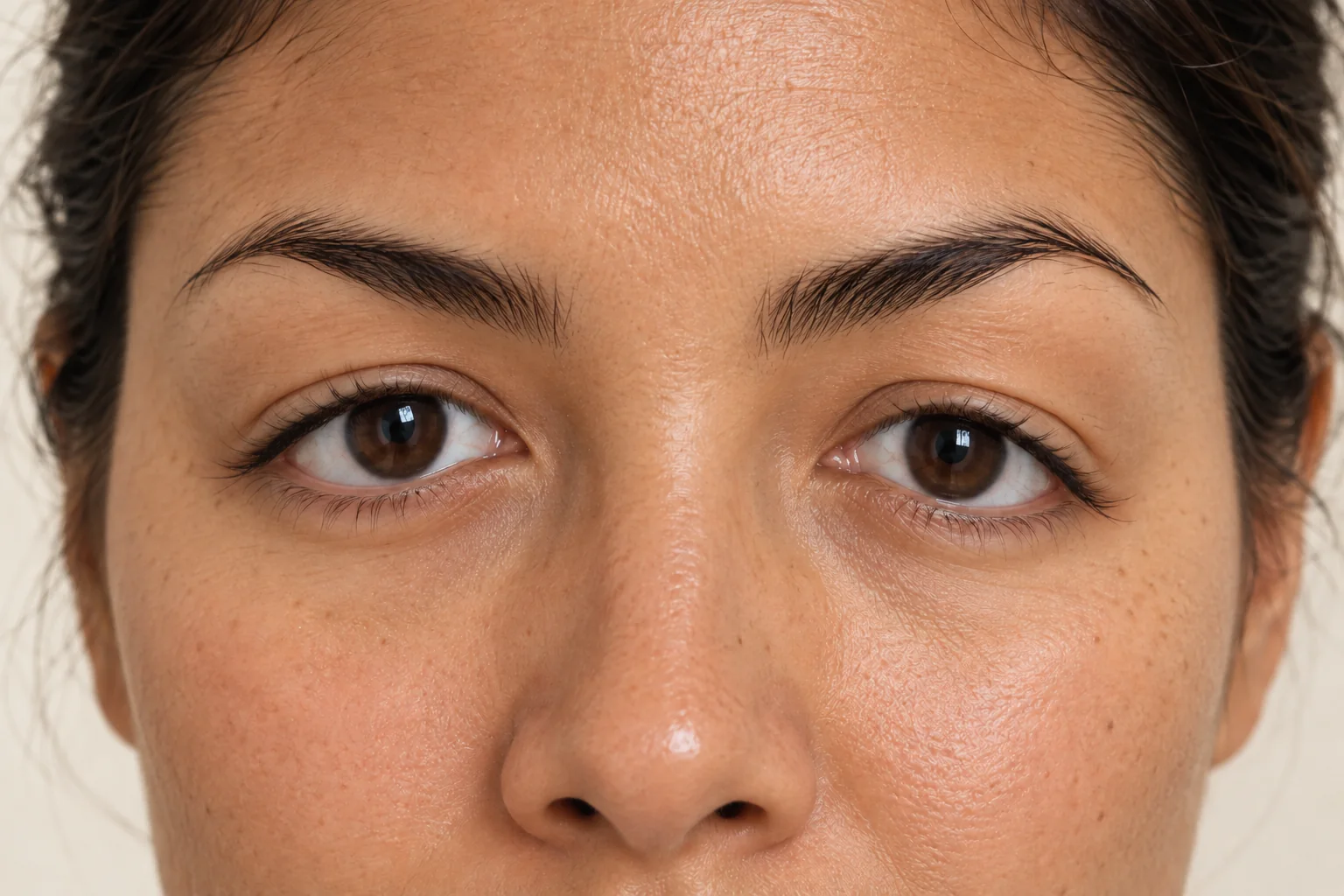
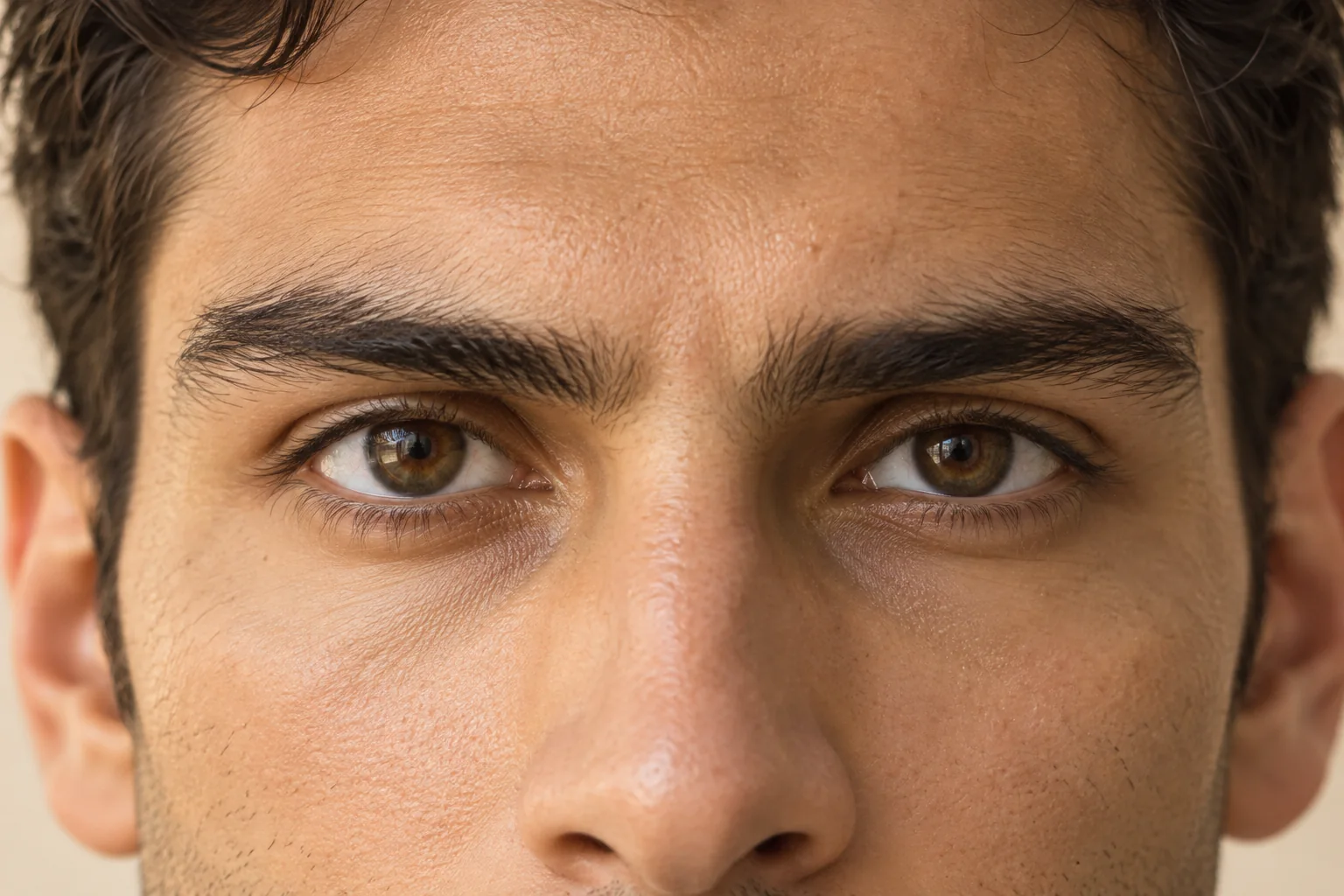
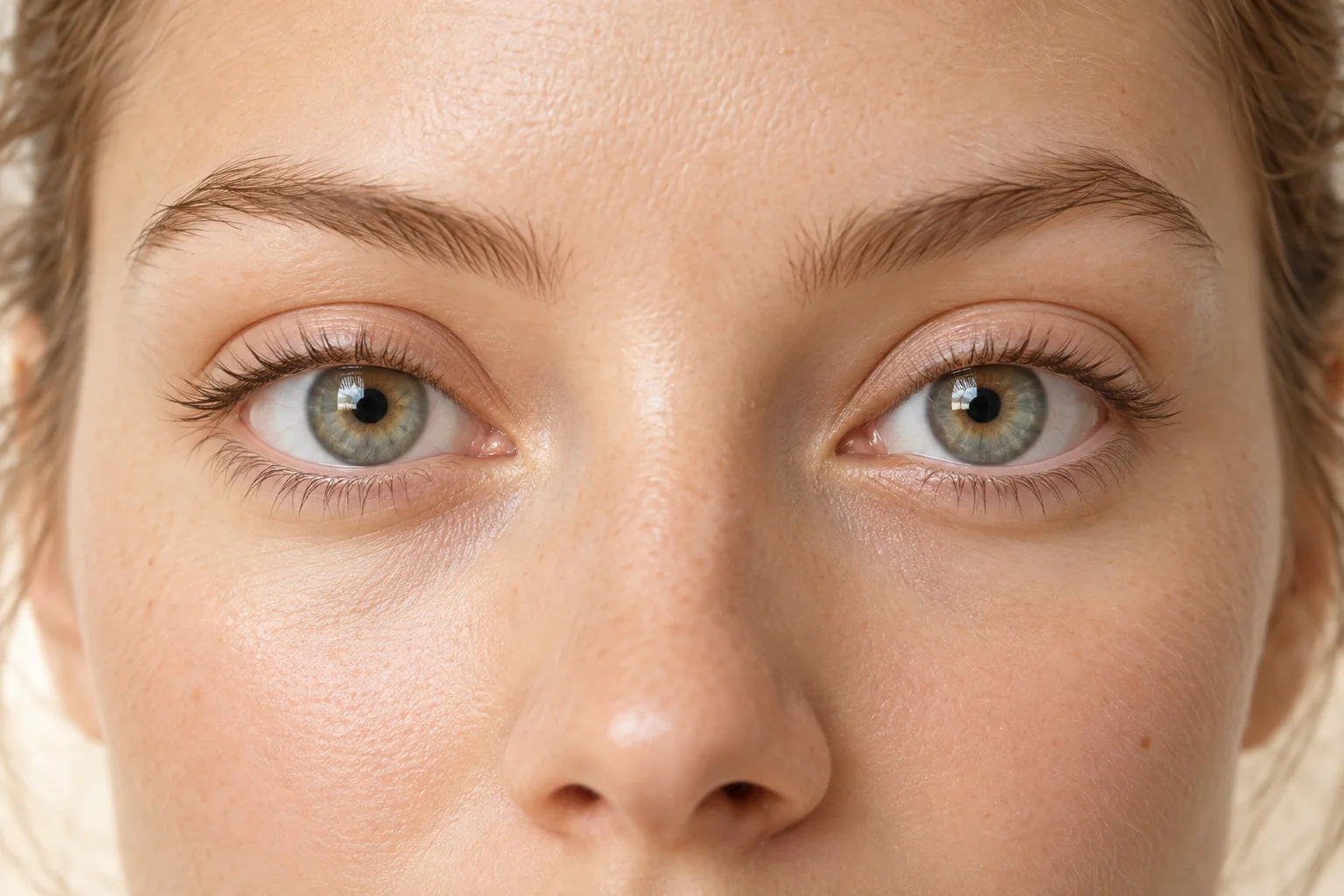
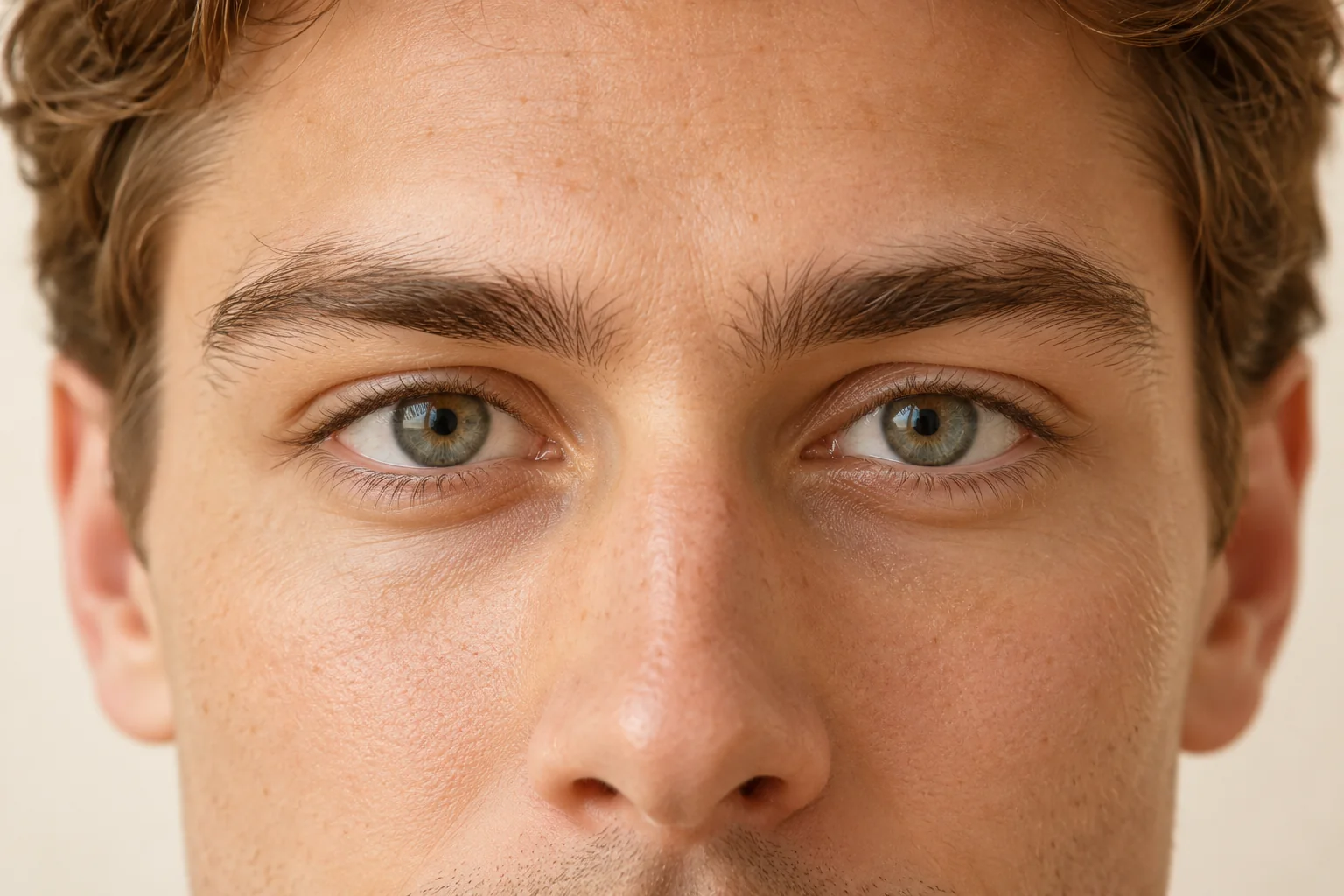
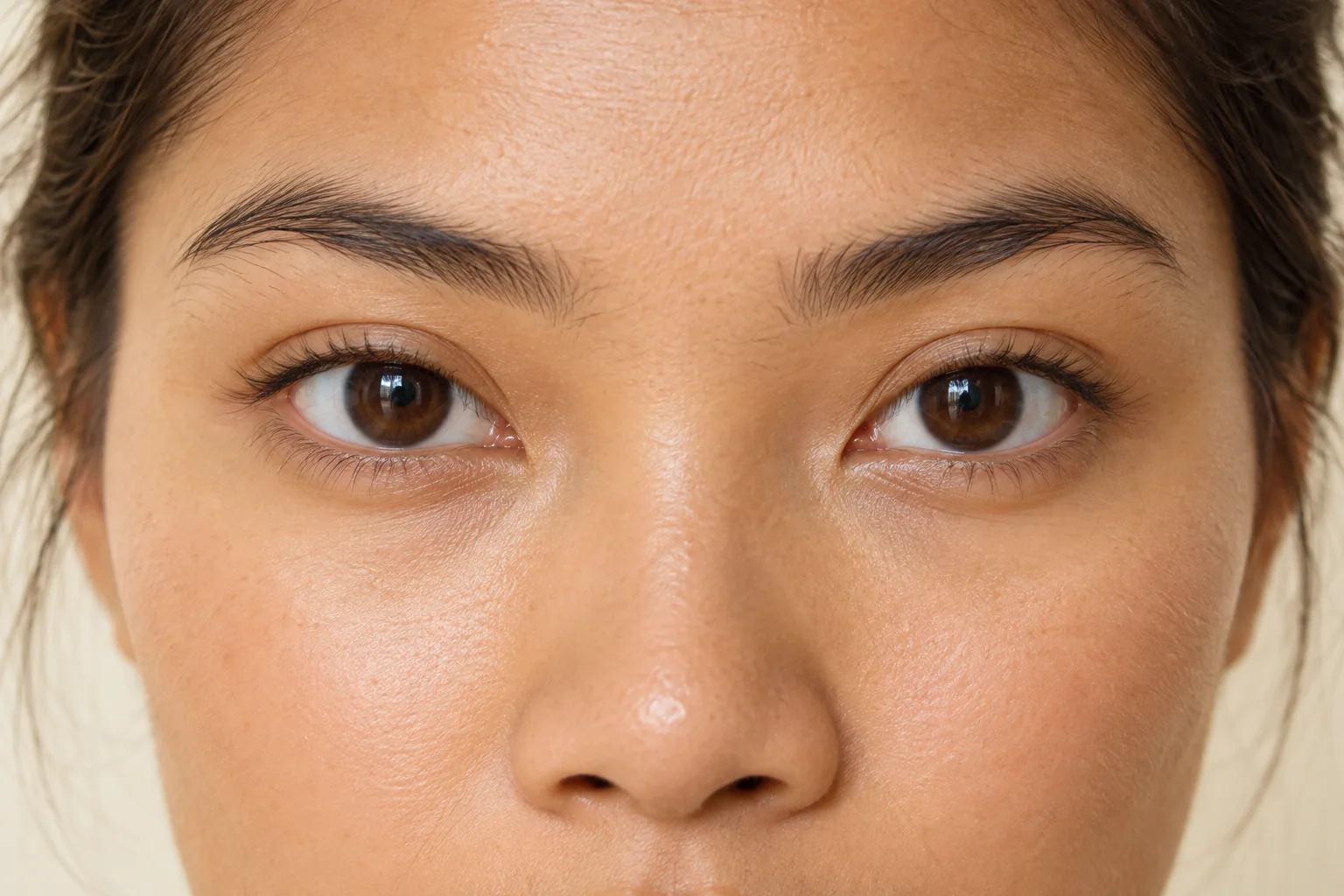
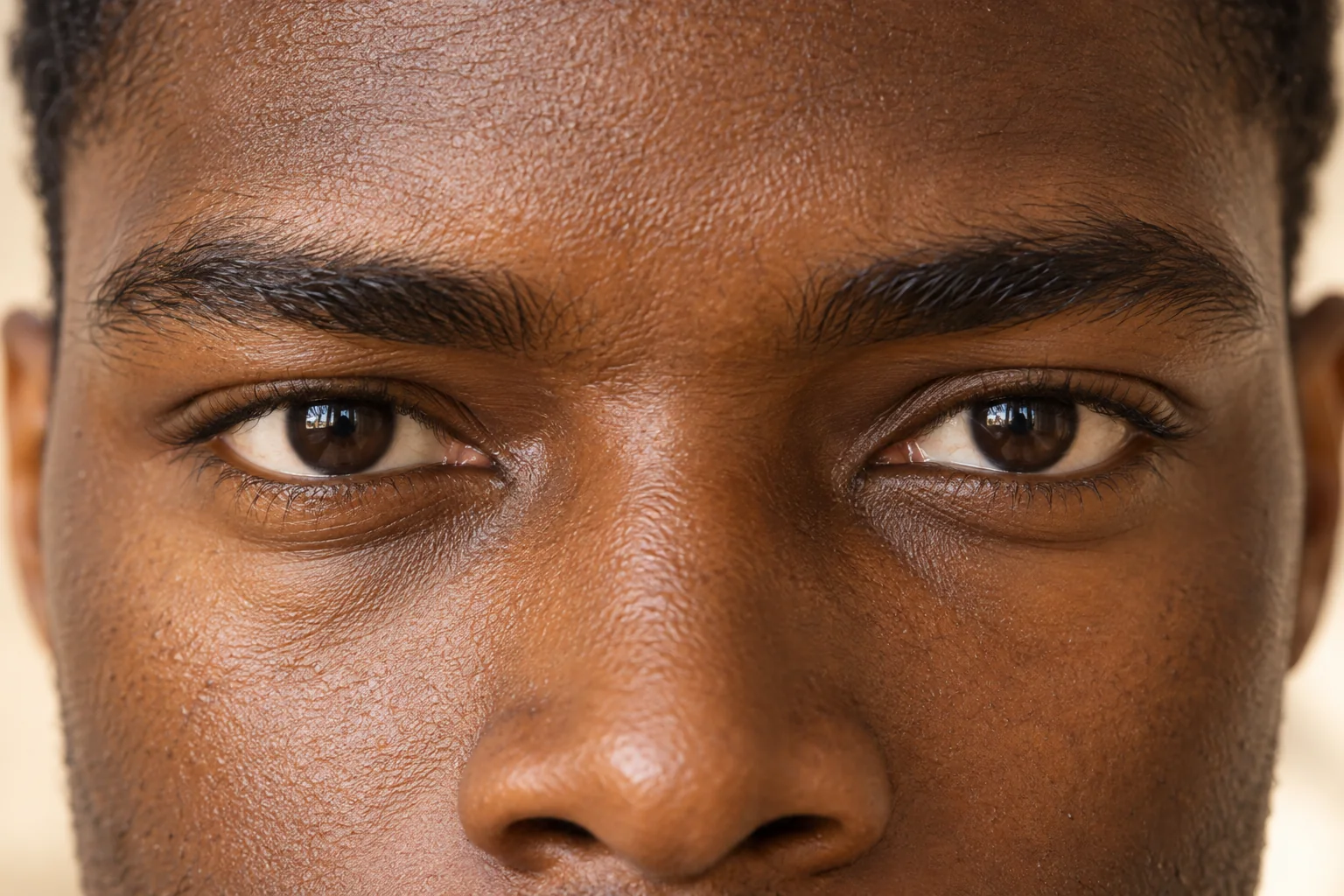
What is my eye shape? The mirror test, step by step
You need a mirror, daylight, and a pen. It takes about two minutes.
Set up
Stand at a mirror in daylight, facing the window. Pull your hair back, take off eye makeup, keep your chin level, and relax your face: a smile pushes the lower lids up and changes everything below.
Tilt: up, down, or level?
Hold a pen level across your face, touching the inner corners of both eyes. Outer corners clearly above it are upturned; below it, downturned.
Depth: set back or forward?
Turn your head and look at your profile, or take a photo from the side. Eyes that sit behind your brow bone are deep-set; eyes and lids that sit in front of it are protruding.
Put your answers together, strongest first: for example hooded almond eyes, slightly upturned. Then read the guide for each part.
Eye shapes compared
The quickest way to tell the shapes apart, and the first thing to change in your makeup for each.
| Shape | What defines it | Mirror check | Makeup priority |
|---|---|---|---|
| Almond | About 3 times as wide as tall; lids cut across the iris | No white above or below the iris | Almost anything; a short wing lifts |
| Round | Tall opening; the whole iris shows | White below or above the iris | Horizontal liner and shadow to lengthen |
| Hooded | A fold of skin covers the crease | Crease appears only with eyes closed | Shadow above the fold, with eyes open |
| Monolid | No crease on the upper lid | No crease even with eyes closed | Gradient shadow from the lashes up |
| Upturned | Outer corners higher than inner | Outer corners above a level pen | Follow the lower lid into a short wing |
| Downturned | Outer corners lower than inner | Outer corners below a level pen | Lift liner and shadow at the outer third |
| Deep-set | Eyes sit back under the brow bone | Lids behind the brow in profile | Light, satin shades on the lid |
| Protruding | Eyes sit forward of the brow bone | Lids in front of the brow in profile | Matte, deeper shades on the lid |
| Close-set | Gap narrower than one eye | A third eye would not fit between | Light inner corners, color outward |
| Wide-set | Gap wider than one eye | A third eye fits with room to spare | Deeper shade on the inner third |
| Hunter eyes | Deep-set, positive tilt, little lid showing | All four features together | Tightline; low, straight brows |
How eye shapes combine
Because the shapes answer different questions, they stack. These pairings come up most, and each changes the makeup advice a little.
The combination people mean most often by "hooded eyes": an almond opening, with the crease hidden. Shadow goes above the fold; liner follows the almond.
Most monolids have an almond opening, often with a fold over the inner corner. Shadow works as a gradient; liner thickens toward the outer corner.
Round eyes that sit forward show the most lid and white. Matte shadow on the lid and soft lower liner balance both.
A fold over the outer corner pulls an eye down, especially with age. Every line angles up toward the tail of the brow.
A strong brow bone with a fold beneath it. Keep the fold light and matte, and let curled lashes do the defining.
Add a low, straight brow and little visible lid, and this is the pattern called hunter eyes.
Hunter eyes is the name for that last combination, plus a low brow and a straight lower lid. Its guide covers what can and cannot change.
Shape is half the picture. The eye color guides explain what makes an iris hazel, amber, or gray and which shades bring each one out, and the nose shape chart does for the middle of your face what this page does for your eyes.
Eye shape FAQ
What are the different eye shapes?
The ten most used are almond, round, hooded, monolid, upturned, downturned, deep-set, protruding, close-set, and wide-set. They describe five separate things (the opening, the lid, the tilt, the depth, and the spacing), so everyone has more than one: hooded almond eyes, or round, wide-set eyes. Hunter eyes is a newer name for one combination.
What is the most common eye shape?
There is no reliable data, because eye shapes are a makeup and styling vocabulary, not a medical classification. Almond is the shape most adult eyes come closest to when you compare height with width, and hooding becomes more common with age.
How do I know my eye shape?
Check five things in a mirror: whether the lids cut across your iris (almond) or show all of it (round), whether you have a crease, a hood, or neither, whether your outer corners sit higher or lower than the inner ones, how far apart your eyes are compared with one eye, and how far they sit back under your brow. The eye shape detector measures the first, third, and fourth from a photo.
Can your eye shape change?
The bones around your eyes stay the same in adulthood, but the soft tissue changes. Upper lid skin loosens and brows lower with age, so many eyes become more hooded and a little more downturned. Puffiness from salt, alcohol, or short sleep can change how hooded your lids look from day to day.
What is the rarest eye shape?
Nobody has measured how common each eye shape is, so any claim about the rarest one is a guess. Some combinations stand out more than others, such as strongly downturned or very wide-set eyes, but they are not rare in any measured sense.
Does eye color change which eye shape I have?
No. Eye shape describes your lids and where your eyes sit, while eye color is the pigment in your iris, so any color can come with any shape. Color does change which shadow shades flatter you, which the eye color guides cover color by color.
Do men and women have different eye shapes?
The same shapes appear in everyone. A strong brow ridge is more common in men, so deep-set eyes, and the hunter eyes pattern, come up more often in men. Makeup advice in these guides works for anyone who wears it, and the brow and glasses advice applies to everyone.
Your eyes, and the skin around them
GoodSkin scores 14 skin traits from one selfie, from wrinkles and puffiness to texture and glow, and tracks how they change month to month.


Scan with your phone camera