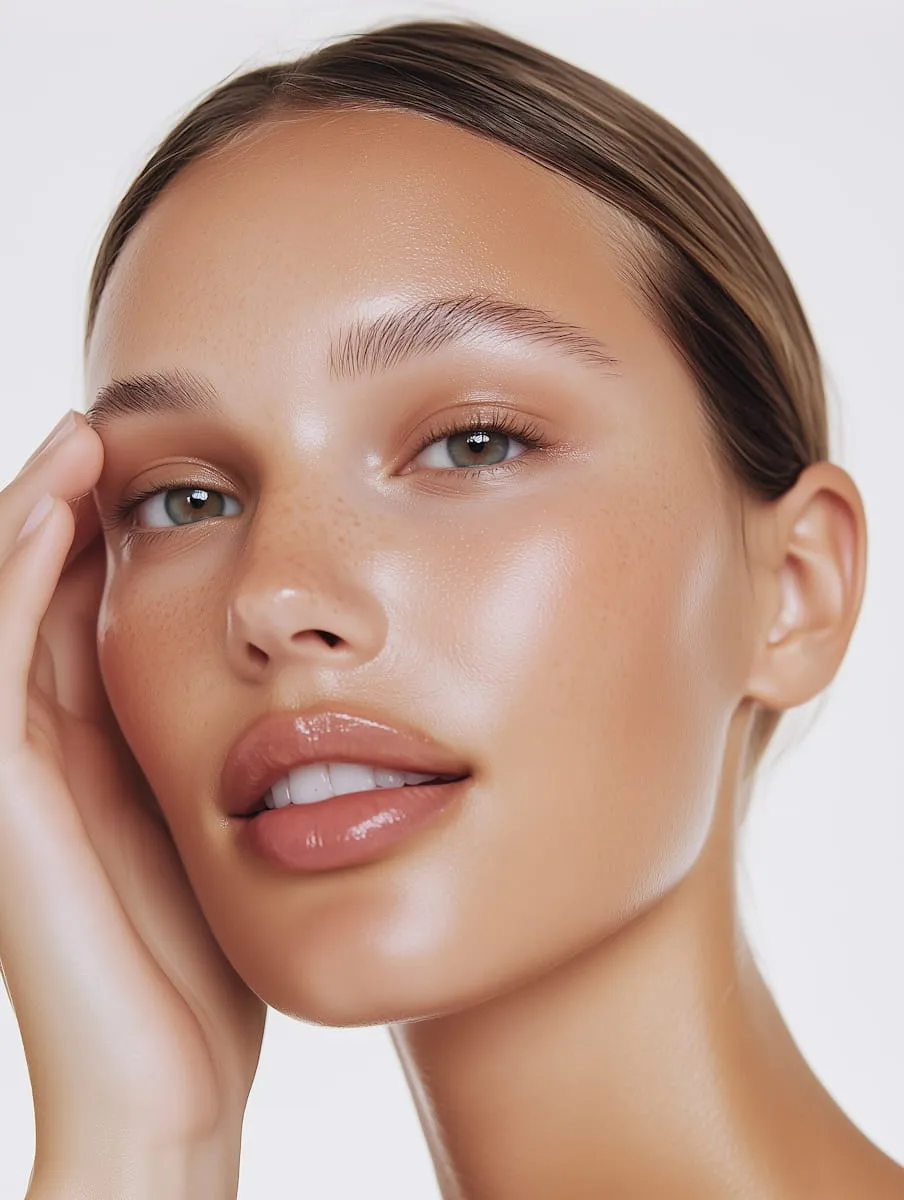
Nose shape test: what nose shape do I have?
Upload a straight-on selfie. This nose shape test measures your nose’s width, length, and tip and draws every line on your photo, then asks a few mirror checks for the side view a photo can’t see. No photo? Take the 6-question quiz.
Runs in your browser. Your photo never leaves your device.
Find your nose shape from one photo
We find the edges of your nostril wings, your tip and bridge, and the corners of your eyes, measure how wide and long your nose is for your face, then ask a few mirror checks about its profile.
Measuring your nose
- Finding your face
- Tracing your nose and eye corners
- Measuring width, length, and tip
Loading the face model (first time only)…
We couldn’t find a face
Try a brighter, straight-on photo with your whole face in the frame, looking into the lens.
Retake your photo
Best: soft daylight from the front, the camera at arm’s length and eye height, chin level.
We couldn’t open that photo
Try another photo. JPG, PNG and HEIC all work.
Something went wrong
Check your connection and try again.
Your nose shape
Measured
- Measured
- From your answers
Close up
Your nose, measured
Width
- Across the wings
- Eye gap
- Ratio
Length
- Top to base
- Share of eyes to chin
Tip
- Tip ÷ bridge
- Reads
Millimeters use your iris as a ruler: adult irises average about 11.7 mm across, so expect these to be off by a millimeter or so. The ratios don’t depend on it.
Your nose shape
Straight
From your answers. To measure your width, length, and tip, .
Your result card
Save it, post it, compare with friends
Drawn on your device from your photo and your answers. Nothing is uploaded.
Curious about the rest of your face? The face proportions calculator measures your thirds, fifths, and nose to eye gap.
What nose shape do I have? The eleven shapes
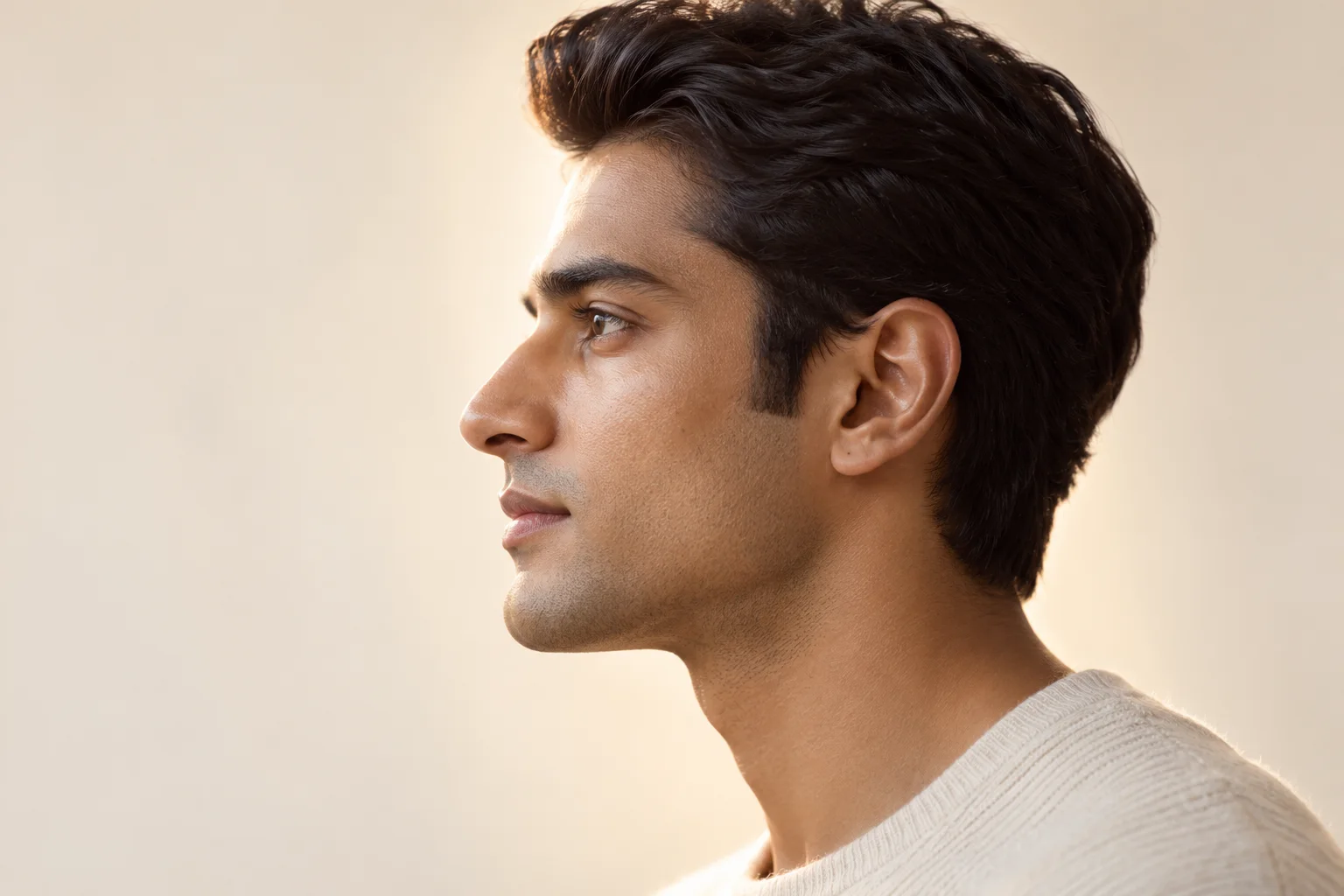
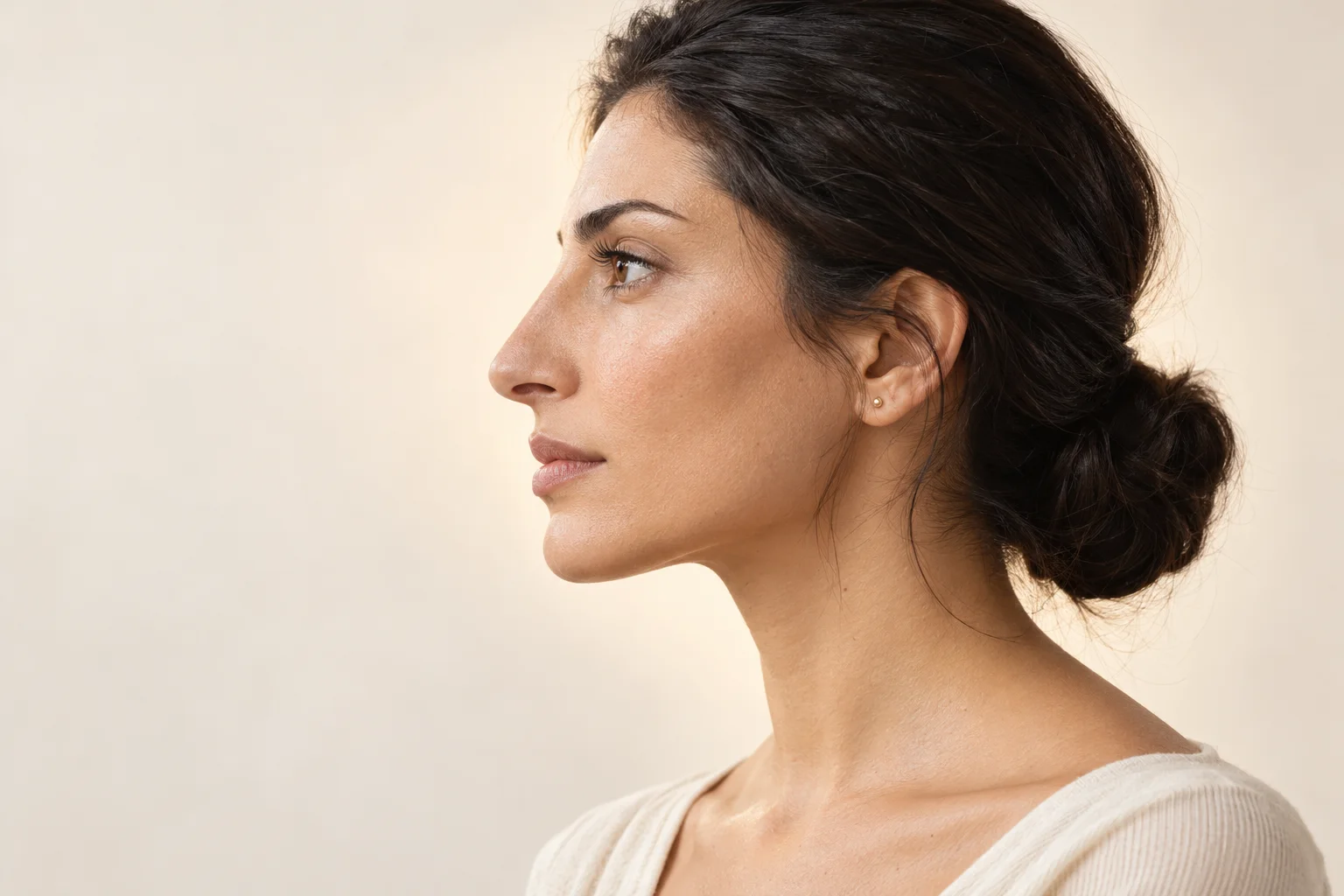
Each shape has its own guide, with how to tell it apart from its neighbors, contouring, and the glasses that sit well on it. See all nose shapes side by side, front and profile.
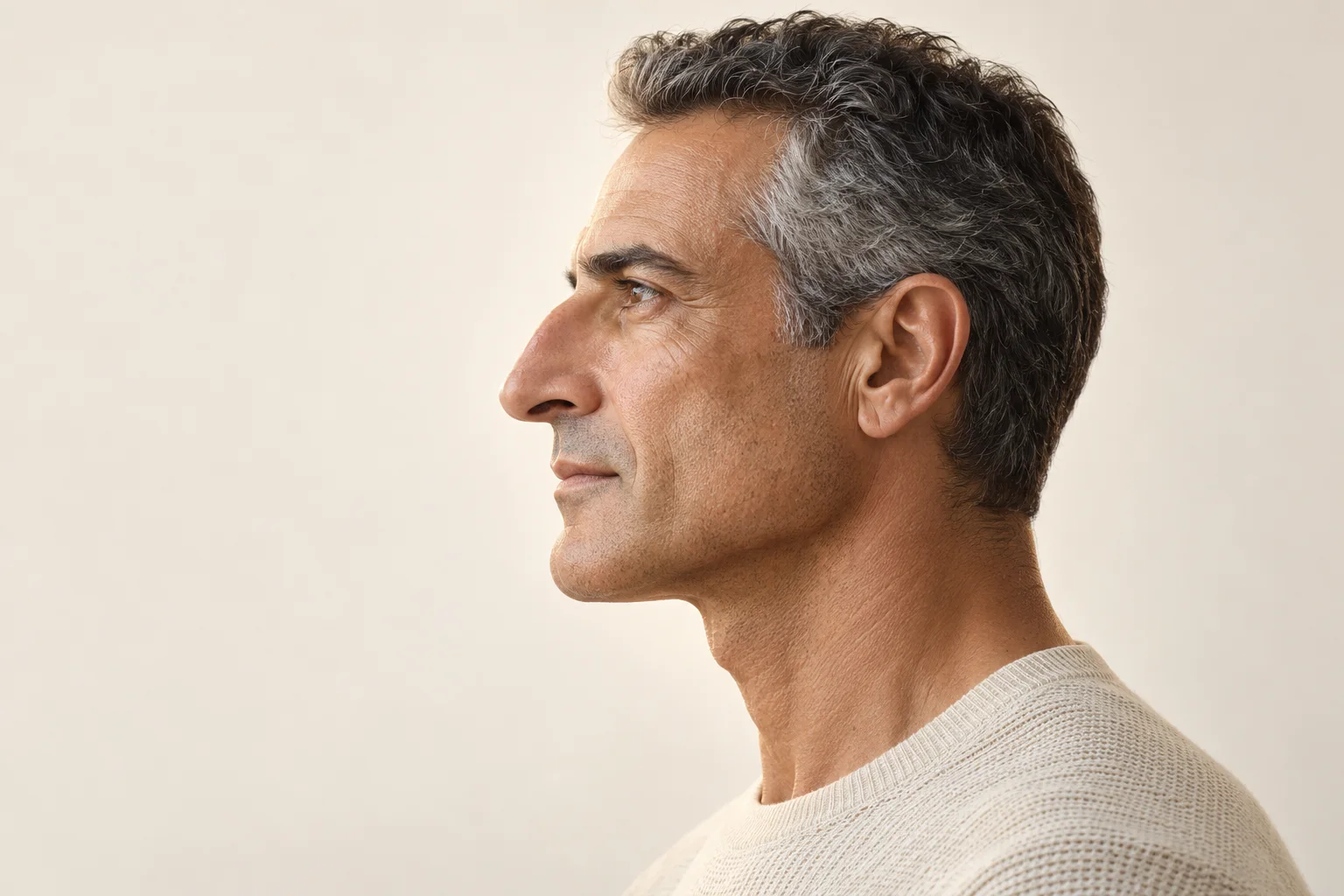
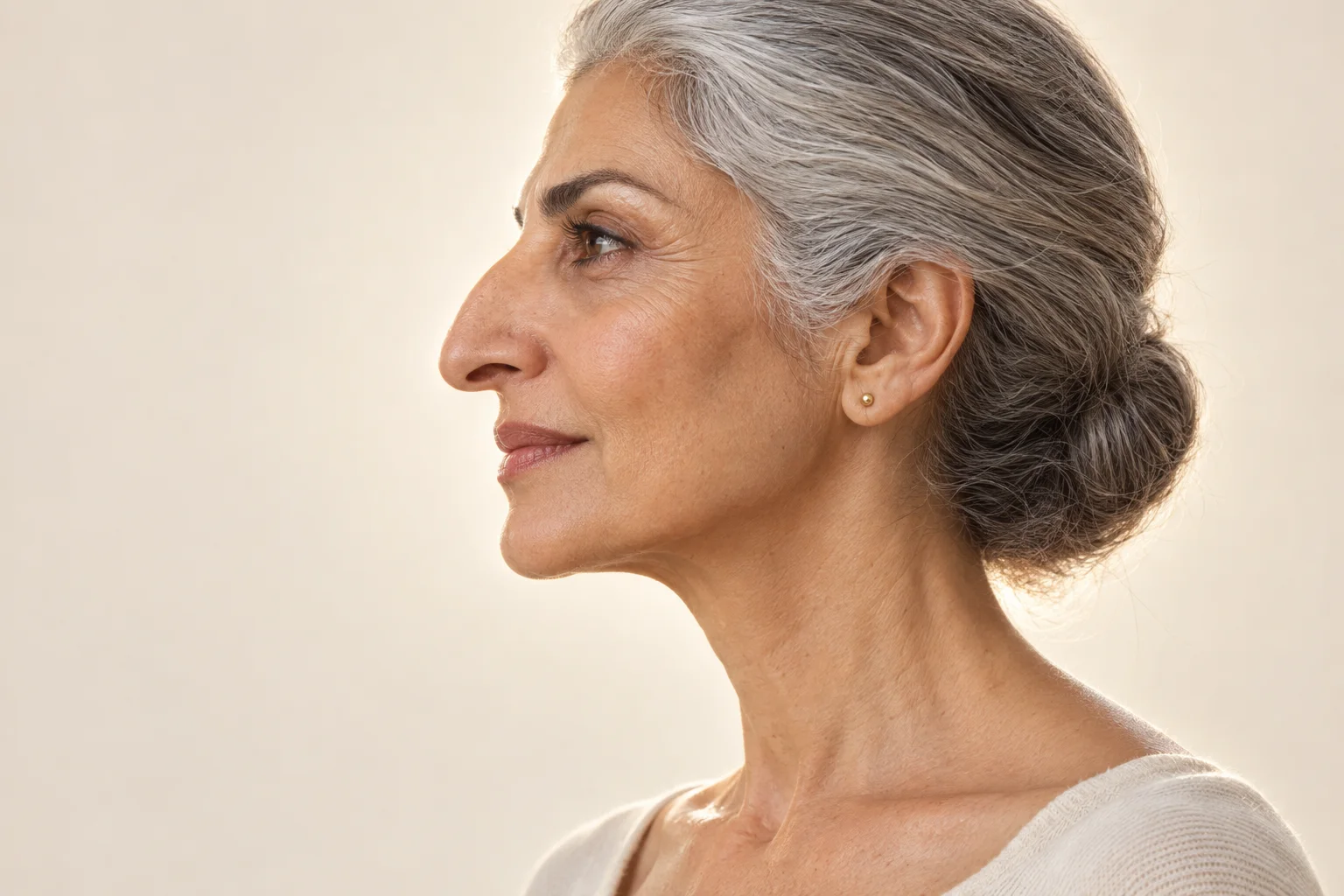
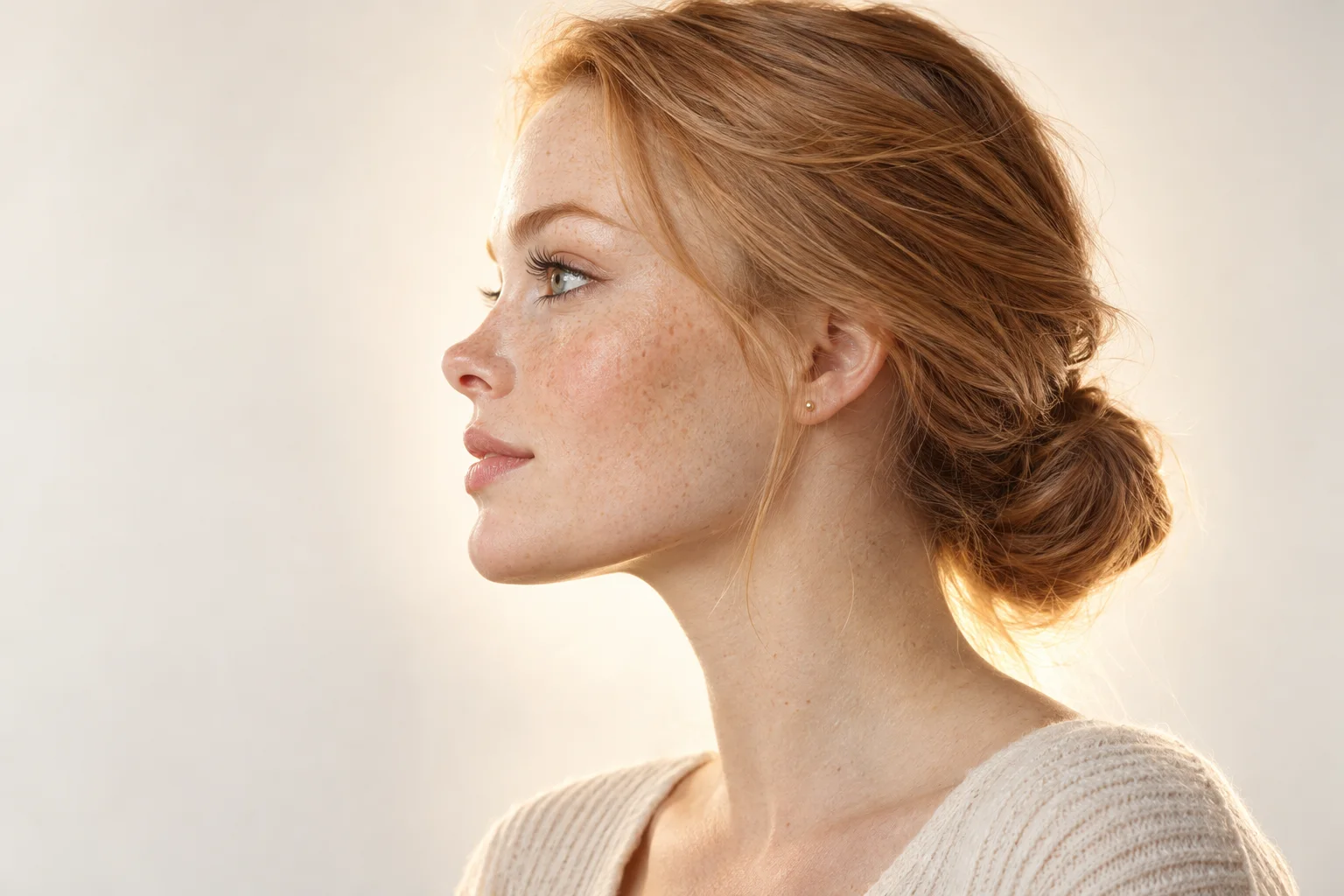
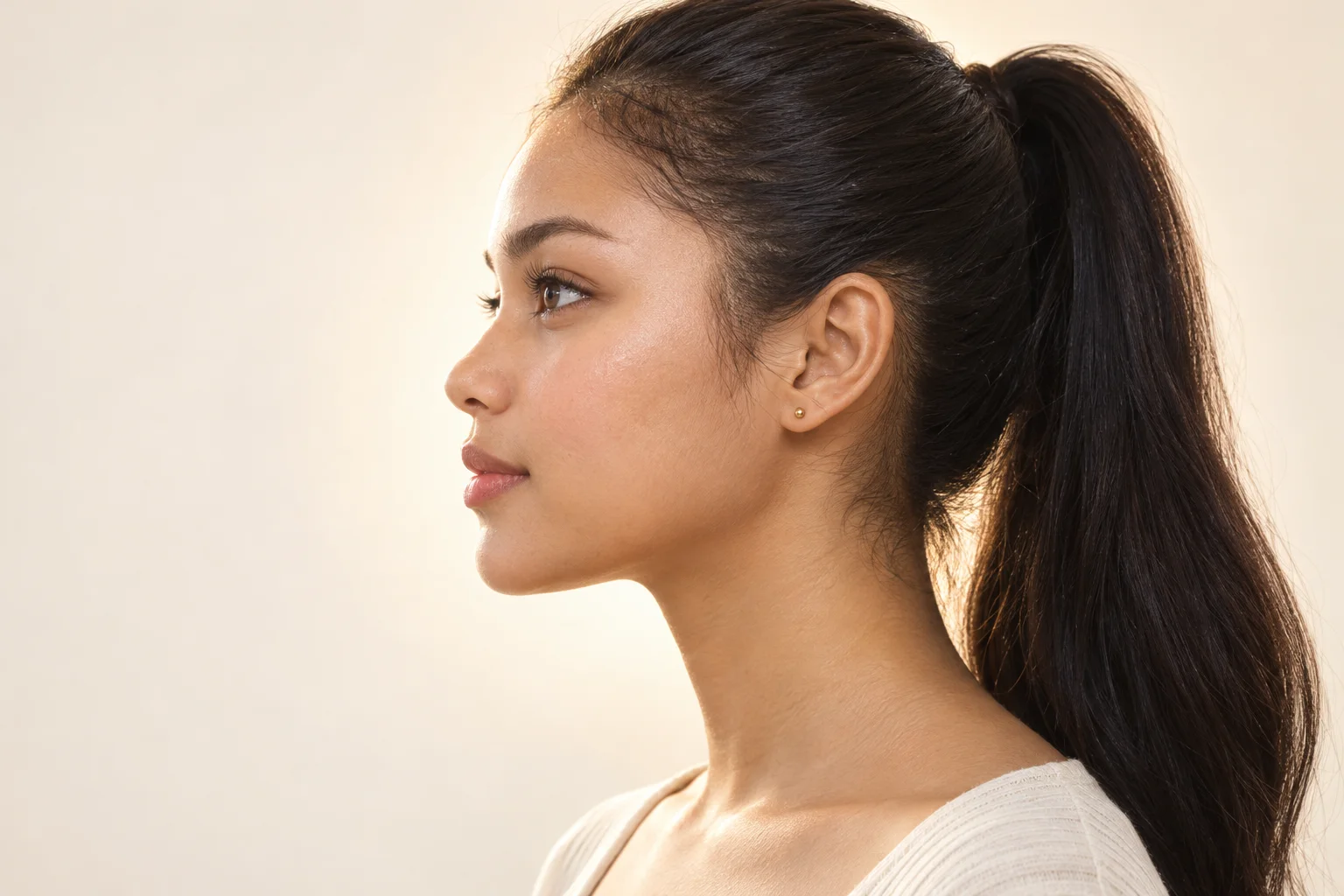

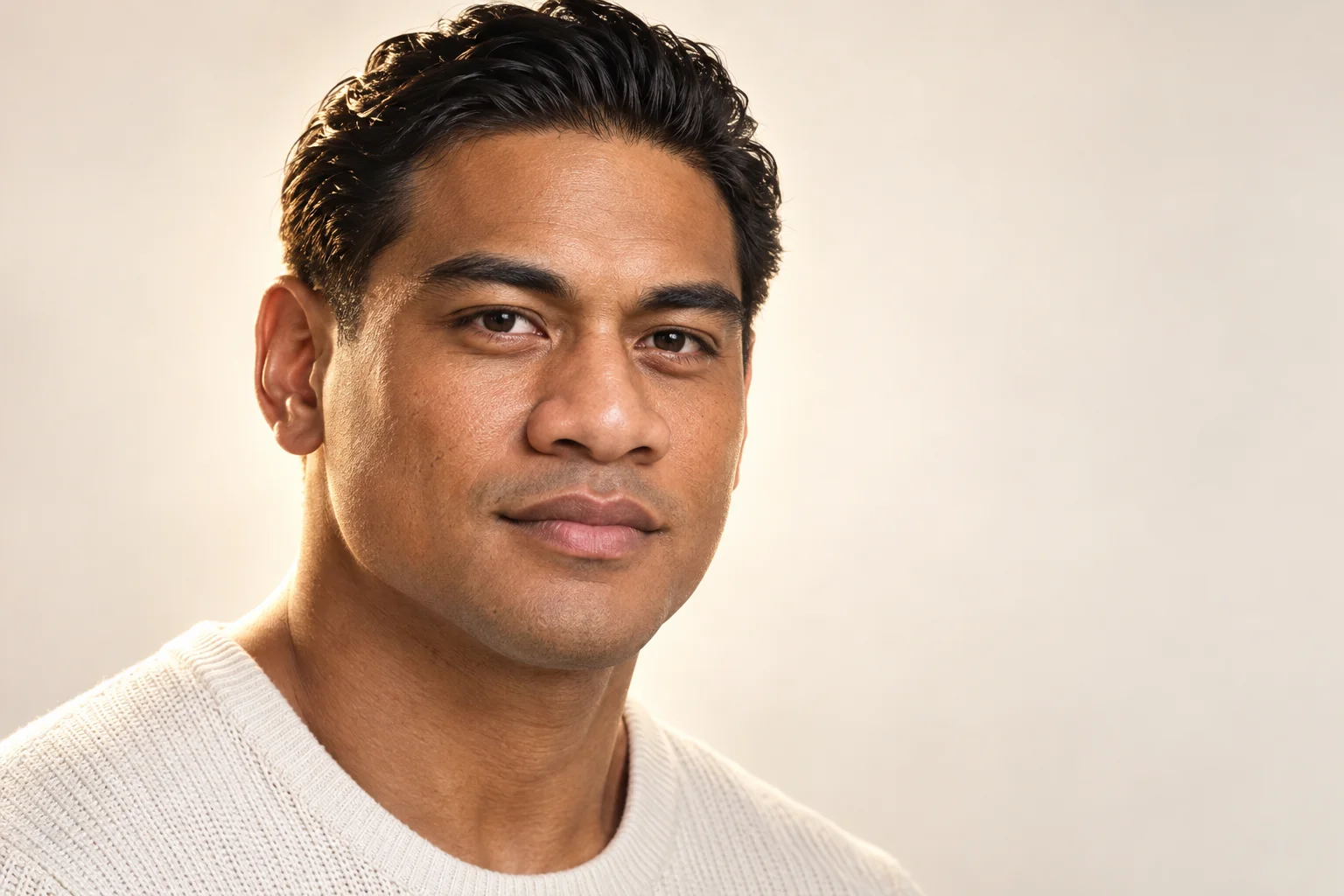
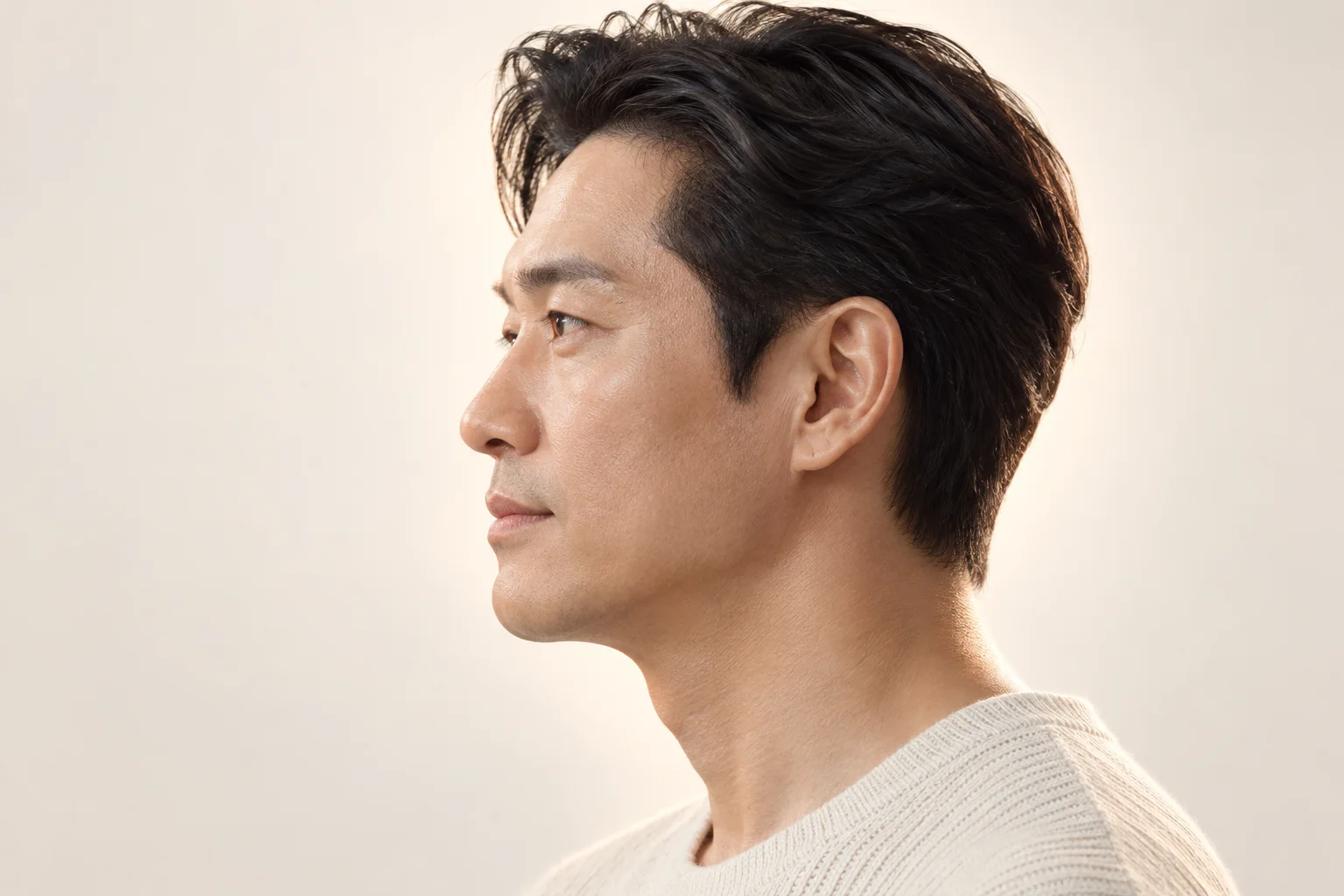
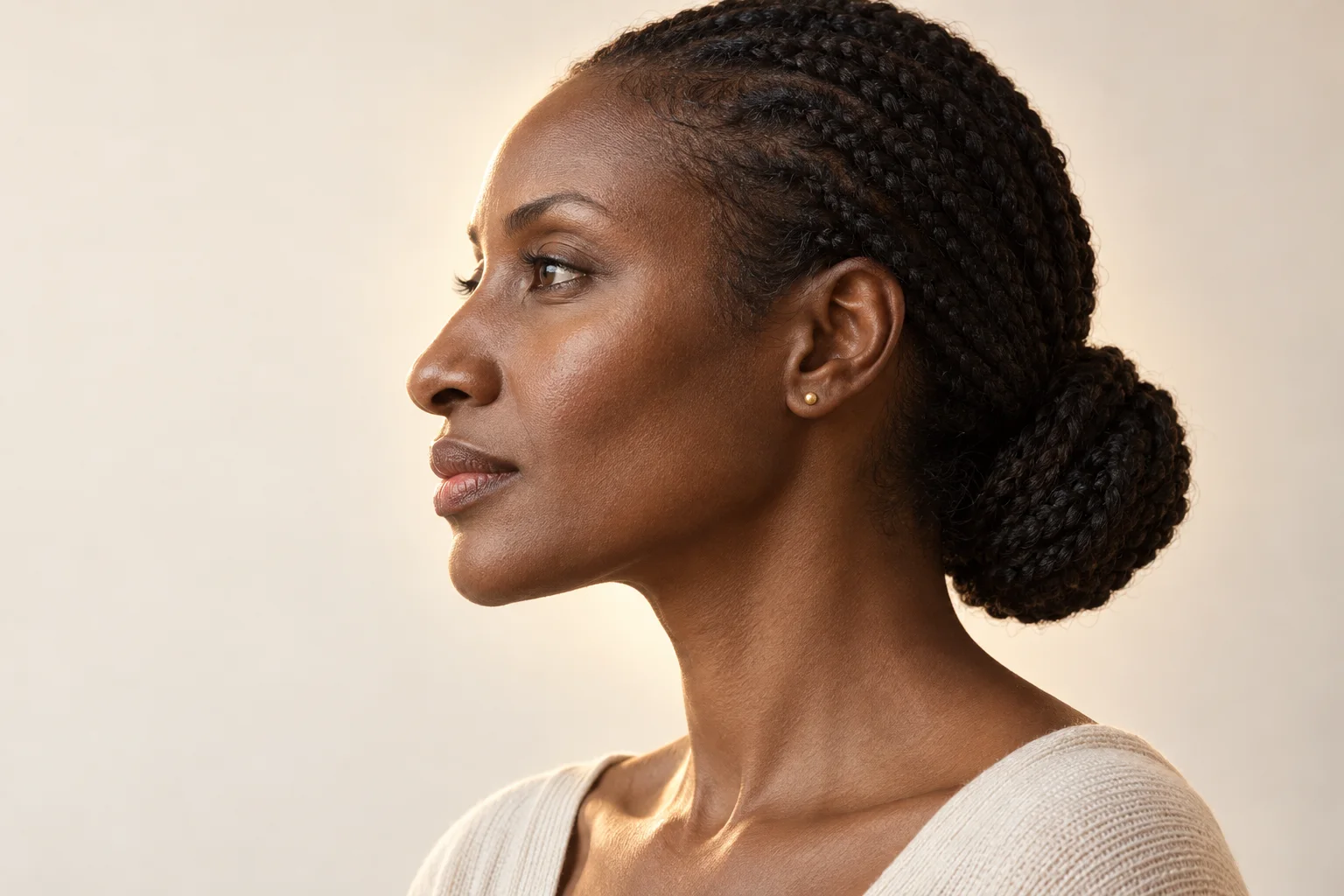
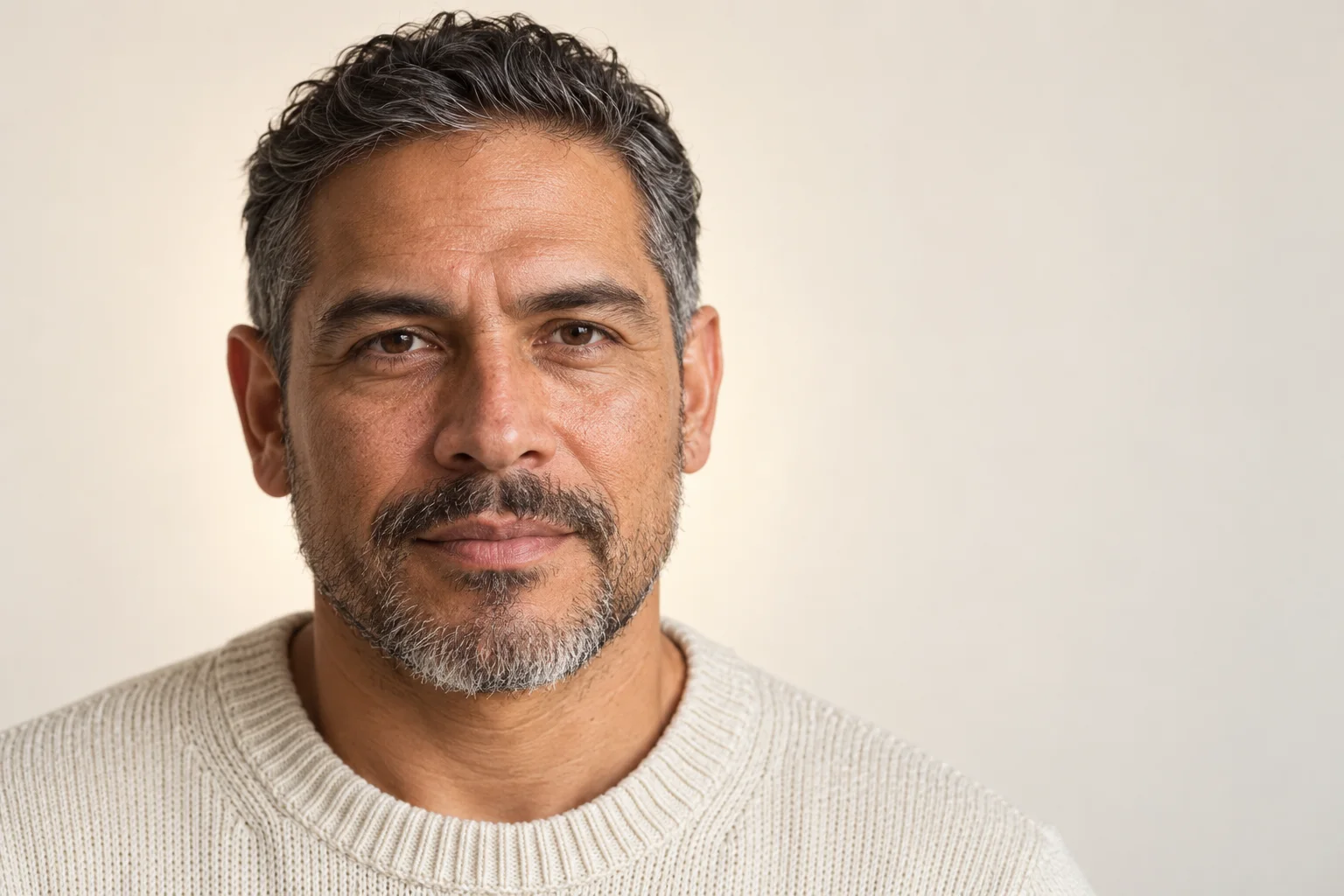
How the nose shape test works
A face model running in your browser places 478 points on your face, including the edges of your nostril wings, the sides of your tip and bridge, the corners of your eyes, and the edge of each iris. We level the photo on the line down the middle of your face, so a tilted head doesn’t skew the numbers, then measure three things:
- Width: the distance across your nostril wings, divided by the gap between your inner eye corners. Old drawing canons set the two equal, and in Leslie Farkas’s measurements of young adults they matched in about 40% of people (Farkas et al., 1985). In his North American reference adults the nose averaged 34.9 mm across and the eye gap 33.3 mm in men, a ratio of 1.05, and 31.4 and 31.8 mm in women, 0.99; in African American adults the nose averaged 44.1 mm in men and 40.1 mm in women, against eye gaps of 35.8 and 34.4 mm, ratios of 1.23 and 1.17 (tables in Virdi, Wertheim, and Naini, 2019). We read under 0.90 as narrower than the eye gap and over 1.15 as wide. Those two lines are ours, set about 0.1 either side of the reference averages.
- Length: from the top of your nose, between your eyes, to its base, as a share of the distance from the top of your nose to your chin. The same tables work out to about 43% in reference men and 44% in women, and about 40% in African American men and 41% in women. Under 41% reads short for your face, a button trait, and over 47% reads long. These lines are ours too.
- Tip: the width across your tip, where it meets the nostril wings, divided by the width of your bridge halfway down. No published study uses these points, so this band is the tool’s own: on our straight-on test photos the face model’s readings ran from 1.88 to 2.11, and we read under 1.92 as a narrow, defined tip and over 2.05 as a tip wider than the bridge, the bulbous pattern.
Your answers name the profile: a bridge that curves out reads Roman, or aquiline when the tip also points down; a scooped bridge or a tip that turns up reads snub; a low bridge reads flat; and a straight bridge reads Greek when it runs on from the forehead, and straight when there is a dip between the brows. A wide base reads Nubian when the bridge is also long or the wings flare, and a bridge that leans reads crooked. Millimeters come from your iris: the visible iris averages about 11.7 mm across in adults (Rüfer et al., 2005).
What a front photo can and can’t tell
A straight-on photo is good at widths and lengths, so those come from your photo. It can’t see your profile: whether the bridge curves out, runs straight, or scoops in, and which way the tip points, only show from the side. The face model also places its points on your nostril wings from the whole face, so it follows how wide they sit but not how far they curve out, and a slight lean of the bridge is easy to confuse with a turned head. You can see all of these in a mirror in a few seconds, so the test asks, and marks which parts of your result came from your answers.
How to take a photo for the nose shape test
- Hold the camera at arm’s length or further, at eye height, and look straight into the lens. A close selfie makes the nose look wider than it is.
- Keep your chin level. Tipping it up shortens your nose and shows your nostrils; tipping it down makes your nose read longer.
- Face soft daylight, so the edges of your nose are clear, and relax your face with your mouth closed.
- Take off glasses, which sit on your bridge and hide it.
For the profile checks, stand side-on to a mirror and hold a second mirror, or your phone’s camera, at nose height in front of you. Look at the line from your brow down to your tip, and at the angle between the underside of your nose and your upper lip. In Farkas’s reference adults that angle averaged about 100 degrees in men and 104 in women, a tip that points ahead or a little up, and about 71 and 74 degrees in African American adults, a tip that points a little down (Virdi, Wertheim, and Naini, 2019).
Your nose is one part of your face’s balance. The face shape detector measures its outline, and the face proportions calculator sets your nose against your thirds and fifths. No nose shape is better than another; the guides are about what suits yours.
Frequently asked questions
What nose shape do I have?
Nose shapes are read on four things: the line of the bridge from the side, the way the tip points, how wide the base is, and whether the nose runs straight down the middle of your face. This nose shape test measures the width, length, and tip from a front photo, asks you about the rest, and names the closest of eleven shapes, with the traits that set yours apart.
How accurate is the nose shape test?
On a sharp, straight-on photo the face model places the edges of your nostril wings and your inner eye corners within a few pixels, so the width reading is close to a ruler’s. The length depends on a level chin. The tip reading is the least certain, because the face model smooths the tip, so its band is the tool’s own. The side view comes from your answers.
Why does my nose look bigger in selfies?
Distance. In one study, a camera about 30 cm away, a selfie held close, made the nose look about 30% wider for the face in men and 29% in women than a distant camera did; from 1.5 m there was essentially no difference (Ward et al., 2018). For this test, hold the phone at arm’s length or have someone take the photo.
Is a wide nose the same as a flat nose?
No. Wide describes the base seen from the front: the nostril wings sit wider apart than the gap between your eyes. Flat describes the profile: the bridge rises only a little from the face. A nose can be either, both, or neither, which is why the test measures the width and asks about the bridge.
Is my photo uploaded?
No. The face model runs in your browser, so your photo is measured on your device and never sent anywhere. The result card is drawn on your device too.
More free tools
Your best skin starts with one scan
Download GoodSkin, take a selfie in good light, and see where your skin stands today.


Scan with your phone camera