Nose shapes, line
Crooked nose: why noses bend, and when to see a doctor
A crooked nose bends away from the center line of the face, along the bridge, at the tip, or both. The bend can be a C-shaped curve, an S-shaped double curve, or a straight slant to one side. A slight lean is common, because few faces are perfectly symmetrical, and a clear bend usually comes from how the nose grew or from an injury. See a doctor if it makes breathing hard, or if it appeared after a knock.
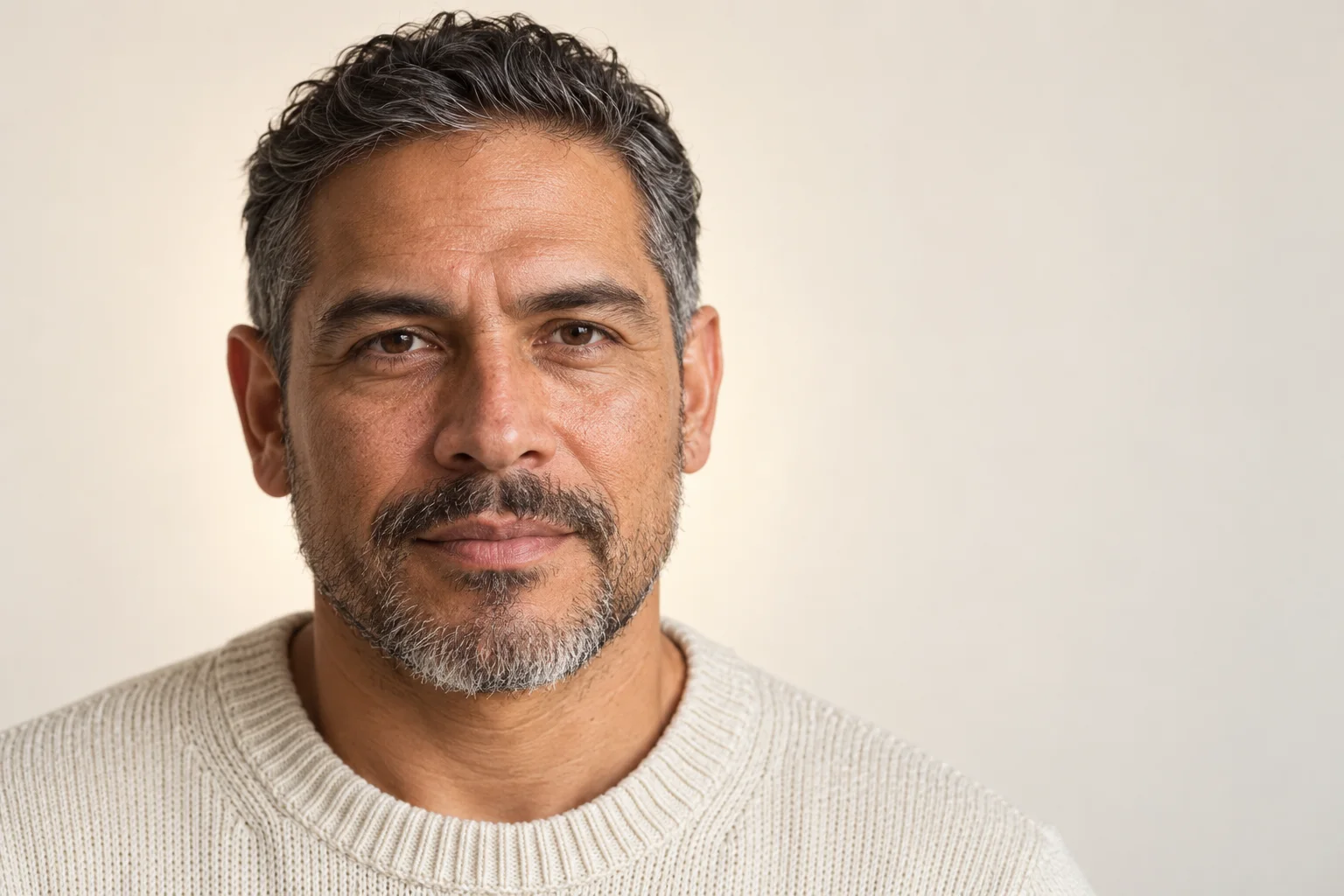
What counts as a crooked nose?
Bridge The top line, brow to tip
Leaves the center line of the face, curving or slanting to one side.
Defines the shapeTip Its direction and fullness
May sit off center, or swing back toward the middle after the bridge bends.
Base Across the nostril wings
The nostrils may look uneven, one rounder or larger than the other.
How to tell if your nose is crooked
Crookedness is a front-view trait. Face a mirror square on in even light, because light from one side throws a shadow that can make any nose look bent.
Against your center line
The view that matters most- Picture a line from the middle of your brows to the middle of your chin: your bridge leaves it.
- One side of your bridge looks longer or flatter than the other.
- Your tip points slightly to one side.
- One nostril looks larger, rounder or more open than the other.
Left profile against right
- Your left and right profiles look noticeably different, because the bridge leans toward one of them.
- From one side you may see a bump that does not show from the other.
Is your nose crooked, or is it the light?
Shadow, angle and camera
Side light, a three-quarter camera angle and a close phone camera can all bend a straight nose in a photo. Check in a mirror with even light from in front, and in a photo taken square on from a few steps away. If the bend disappears, it was the light, and your nose is straight.
A bump is not a bend
A Roman nose has a bump on the bridge that shows in profile and sits on the center line. A crooked nose bends to the side, seen from the front. A bump that leans to one side is both.
A bent bridge or a deviated septum?
The outside of your nose and the wall inside it are different things. The septum is the wall of cartilage and bone that divides the inside of the nose into left and right, and about 8 in 10 people have one that is a little off center (Cleveland Clinic). Most never notice.
A deviated septum can show on the outside: a severely deviated one may make the nose look off center, and nostrils of clearly different sizes can be a sign of it (Cleveland Clinic). But a bridge can bend over a fairly straight septum, and a septum can bend behind a straight bridge.
The real question is breathing. A bend you can see is a matter of shape; a septum that narrows one airway is a matter of comfort and sometimes health.
A bent bridge: outside
- You can see it in the mirror
- The bone or cartilage of the bridge leans
- Breathing can be completely normal
A deviated septum: inside
- Often invisible from outside
- The inner wall leans into one airway
- Can block one side and disturb sleep
When is a crooked nose worth a doctor's visit?
A crooked nose that breathes well and has looked the same for years needs no treatment. If the look bothers you, that is a cosmetic question, separate from your health. See a doctor, a GP or an ear, nose and throat specialist, if any of these apply:
- Breathing through your nose is hard, usually worse on one side, or it disturbs your sleep (Cleveland Clinic).
- You get frequent nosebleeds, loud snoring or a constantly blocked side.
- After an injury, your nose is not straight, or the swelling has not started to go down after 3 days (NHS).
- A nosebleed after an injury will not stop: get emergency care now (NHS).
Why noses bend: the common causes
A crooked nose is often described by the shape of its bend. In a C-shaped nose the bridge curves to one side in one arc; in an S-shaped nose it curves one way and then the other; in a slanted nose the whole bridge tilts to one side in a straight line.
The bend can sit in the bony upper part of the bridge, in the cartilage below it, or in both, which is why some crooked noses look bent at the top and others only toward the tip.
Injury is a common cause. A broken nose can heal crooked, and the NHS advises getting help if your nose is not straight after an injury rather than trying to straighten it yourself; a doctor can sometimes move the bones back, and that has to be done within 3 weeks, before they set (NHS).
Glasses for a crooked nose
- Saddle bridge
- Keyhole bridge
- Adjustable padsSuits this shape
- Low bridge fit
Two sides, two heights
On a crooked nose the two sides of the bridge often sit at different heights or angles, so frames with a fixed bridge tilt, one lens higher than the other. Look at a frame on your face in the mirror: the top rim should run level with your brows.
A level line across the face
A strong top rim or browline frame gives the face a level line at eye height. A bold, straight bridge bar can make a slight bend more noticeable, so a thin or clear bridge is the subtler choice.
Pads set one by one
Metal frames with adjustable pads are the best answer: an optician can set each pad to its own side of your nose, so the lenses sit level even though the bridge does not.
Drawing a straight line over a bend
The eye follows light and shadow more than the shape underneath, which makes contour a useful tool on a crooked nose: draw a straight nose on top of the bend.
Lines parallel to your center
Two shade lines drawn straight down from the inner brows, parallel to the center line of your face, even where the bridge curves away.
One true center line
One straight highlight down the true center of your face, from between the brows to the tip, not following the bridge.
- Find your center line: imagine a line from between your brows to the middle of your upper lip.
- Draw one shade line on each side, the same distance from that line, straight down to the nostril wings.
- Where the bridge bulges out past a shade line, blend a little extra shade over the bulge so it sits back.
- Draw the highlight straight down the center line, even where it leaves the bridge for a moment, and blend its edges softly.
- Check in even light from the front, then from both sides.
Avoid
- Tracing the bend with your contour: it outlines the curve you are trying to soften.
- Strong shimmer: it lights the side of the bridge that leans toward the light.
Check your nose with the detector
The nose shape detector measures your nose from a selfie that it first levels on your face's midline, and it asks whether your bridge leans to one side. Answer yes and the result reads crooked, whatever else the photo finds; your width, length and tip still appear as traits.
Frequently asked questions
Can a crooked nose straighten on its own?
Bone and cartilage that have set do not straighten by themselves, and taping or pushing the nose does not reshape it. After a fresh injury, swelling can make a nose look more crooked than it is for a few days.
Can a crooked nose cause headaches or snoring?
The bend you can see does not, but a deviated septum, the wall inside, can come with facial pain, headaches, snoring and a stuffy nose (Cleveland Clinic). If those come with a blocked side, see a doctor.
Does wearing glasses make your nose crooked?
No. Glasses rest on the skin and can leave red marks or dents in it, but they do not bend the bone or cartilage underneath.