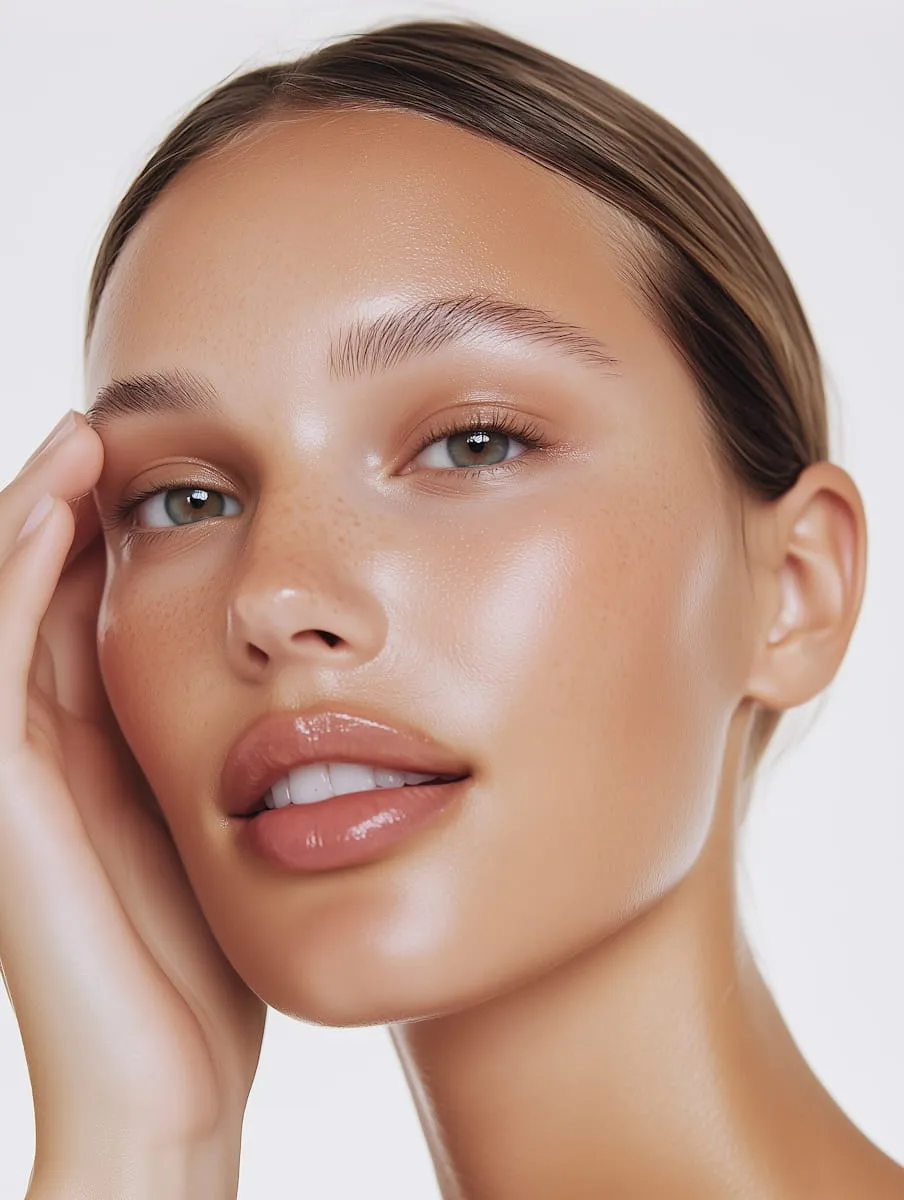
Nose shapes, tip
Button nose: small, round-tipped, and how it grows with you
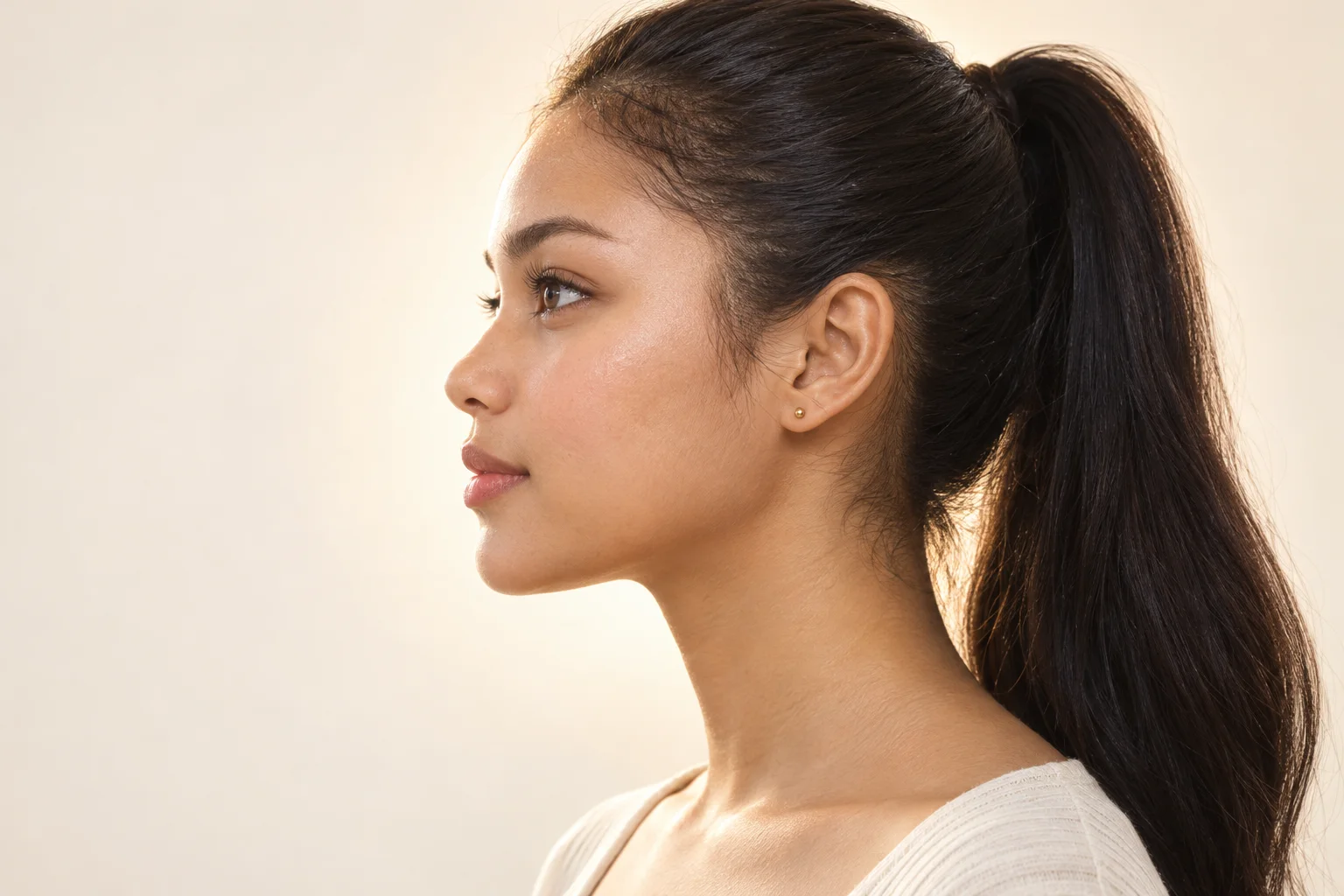
A button nose is a small nose for its face, short from top to base, with a soft round tip and a bridge that barely rises; seen from the side, the tip lifts just slightly. It reads neat and soft from the front, and from the side it barely interrupts the line of the face. The name is about size and roundness, which is what separates it from a snub nose, where the defining feature is a tip that clearly turns up.
What counts as a button nose?
Bridge The top line, brow to tip
Short and low, often with a gentle scoop, so it rises only a little from the face.
Tip Its direction and fullness
Small and round, a little wider than the bridge, and lifted only slightly.
Defines the shapeBase Across the nostril wings
Slim to average and compact, with soft, rounded nostril wings.
Is your nose a button nose?
Size is relative, so compare your nose with the rest of your face, not with other people. A front photo and a side photo taken from a few steps away make it easy.
Compared with your face
- The tip looks round and soft rather than pointed or sharply defined.
- The tip is a little wider than the bridge, but the nose is small overall.
- Your nostril wings are rounded and sit close to the tip.
- You may see a little of your nostrils, but not much.
From the side
The view that matters most- Your nose rises only a little from the face before the tip.
- The tip is the roundest part of the profile, without a sharp point.
- The tip points forward or lifts slightly; it does not point clearly up.
- The bridge has a soft, shallow scoop rather than a ruler-straight line.
Do button noses change as you grow?
Noses keep growing for most of life. In a study that measured the outside of the nose in 859 people aged 4 to 73, nasal volume and length went up from childhood all the way into old age (Sforza et al., 2011).
That is one reason small, round noses are so common in children: the nose has a lot of growing still to do. A button nose in adulthood is the same small, soft shape that kept its proportions as the rest of the face grew around it.
Button, snub or bulbous?
Is the lift the main thing?
If the lift is what you notice first and your nostrils show from the side, you are closer to snub; that guide has the side-by-side test.
Small round tip or large round tip?
Both have a round tip that is wider than the bridge. A button nose is small overall, so the round tip reads delicate; on a bulbous nose the tip is large for the face and clearly the fullest part of it.
Makeup for a button nose, no contour needed
A button nose rarely needs contour, and heavy shading can make a small nose look muddy. These do more with less:
A dot of light on the tip
Press a little highlight onto the roundest point of the tip and blend it out. It shows off the shape without adding lines.
Blush that sits high
Blush swept onto the tops of the cheeks, close to the nose, ties a small nose into the rest of the face.
Brows frame the top
Shade lines down a short bridge tend to read as smudges. Leave them out and let groomed brows frame the top of the nose instead.
Sizing frames for a small nose
- Saddle bridge
- Keyhole bridgeSuits this shape
- Adjustable pads
- Low bridge fit
Start with frame size
Pick the frame size by your face width first. On a small nose, a frame that is too big has nowhere to rest except your cheeks, however the bridge is shaped.
Shapes that suit a round tip
Small to medium frames in proportion to your face suit a small nose, and round or soft cat-eye shapes echo the rounded tip.
If frames still sit low
A small nose often has a low bridge too. Metal frames with adjustable pads can be raised, and acetate (plastic) frames come in low bridge fit versions; the flat nose guide explains how those work.
Measure your nose from a selfie
The nose shape detector measures your nose's length against your face and its tip against your bridge from a selfie. A nose that measures short, with a tip that does not point down, reads button; a scooped bridge reads button too when the photo finds both a short nose and a full tip. Your side-view answers then decide whether snub shows up as a second trait.
Frequently asked questions
Can you have a button nose and a wide nose?
Yes. Button describes a small nose with a round tip, and wide describes the base, so a small, round-tipped nose can still have nostril wings that reach past the inner eye corners. The wide nose guide covers that part.
What is the opposite of a button nose?
A long nose with a defined tip, such as a Roman or aquiline nose. Where a button nose is short and soft, those are long, with the bridge doing most of the talking.
Can men have button noses?
Yes. Button describes a shape, small and short with a round tip, and men have it too; the frame sizing advice is the same.