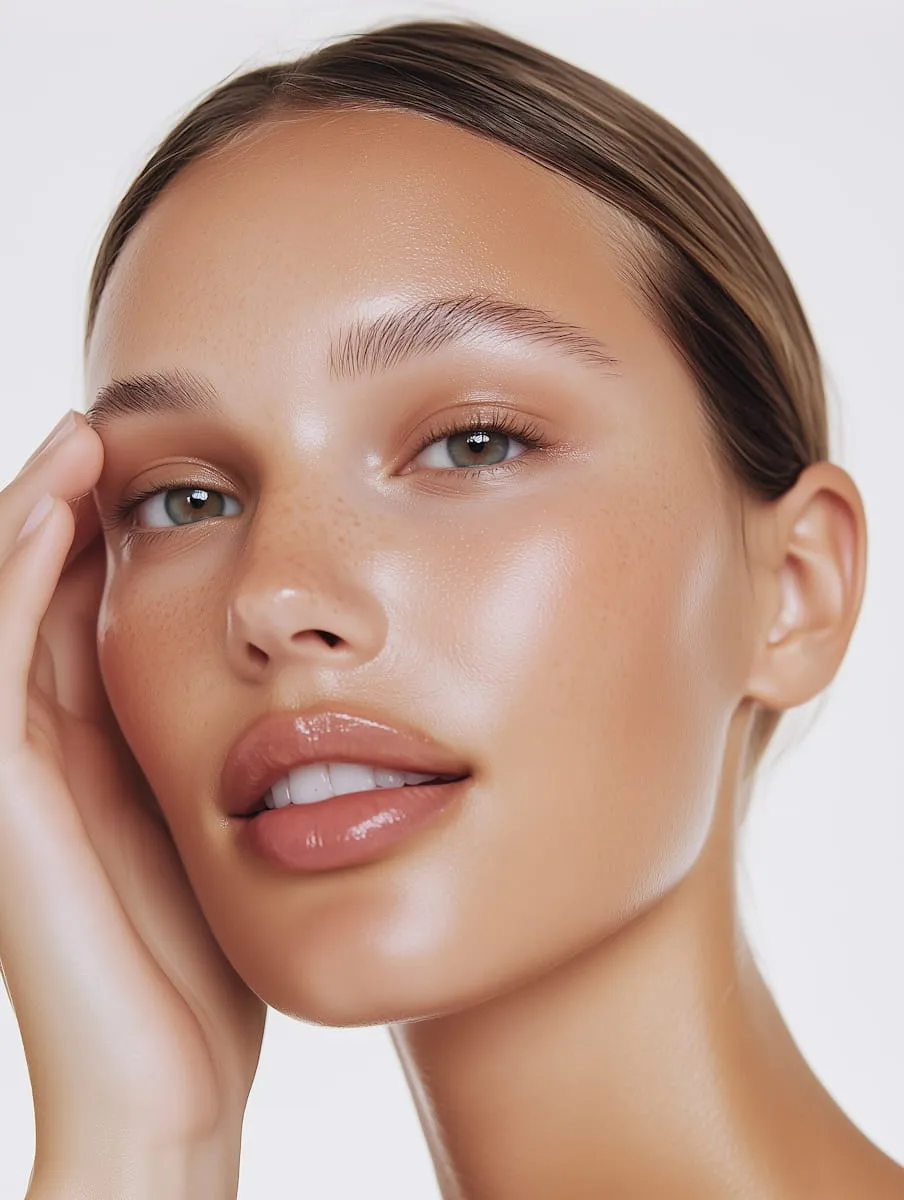
How old do I look? Age guesser from one photo
Upload a selfie and an age model running on your device guesses how old you look. It reads your face six ways, checks your light, angle, and expression, and makes you a card to share. Add your real age to see if you look younger.
Runs in your browser. Nothing is uploaded.
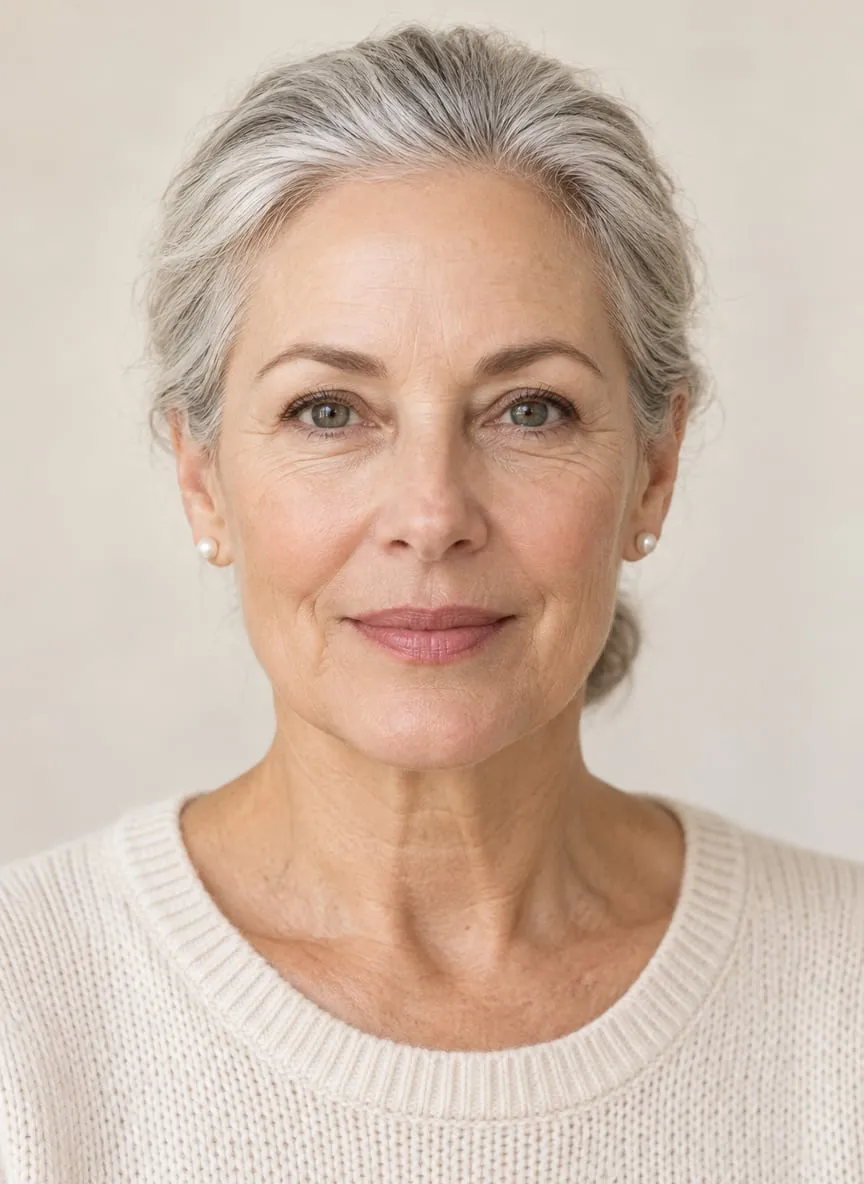
Guess your age from a selfie
An age model on your device reads your face six ways and averages them. Then it checks the light, angle, expression, and sharpness of your photo, the four things that move an age guess most.
Guessing your age
- Loading the age model
- Finding your face
- Reading your age six ways
- Checking your photo
Loading the age model (first time only)…
We couldn’t find a face
Try a brighter, straight-on photo with your whole face visible.
We couldn’t open that photo
Try another photo. JPG, PNG and HEIC all work.
Something went wrong
Check your connection and try again.
You look about
years old
What your photo shows
- Light
- Angle
- Expression
- Detail
How old do I look?
Upload a clear, straight-on selfie above and the age guesser shows how old you look in seconds, with how far off its model typically is at your age. Treat one photo as one opinion: light, angle, and expression can move a guess by several years. Two or three photos taken in soft daylight with a relaxed face give you an honest answer, and the photo checks under your result tell you what to fix between them.
How this face age calculator works
The age guesser finds your face, places 68 points on your brows, eyes, nose, lips, and jaw, and cuts out your face the way its age model expects to see it. The model is a small neural network from the open-source face-api.js library, trained on photos from eight public face datasets that span babies to people over 80.
It reads your face six times: as taken and mirrored, each at three crop sizes, and averages the six guesses. A single read can swing a few years on a small change in framing, and the average smooths that out. The library and models download once, about 1.3 MB, and run on your device, so your photo is never uploaded.
While it reads your age, the tool also checks the photo: how evenly lit your face is, the angle of your head, your expression, and how sharp your face is. Those four things move an age guess more than most people expect, so your result says which ones to fix for a fairer read.
How accurate is an age guesser?
On its test photos, this model’s guesses were off by 4.5 years on average (face-api.js documentation). The error depends on age: it is smallest for young children, close to 5 years through middle age, and larger past 60.
| Real age | Average miss |
|---|---|
| 0-3 | 1.5 years |
| 4-8 | 3.1 years |
| 9-18 | 4.8 years |
| 19-28 | 5.0 years |
| 29-40 | 5.4 years |
| 41-60 | 4.9 years |
| 60-80 | 6.2 years |
| 80 and over | 9.9 years |
So a guess of 34 for someone who is 30 is an ordinary result, not a sign that you look old. People misjudge age from photos too, and older faces are harder for them to judge than younger ones (Voelkle and colleagues, 2012). The fairest way to use any age guesser is to take a few photos the same way and look at where they agree.
What makes a face look older or younger?
People, and age models trained on people’s faces, judge age from a handful of cues: lines and texture, how even your skin tone is, the contrast of your eyes, lips, and brows, the area under your eyes, and the volume and structure of your face. Light and expression change how strongly each one shows in a photo.
Lines and skin texture
Wrinkles are the cue most people think of first, and the research backs them up. In studies of Danish twins and British women, skin wrinkling, gray hair, and visible sun damage were each linked to how old a woman looked for her age (Gunn and colleagues, 2009). Lines at the corners of the eyes and across the forehead carry a lot of weight. Read more on fine lines vs wrinkles, crow’s feet, and forehead wrinkles.
Even skin tone
Uneven color ages a face even when the skin is smooth. When researchers changed only the color distribution of the skin on 3D face models, faces with more even color were judged younger, healthier, and more attractive (Fink, Grammer, and Matts, 2006). Sun spots, redness, and patchy pigment all count. See what helps with dark spots on the face.
Contrast of eyes, lips, and brows
Faces lose contrast with age: the lips, eyes, and brows fade toward the color of the skin around them. In a set of experiments, raising that contrast made faces look younger and lowering it made them look older (Porcheron, Mauger, and Russell, 2013). It is one reason a little brow pencil or lip color can change an age guess.
The under-eye area
Hollows, dark circles, puffiness, and fine lines under the eyes are among the first things that read as tired or older. Several of them come from changes in the bone and fat around the eye socket, not only the skin (Mendelson and Wong, 2012). Read about dark circles, eye bags, and under-eye wrinkles.
Volume and structure
With age, parts of the facial skeleton slowly recede, including the rims of the eye sockets, the upper jaw, and the front of the lower jaw, and the soft tissue above them loses support. That deepens the folds from the nose to the mouth and softens the jawline (Mendelson and Wong, 2012). More on nasolabial folds, neck lines, and the skin elasticity test.
Light and expression
Neither changes your age, but both change your photo. Hard light from above or the side fills every line with shadow, while soft light from the front fills them in. Expression cuts both ways: a smile creases the skin around your eyes, and in one study smiling faces were judged older than neutral ones (Ganel, 2015), while in another, happy faces were more often guessed younger (Voelkle and colleagues, 2012). For the fairest read, keep a relaxed face.
Why your age guess changes from photo to photo
- Light. Shadows deepen lines and under-eye hollows, and blown-out highlights erase texture. The light check flags both.
- Angle. A turned or tilted head hides part of your face and shifts the crop the model reads.
- Distance. A phone held close works like a wide-angle lens and changes the shape of your face.
- Expression. Smiling, squinting, and raised brows all add lines that aren’t there at rest.
- Filters. Beauty modes smooth skin and can take years off. Turn them off for an honest read.
- Glasses, hair, and makeup. Frames and a fringe hide your brows and forehead, and makeup changes tone and contrast.
How to get a fair age guess
- Face a window in daylight, with no lamp straight overhead.
- Hold the phone at eye level and at arm’s length, or prop it up and step back.
- Look straight into the lens with your chin level.
- Relax your face and close your lips.
- Pull your hair off your forehead and take off your glasses.
- Turn off beauty filters and portrait mode.
- Take two or three photos and compare. Where they agree, trust the number more.
Does looking older than your age mean anything?
For one photo, it mostly tells you about the photo. Over years, how old you look carries real information: in a study of 1,826 Danish twins aged 70 and over, the twin who looked older in photos was more likely to die first, even after accounting for real age, and looking older also went with weaker physical and mental function (Christensen and colleagues, 2009).
The cues you can change are mostly in your skin. Dermatologists recommend a broad-spectrum sunscreen of SPF 30 or higher every day, and note that smoking greatly speeds up skin aging (American Academy of Dermatology). For fine lines, see how retinol and prescription retinoids compare.
Face age vs skin age
This tool guesses how old your whole face looks in one photo: your features, structure, hair, and skin together. A skin age test asks a narrower question: how old your skin itself looks, from its lines, firmness, and tone. The GoodSkin app reports a Skin Age trait as one of 14 skin traits from a selfie, from its own analysis, so expect a different number from the one here. See what an AI skin analysis measures.
Want more from the same selfie? The attractiveness test scores your proportions, the face symmetry test mirrors each half of your face, and the free skin analysis maps redness, shine, and uneven tone.
Frequently asked questions
How old do I look?
Upload a clear, straight-on selfie above and the age guesser gives you an estimate in seconds, with the model’s typical error for your age group. For the most honest answer, take two or three photos in soft daylight with a relaxed face and compare them.
How accurate are AI age guessers?
On its test photos, the model behind this tool missed by 4.5 years on average: about 5 years for adults up to 60, and more after that. Light, angle, and expression can move a single photo’s guess further, which is why the tool checks all three.
Why does the age guesser say I look older than I am?
Most often it is the photo: light from above or the side that deepens lines, a big smile, a tilted head, or a soft, grainy image. Retake it facing a window with a relaxed face. If several good photos agree, the cues are likely real, and sun damage and uneven tone are the ones skin care can change most.
Does smiling make you look younger?
Not reliably. In one study, smiling faces were judged older than neutral ones because a smile creases the skin around the eyes, while another found happy faces were more often guessed younger. For a fair age guess, keep a relaxed face.
Is this the same as the Skin Age score in the GoodSkin app?
No. This free tool estimates how old your whole face looks, with an open-source model that runs in your browser. The GoodSkin app reports Skin Age as one of 14 skin traits from its own analysis, so the two numbers will differ.
Do you keep my photo or my age?
No. The age model runs in your browser, so your photo and the real age you type stay on your device. Nothing is uploaded or saved, and the result card is drawn on your device too.
More free tools
Your best skin starts with one scan
Download GoodSkin, take a selfie in good light, and see where your skin stands today.


Scan with your phone camera