Eye color test: what eye color do I have?
Wondering what eye color you have? This eye color test finds each iris in your selfie, reads a ring of its color while leaving out the pupil, lashes, and reflections, and names it. No photo handy? Take the 3-question daylight mirror check.
Your photo never leaves your device. Everything runs in your browser.
Find your eye color from one photo
We find both irises, read a ring of each between the pupil and the dark rim, drop the shadows and reflections, and name the color that’s left. Then we check the two eyes against each other.
- Face a window. Daylight, no lamps, no flash.
- Glasses off, filters off, no colored contacts.
- Look into the lens, close enough that your eyes are sharp.
Reading your eye color
- Finding your face
- Tracing each iris
- Reading the color
Loading the face model (first time only)…
We couldn’t find a face
Try a brighter, straight-on photo with both eyes open and in view.
We couldn’t open that photo
Try another photo. JPG, PNG and HEIC all work.
Something went wrong
Check your connection and try again.
Retake for a fair reading
We’d rather ask for a new photo than guess: these are the things that make a camera get eye color wrong.
- Face a window. Daylight, no lamps, no flash.
- Glasses off, filters off, no colored contacts.
- Look into the lens, close enough that your eyes are sharp.
Your eye color
Hazel
Your eyes read as different colors. What heterochromia is
Both eyes together Each eye
Up close
The pixels we read
Each dot is one pixel of your photo. The gold ones made your color; the rest were left out.
- Read: the middle of the iris’s tones
- The darkest 30%, left out: pupil edge, lashes, shadow
- The brightest 15%, left out: reflections and glints
- Your color is named from outside the solid ring, after the white of your eye has evened out the light
Your eye color
Hazel
From your answers. To read the color itself, .
Colors for your eyes
Read the full guideMakeup
Clothes
Color seasons that often go with these eyes
Your season also depends on your skin and hair. The seasonal color analysis reads all three from one selfie.
Your result card
Your irises, up close
Drawn on your device from your own photo. Nothing is uploaded.
Curious about the shape too? The eye shape detector measures your tilt, opening, and spacing.
The eye colors
Each color has its own guide: what makes it, how to tell it from its neighbors, and the makeup and clothes that bring it out. The eye color chart puts them side by side.
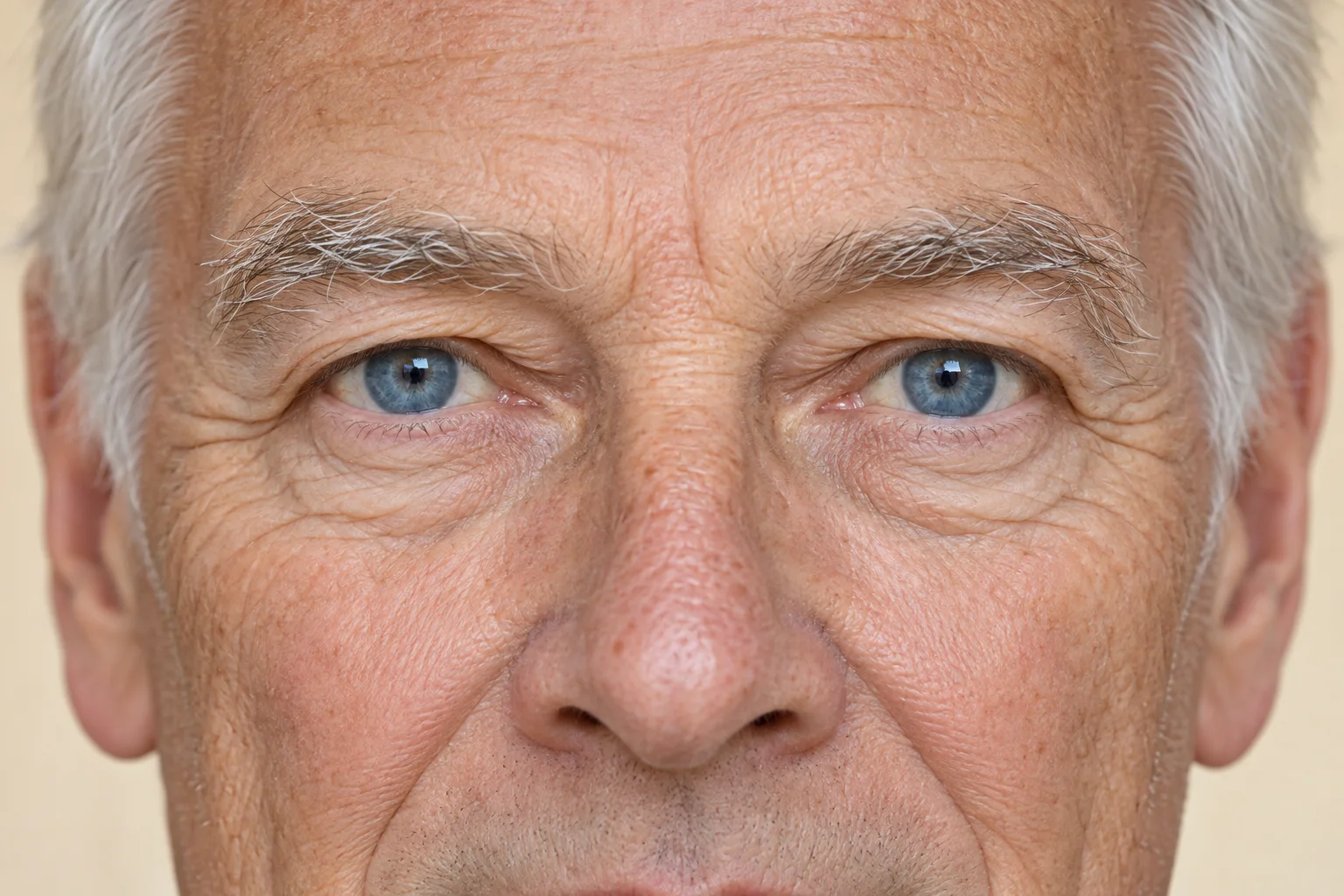
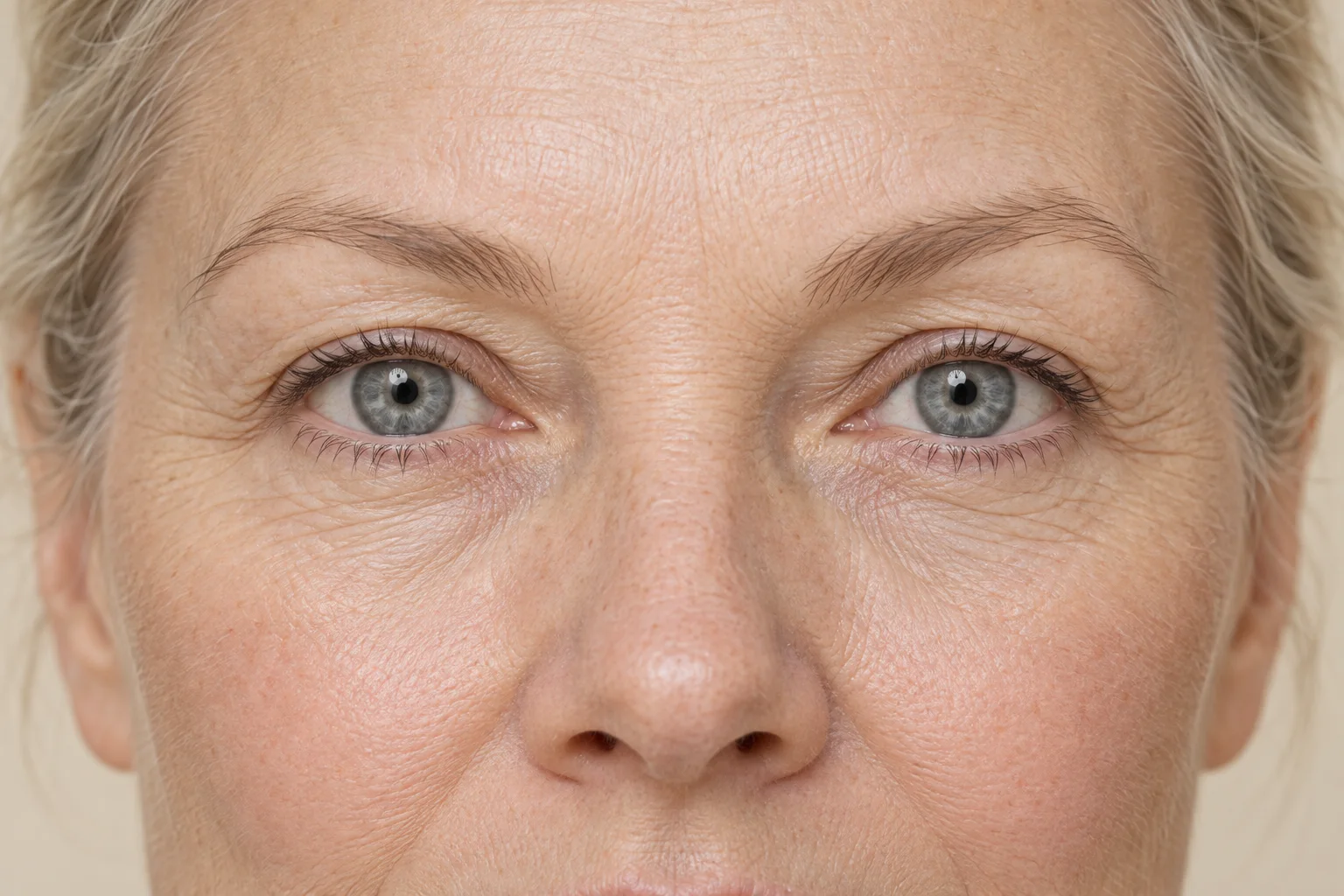
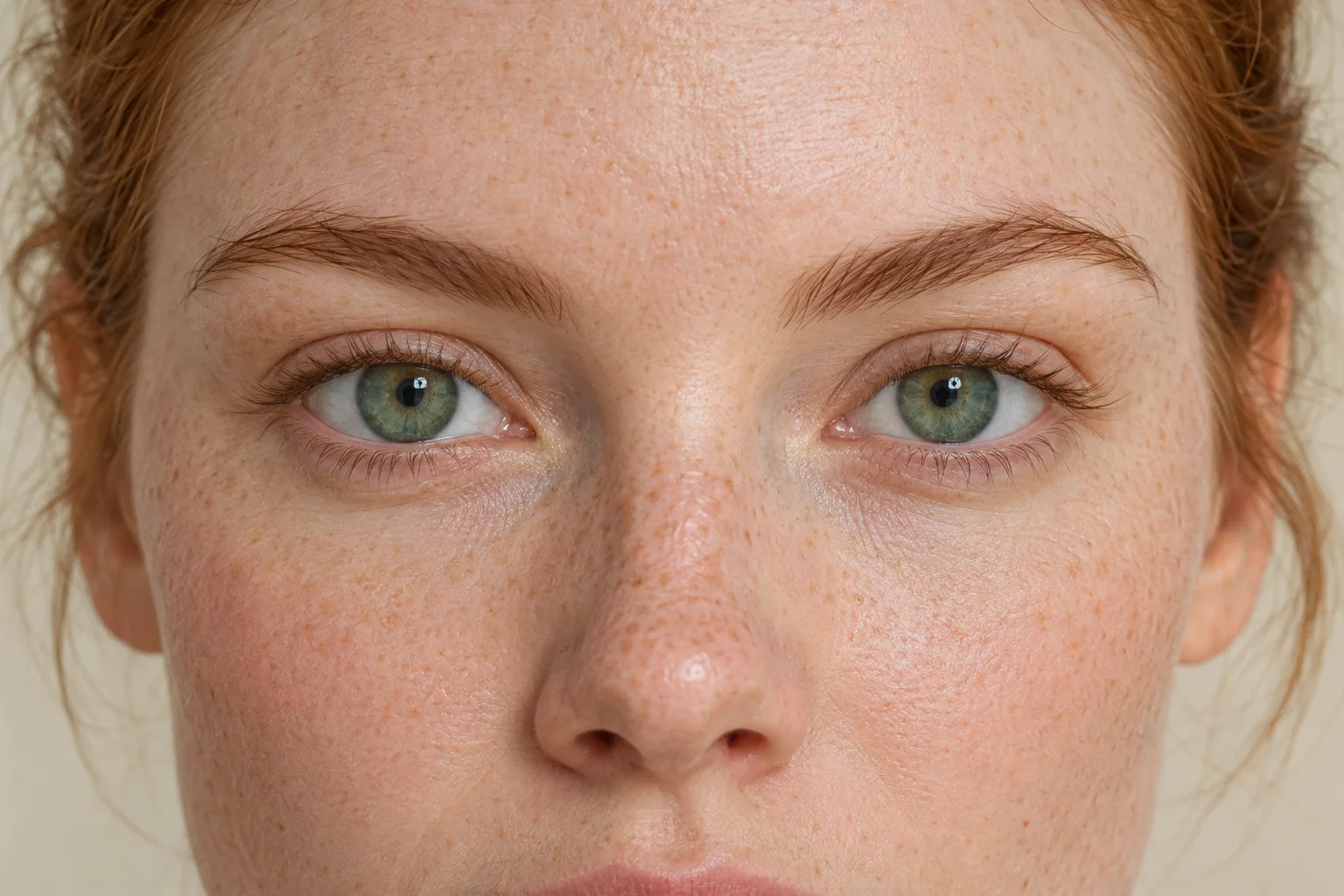
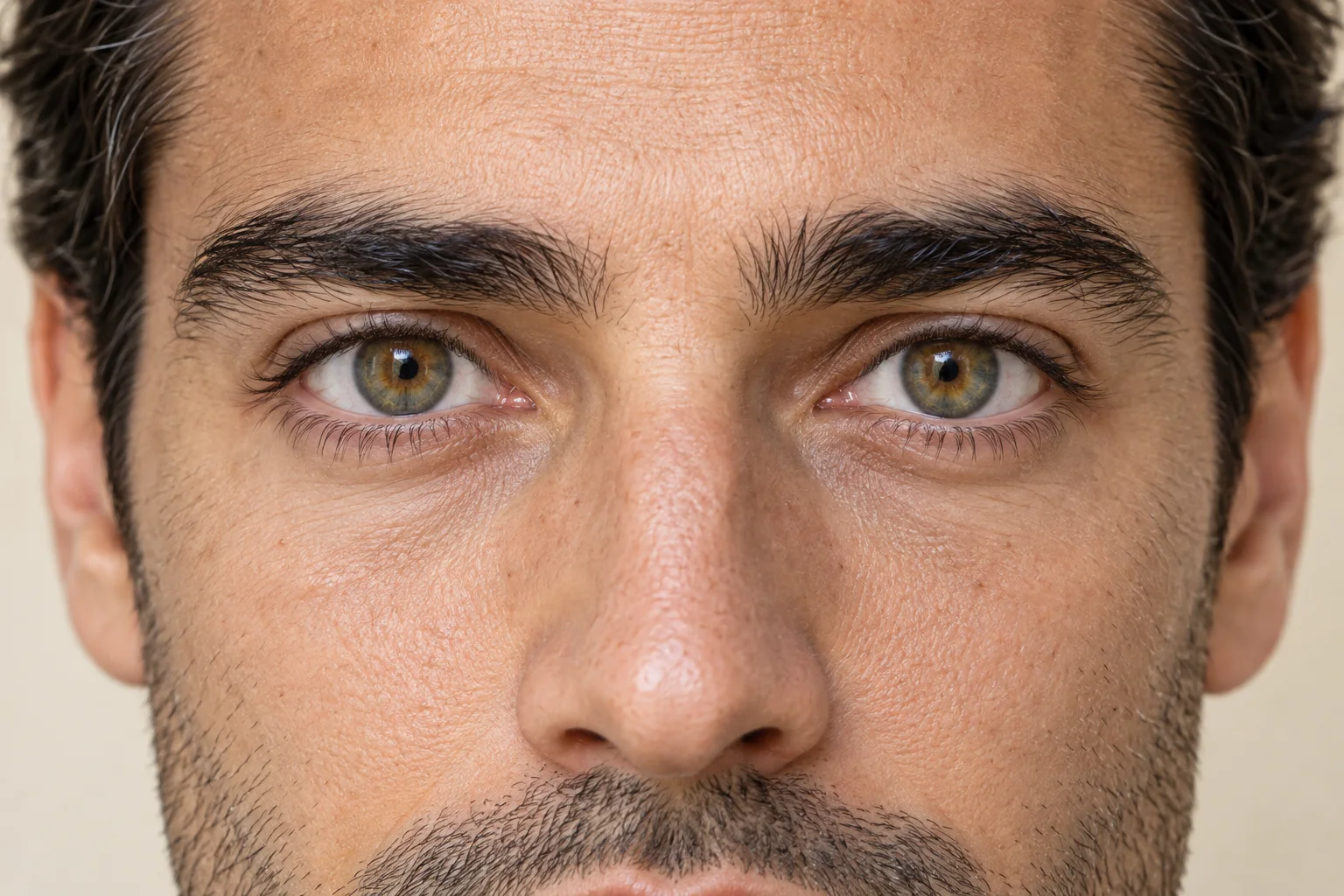
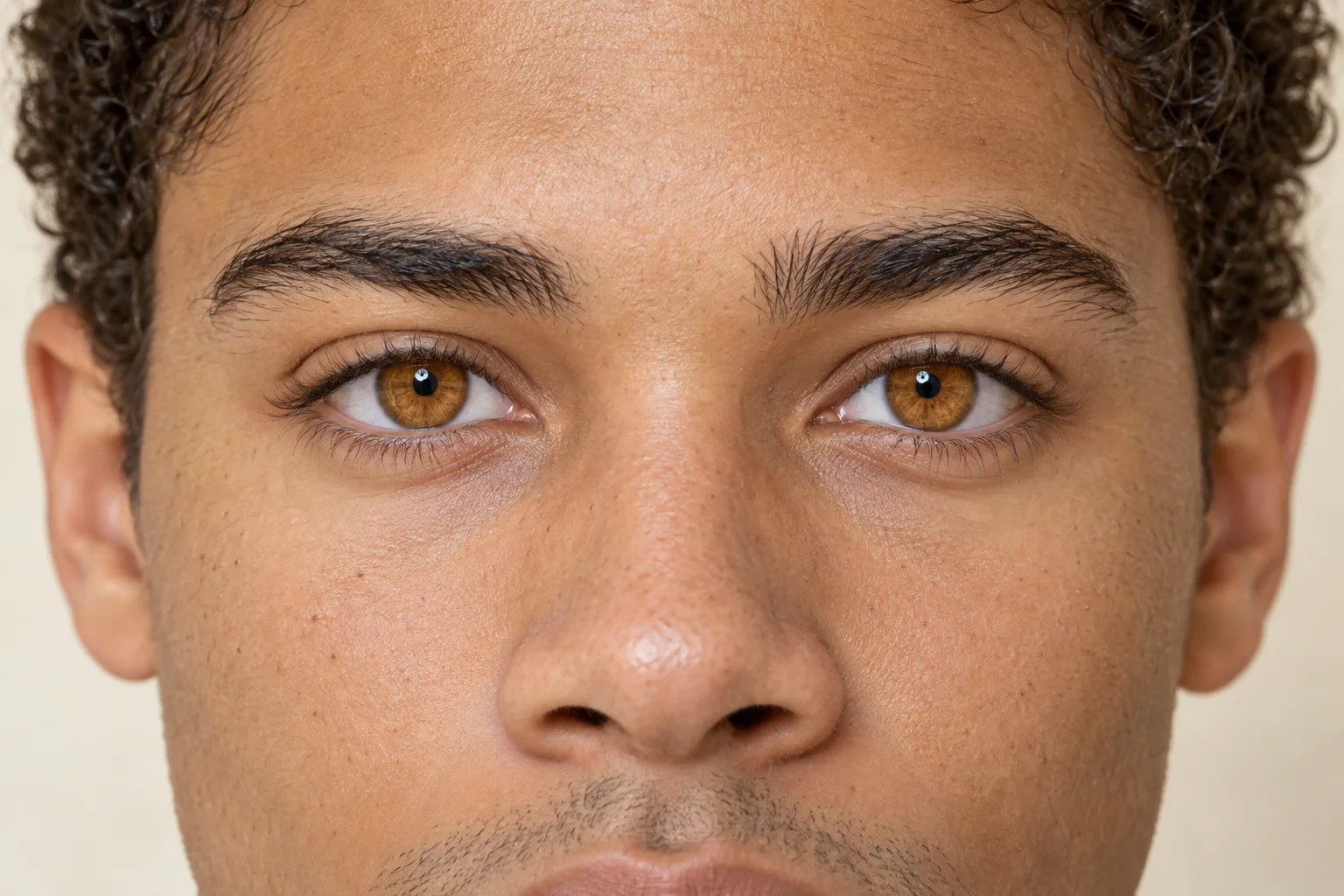
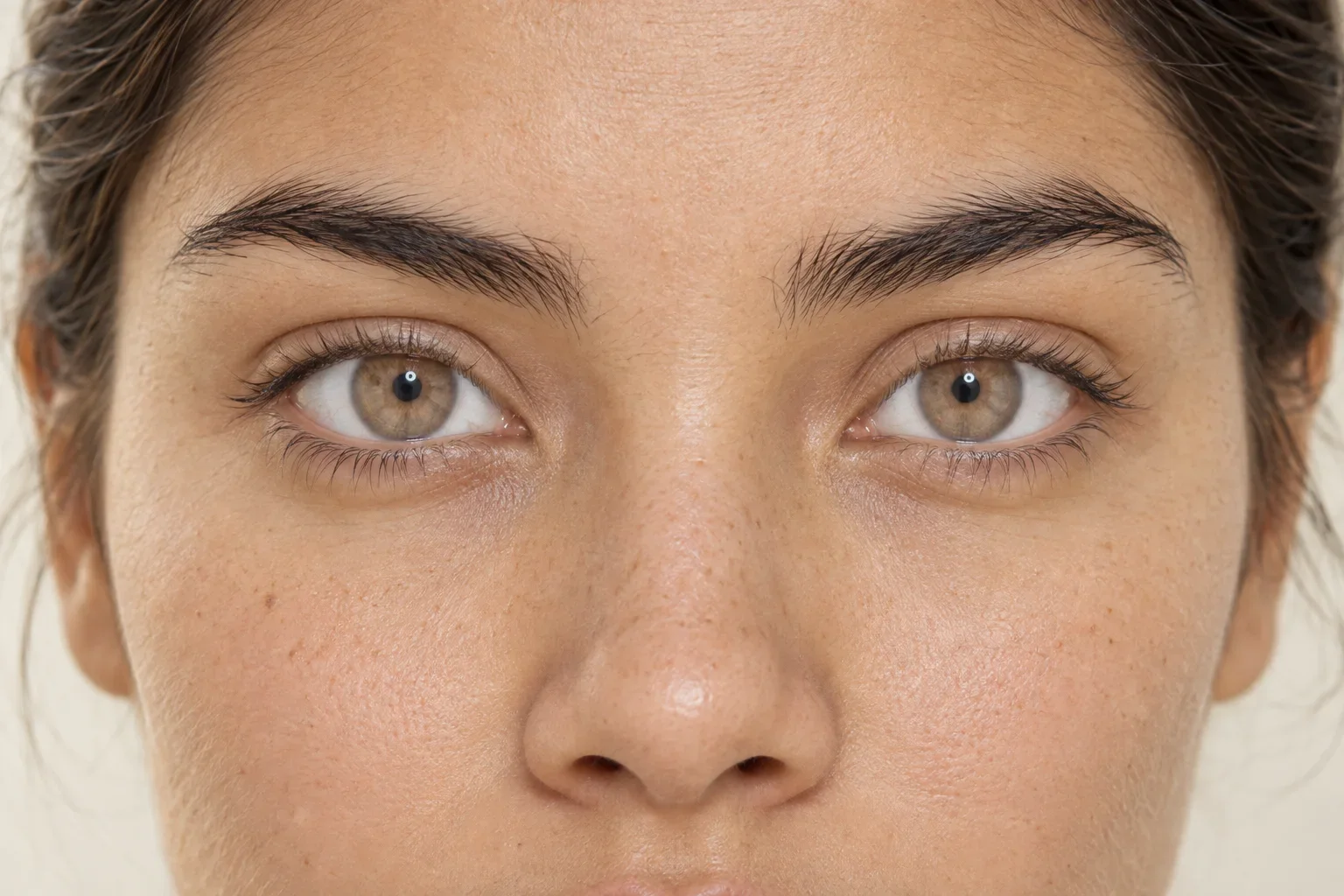
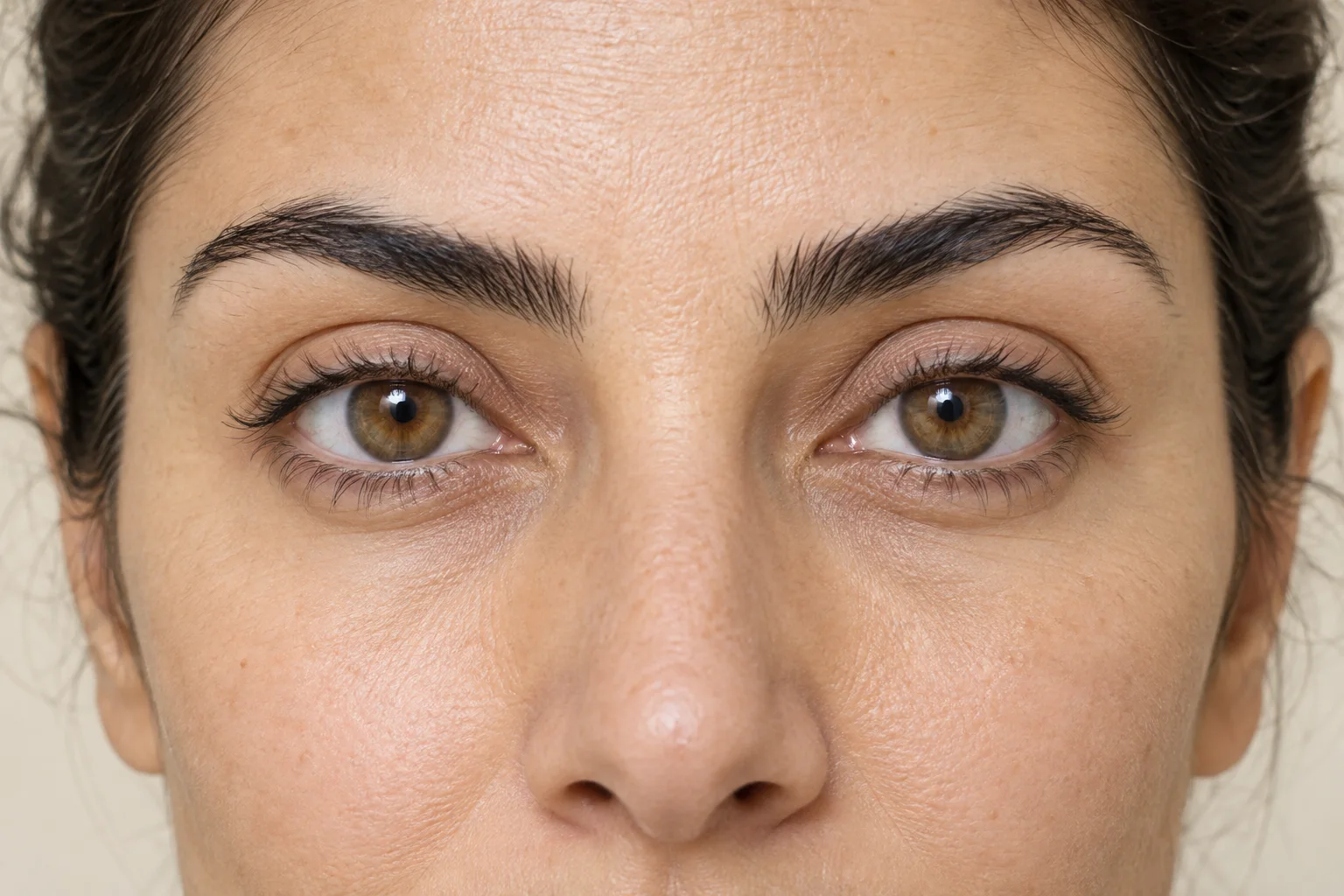
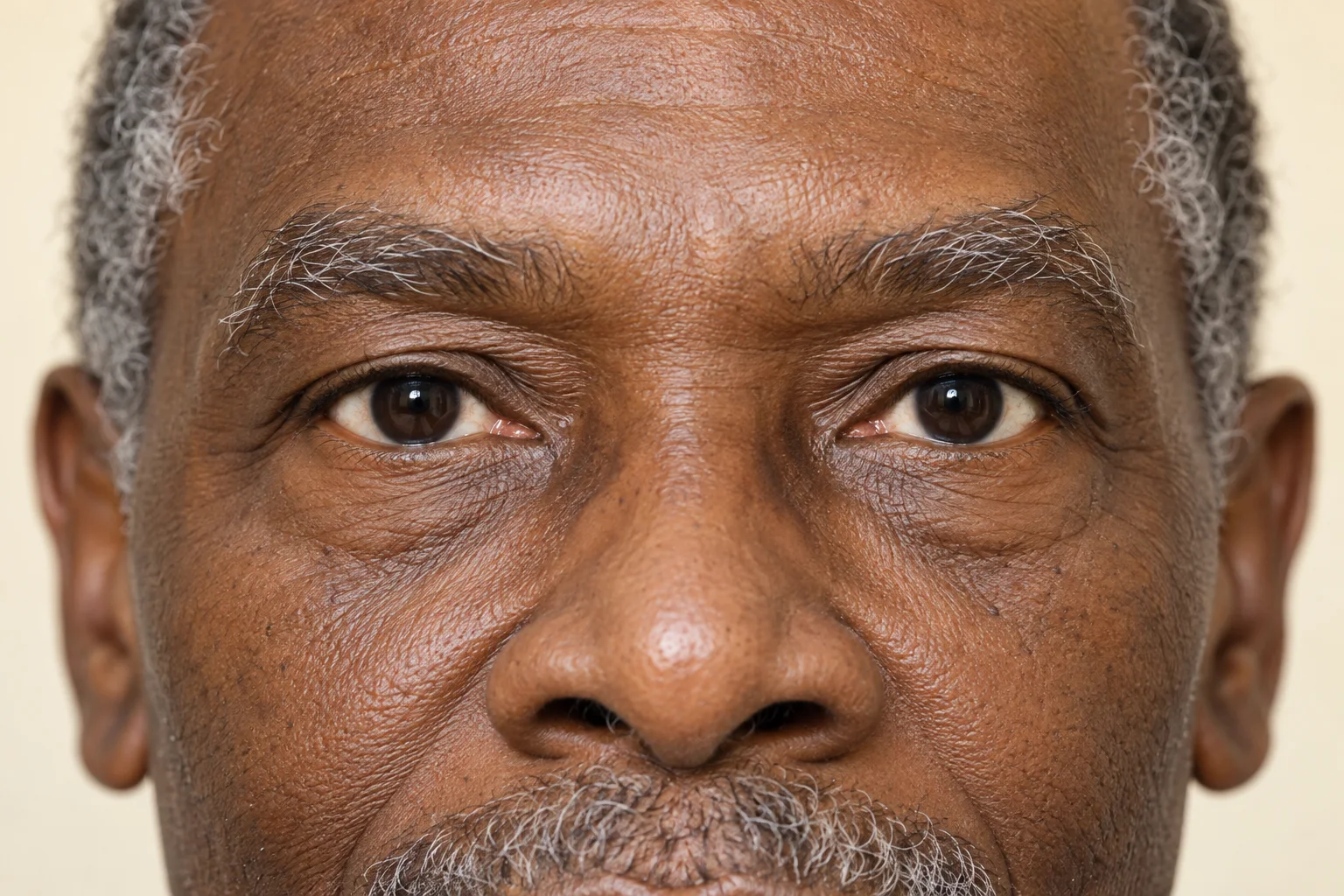
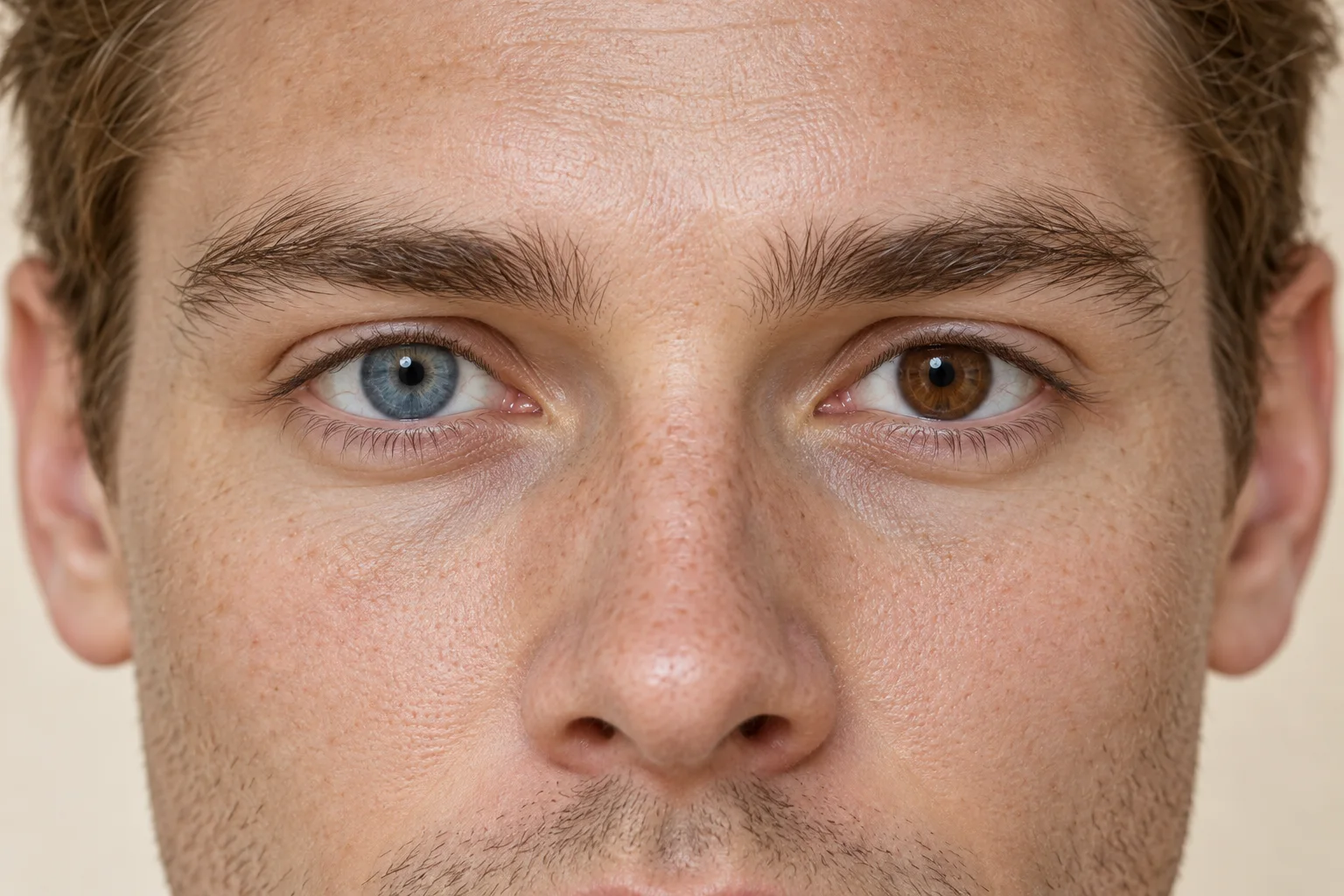
What eye color do I have? How the eye color test reads it
A face model running in your browser places 478 points on your face, five of them on each iris: its center and four points on its edge. That gives us a circle for each iris. We don’t read the whole circle:
- The pupil is cut out. The inner third of the circle is pupil and its dark edge, so we start reading 35% of the way out.
- So is the rim. Most irises have a darker ring at their edge (the limbal ring), so we stop at 92% of the way out.
- Lids and lashes stay out. The ring is cut to the outline of your eye opening, so skin and lashes that cover part of the iris aren’t read.
- The darkest and brightest pixels are dropped. We sort what’s left from dark to light and drop the darkest 30% (shadows from lashes, the deep folds of the iris) and the brightest 15% (reflections of windows and lights). The color you see is the middle of what remains.
- The light’s tint is taken out. A sunset, a lamp, or a pink-walled room tints everything in a photo, and light eyes have so little pigment of their own that the tint can make a gray-green iris read brown. The white of your eye should be close to white, so we measure the tint it picked up and remove the same tint from that iris, within limits, so a naturally yellowish white can’t push a brown eye toward blue.
- The color is named from the outer part. Many light eyes have a gold or brown ring around the pupil, so the name comes from the iris beyond 60% of the way out, the color most people see first. Your swatches show the color after the tint is taken out.
Each pixel is turned into Lab color, the color space researchers use to measure iris color from photos (Edwards et al., 2016). In plain words, Lab splits a color into three numbers: lightness (0 is black, 100 is white), color strength (how far from gray it is), and hue, an angle that says which color it is: about 40 is red-brown, 70 gold, 130 green, and 230 blue. Both eyes are read on their own and together.
The name comes from where your reading lands. First, light eye or brown eye: a brown iris has warmth, at least3 of strength at a red-brown to gold hue (15 to 75), or 5 toward olive, up to hue 100. Anything cooler or grayer is a light eye. Then these lines, in order:
| Color | What the reading needs |
|---|---|
| Dark brown | Darker than 26, unless the iris is clearly blue |
| Gray | A light eye with almost no color (strength under 3.5) |
| Blue | A light eye with a hue between 200 and 340 |
| Green | A light eye with a hue between 75 and 200, too little warmth for brown |
| Amber | A brown eye with strength 20 or more, a gold to copper hue (55 to 80), and lighter than 36 |
| Hazel | A brown eye with an olive-gold hue, 80 to 100 |
| Light brown | A brown eye lighter than 44 |
| Brown | Any other brown eye |
A camera reads irises far duller than they look in a mirror, so the strength numbers are small. When your reading sits within a few points of a line, the result names both colors, like “between hazel and amber”.
What a photo can and can’t tell
Your iris doesn’t change color from day to day, but the light on it does, and so does what a camera records. Lamps, clothes, and makeup can make eyes look bluer, greener, or more golden, which Cleveland Clinic describes as an optical illusion. That is why the test checks the white of your eyes first: if it’s too dark or strongly tinted, your iris is too, and we ask for another photo instead of naming a color that isn’t yours.
Two colors in one eye. A ring of gold or brown right around the pupil (central heterochromia) sits inside the part we name the color from, so the test names the main color of the iris and doesn’t try to judge the ring. Two eyes of different colors are a different story: those we compare, and if they read far apart in even light, the result tells you. The heterochromia guide shows all three kinds.
Contacts, filters, and edited photos change the color a camera sees, so the test can only read what’s in the photo. Babies are a special case too: their eye color can take up to three years to settle (Cleveland Clinic). A real change in an adult’s eye color, especially in one eye, is a reason to see an eye doctor, not a photo tool.
Eye color comes from melanin in the iris (Sturm and Larsson, 2009), and the amount runs on a smooth range, not eight boxes. The names are a useful shorthand; your swatches show where you really sit.
How to take a photo for the eye color test
- Face a window in daylight. Turn off lamps and skip the flash. Overcast daylight is best.
- Take off your glasses and turn off beauty filters. Lenses reflect light and tint what’s behind them.
- Look straight into the lens with your eyes open naturally. A turned head puts one eye in shadow.
- Get close. Your eyes should fill a good part of the photo, so each iris is plenty of pixels across.
- Hold still and tap your eyes to focus before you shoot.
Eye color is one of the three colors a color season is built from, with your skin and hair. Your result lists the seasons that often go with your eyes; the seasonal color analysis reads all three from one selfie. Your eyes are one part of your face the GoodSkin app doesn’t read: it scores your skin, with 14 traits from one selfie, including pigmentation, dark spots, and redness.
Frequently asked questions
Why does my eye color look different in every photo?
Because a camera records the light as much as the iris. Warm lamps push eyes toward gold and green, shade and cool light push them toward gray, and the colors you wear change what stands out. Cleveland Clinic calls these changes an optical illusion: the iris itself stays the same. Window daylight gives the truest reading.
What is the difference between hazel and amber eyes?
Hazel is two colors in one iris, usually brown or gold near the pupil and green toward the edge. Amber is one even gold or copper color with no green in it. On the test, both are warm and colorful; a hue that leans toward green reads hazel, and a gold to copper hue with strong color reads amber.
Can the eye color test detect heterochromia?
It can flag two different colored eyes: each iris is read on its own, and if the two land far apart in even light, the result says so. It does not try to read a ring of color around the pupil (central heterochromia), because the pupil edge is cut out of the sample. A mirror check in daylight is the better test for that.
How accurate is the eye color test?
It reads exactly what your camera recorded, so the photo matters more than anything else. It refuses photos that are too dark, blurry, tinted by lamps, or taken through glasses rather than guess, and when a reading sits close to the line between two colors, it names both.
Is my photo uploaded?
No. The face model and the color reading run in your browser, so your photo stays on your device. The result card is drawn on your device too.
More free tools
Your best skin starts with one scan
Download GoodSkin, take a selfie in good light, and see where your skin stands today.


Scan with your phone camera