Eye colors, two at once
Heterochromia: two different colored eyes, types, and causes
Heterochromia means having more than one iris color: one eye a different color from the other, a patch of another color in one iris, or a ring of a different color around the pupil. Many people with it were born that way, and for them it is often a harmless trait caused by a genetic change that affects only eye color (Cleveland Clinic). Heterochromia that appears or changes in adulthood is different: it can signal an eye problem and should be checked by an eye doctor (AAO).
The three types of heterochromia
Doctors describe heterochromia by where the second color sits (AAO):
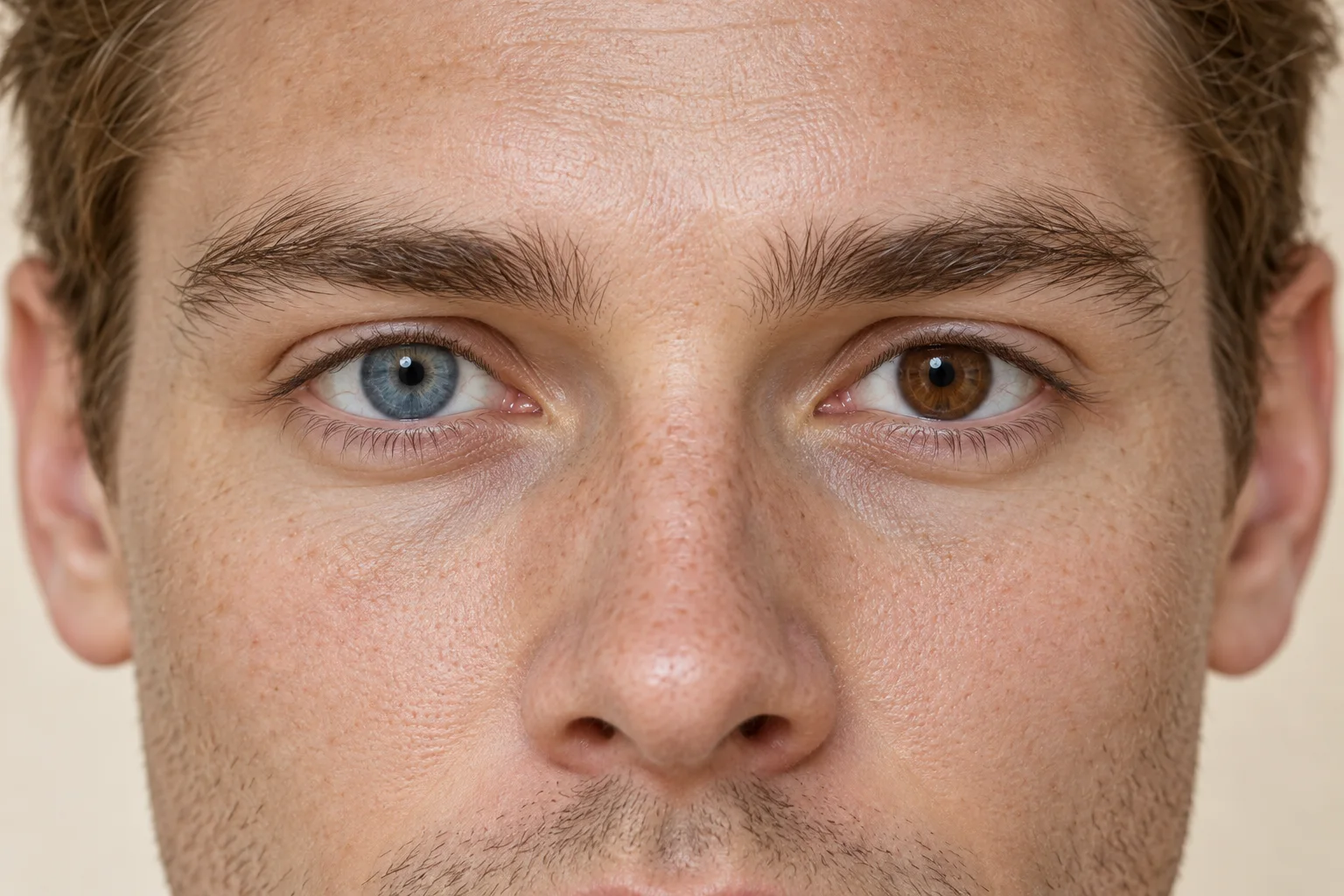
Complete
One iris is entirely a different color from the other, such as one blue eye and one brown.
Sectoral
A wedge or patch of one iris differs from the rest of it. Also called partial heterochromia.
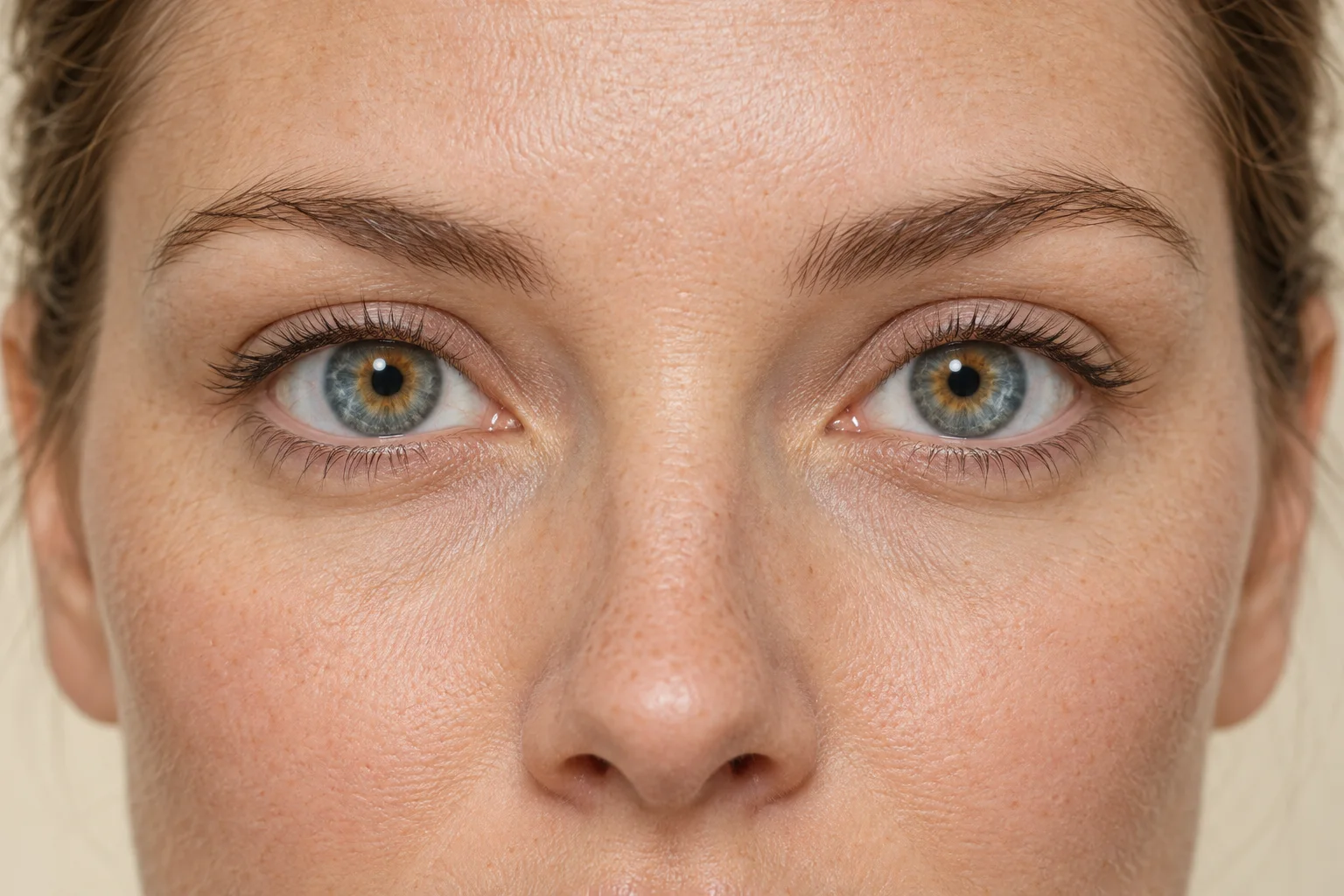
Central
An inner ring around the pupil differs from the rest of the iris, often gold or brown against a lighter iris.
Two different colored eyes: complete heterochromia
Complete heterochromia is the version most people picture: one eye blue and the other brown, or one green and one hazel. The lighter eye has less melanin, the brown pigment of the iris, in its front layer than the darker eye.
When it has been there since birth or infancy and nothing else is wrong, it is usually a harmless quirk. Babies with heterochromia should still be examined by an eye doctor, because a few congenital causes, such as Horner syndrome and Waardenburg syndrome, come with other signs (AAO). Waardenburg syndrome, which affects about 1 in 40,000 people, can bring very pale blue eyes or eyes of two colors, and hearing loss in some people (MedlinePlus).
Cleveland Clinic advises telling your pediatrician if a baby with heterochromia also has a small pupil or a drooping eyelid (Cleveland Clinic).
Central heterochromia: a ring of color around the pupil
In central heterochromia, Cleveland Clinic describes one iris with "an inner ring that's a different color from the rest," which "may look like spikes extending outward from the pupil" (Cleveland Clinic). The inner ring is often gold or brown against a lighter blue, gray, or green iris, like the drawing below.
- Inner ring. Gold or brown around the pupil.
- Collarette. The ridge where the two colors meet.
- Outer iris. A lighter color, with less pigment.
Nobody has measured how many people have central heterochromia, and even for heterochromia as a whole, Cleveland Clinic says the exact share of the population is unknown (Cleveland Clinic). A ring you have always had needs no treatment. One that appears or spreads in adulthood is a change, and worth showing an eye doctor.
What causes heterochromia?
Causes fall into two groups: heterochromia you are born with or that shows up soon after birth, and heterochromia that develops later (AAO, Cleveland Clinic).
Present from birth or infancy
- A harmless genetic change that affects only eye color, a common cause
- Congenital Horner syndrome, a problem with the nerves to one side of the face
- Waardenburg syndrome, which can also affect hearing
- Rarer syndromes that affect the skin, nerves, or gut, such as Sturge-Weber syndrome, piebaldism, and Hirschsprung disease
Developing later in life
- An eye injury, or bleeding inside the eye
- Inflammation inside the eye (iritis or uveitis)
- Fuchs heterochromic iridocyclitis, a mild, long-lasting inflammation
- Glaucoma, and some glaucoma eye drops such as latanoprost
- Latisse, an eyelash serum made from a glaucoma drug
- Eye surgery
- Pigment dispersion syndrome, where pigment rubs off the back of the iris
- Tumors of the iris, harmless or cancerous
- Diabetes
- Central retinal vein occlusion, a blocked vein at the back of the eye
- Acquired Horner syndrome
- Neuroblastoma, a childhood cancer
Two of the later causes are worth knowing by name. Latanoprost-type glaucoma drops darken the iris by adding melanin, most often in mixed-color eyes such as green-brown and hazel, and using them in one eye only can leave permanent heterochromia (latanoprost prescribing information). Fuchs heterochromic iridocyclitis usually affects one eye, usually leaves that eye the lighter one, often causes no pain or redness, and can lead to cataract and glaucoma (EyeWiki).
When a change in eye color means you should see an eye doctor
Heterochromia you have had all your life is a trait. A new difference is a symptom. The American Academy of Ophthalmology advises seeing an ophthalmologist if heterochromia appears in adulthood or changes in appearance (AAO), and Cleveland Clinic says the same for any change in your eye color or the way your eyes look (Cleveland Clinic). Book an appointment if:
- One eye, or part of one iris, changes color in adulthood, slowly or suddenly.
- A freckle on the iris grows or changes its shape or color (AAO).
- A color change comes with a red eye, strong sensitivity to light, blurry vision, or sudden floaters, which can be signs of uveitis; the AAO says to contact an ophthalmologist right away (AAO).
- A baby has heterochromia, especially with a small pupil or a drooping eyelid on one side.
- Your eye color changes after an eye injury, eye surgery, or starting new eye drops.
An eye doctor can look at the iris under a slit lamp, a microscope with a bright light, check the pressure in the eye, and decide whether you need further tests. Some causes, such as neuroblastoma in a child, need quick diagnosis and treatment (Cleveland Clinic). This page can show you what the types look like; only an exam can tell you why your eyes differ.
Can heterochromia be treated or changed?
Harmless heterochromia needs no treatment, and there is no treatment for the color difference itself. When a condition is behind it, doctors treat that condition (Cleveland Clinic).
If you would like your eyes to match for a day, colored contact lenses can do it. They still need a prescription, even when they do not correct your vision (Cleveland Clinic).
Makeup and colors for two different colored eyes
Eyeshadow
Neutral, warm shades flatter two colors at once: bronze, taupe, soft brown, and champagne. To make one eye the focus, use the shades for that color on both lids; the other eye will simply look warm.
Eyeliner
Soft brown liner frames both eyes without favoring either. For central heterochromia, a gold or copper pencil on the inner corner picks up the inner ring.
Lashes and brows
Mascara on both eyes evenly; the color difference is the feature, so keep the frame matched.
Clothes near your face
A color that sits between your two eye colors flatters both: teal between blue and brown, olive between green and brown. For your color season, judge by your skin and hair and the eye people notice first.
TealCamelNavyOliveFrequently asked questions
Is heterochromia genetic?
Often. Harmless, isolated genetic changes are a common cause, and some people inherit that change from a parent (Cleveland Clinic).
Does heterochromia affect vision?
Harmless heterochromia does not. Some conditions that cause it later in life can, such as the glaucoma and cataract that can come with Fuchs heterochromic iridocyclitis (EyeWiki), which is one more reason to get a new color difference checked.
Is central heterochromia the same as hazel eyes?
They overlap. A gold or brown ring around the pupil is common in green and hazel eyes, as our green eyes guide shows. When the inner and outer colors are clearly different, like amber inside blue, people call it central heterochromia; when they blend, they call it hazel.