Face shapes: the 6 types and how to tell yours
Every face is described by three widths and one length: forehead, cheekbones, jaw, and the distance from hairline to chin. Which width is largest, and how long the face is next to it, decides the shape.
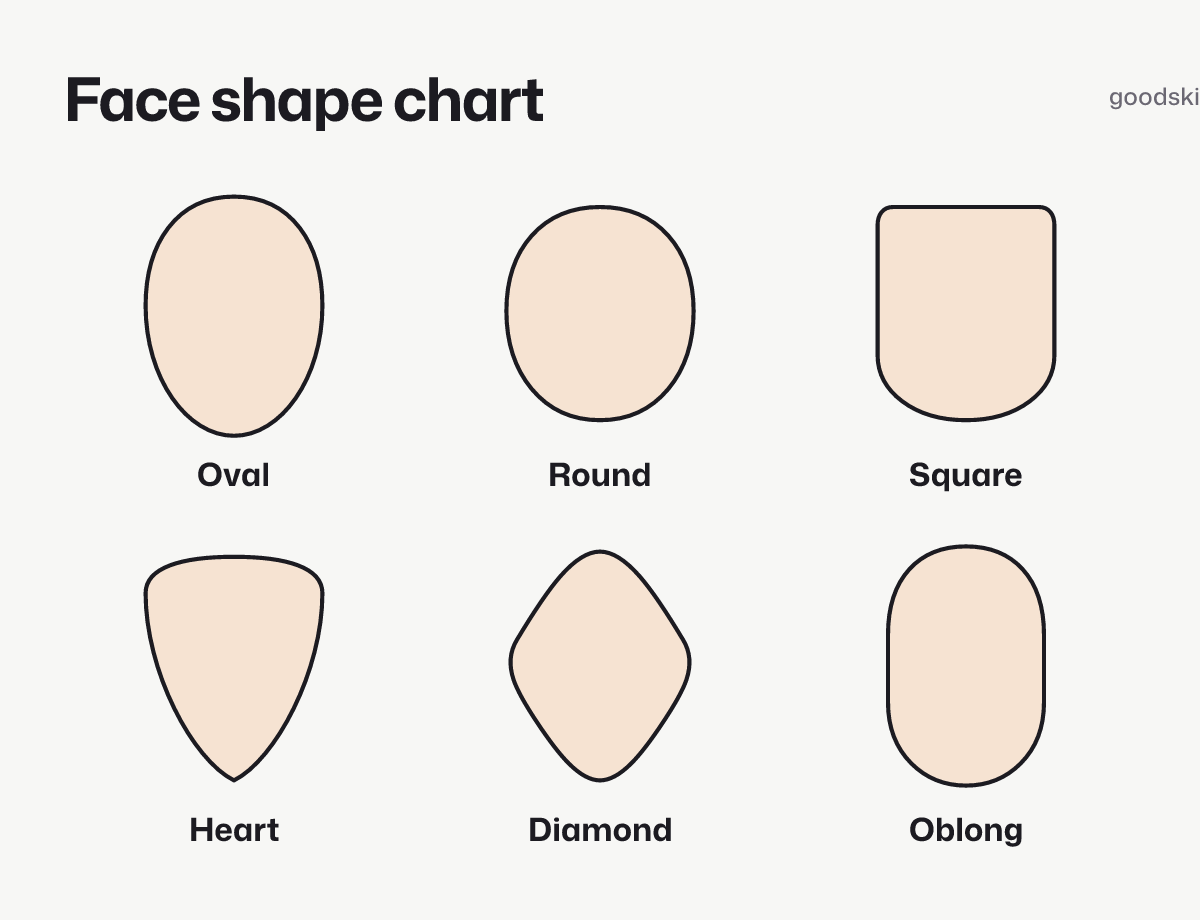
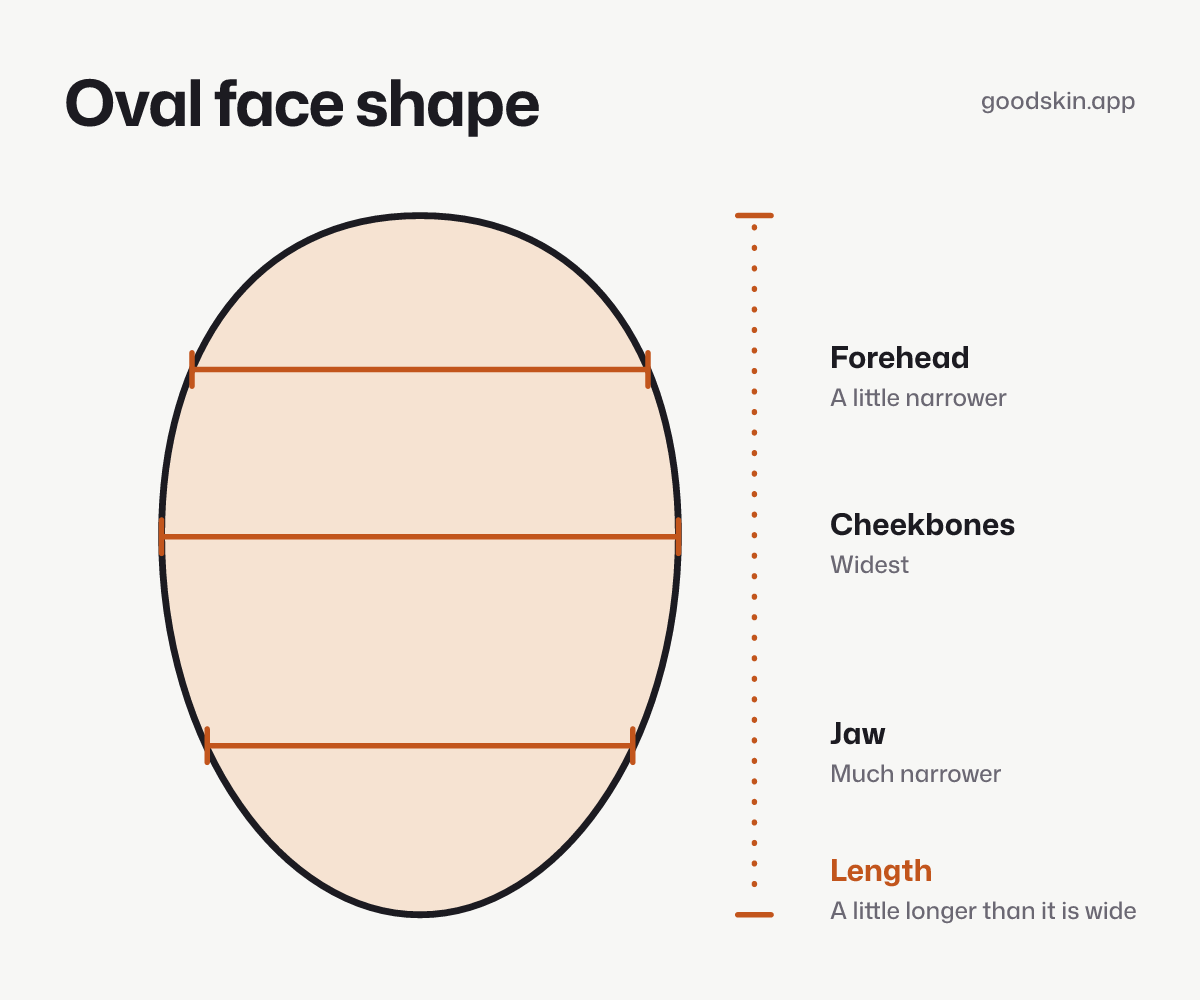
Find my face shape- OvalA little longer than wide, with the cheekbones widest and a soft jaw.
- RoundAbout as wide as it is long, with full cheeks and a soft jaw.
- SquareForehead, cheekbones, and jaw close in width, with an angular jaw.
- HeartForehead widest, tapering to a narrow, pointed chin.
- DiamondCheekbones widest, with a narrower forehead and jaw.
- OblongClearly longer than wide, with fairly even widths.
How to measure your face shape
You need a soft tape measure and a mirror. Pull your hair back first.
- Forehead: across the widest part, halfway between your brows and hairline.
- Cheekbones: across the highest point of each cheekbone, just below the outer corners of your eyes.
- Jaw: from the tip of your chin to the corner of your jaw below the ear, then double it.
- Length: from the middle of your hairline to the tip of your chin.
Then compare the numbers:
- Length clearly the largest, with even widths: oblong.
- Length a little larger, cheekbones widest, soft jaw: oval.
- Length and width about equal, soft jaw: round.
- All three widths close, angular jaw: square.
- Forehead widest, narrow pointed chin: heart.
- Cheekbones widest, narrow forehead and jaw: diamond.
Prefer not to measure? The face shape detector takes the same measurements from a selfie, and the photo never leaves your device.
Face shape FAQ
What are the 6 face shapes?
Oval, round, square, heart, diamond, and oblong. They are told apart by three widths (forehead, cheekbones, and jaw), by how long the face is compared with its width, and by whether the jaw and chin are soft or angular.
What is the most common face shape?
There is no reliable data on how common each shape is. Most faces sit between two shapes, and the same face can read differently depending on the photo angle, hairline, and weight, so treat your shape as a useful label rather than a fixed category.
Can your face shape change?
The bone structure underneath stays the same in adulthood, but the outline can shift. Weight gain or loss changes fullness in the cheeks and jaw, skin and fat lose volume with age, and puffiness from salt, alcohol, or short sleep can soften the jawline for a few hours.
What if I am between two face shapes?
That is normal. Read both guides and use the advice that matches your strongest feature: if your jaw is the angular part, follow the square tips for haircuts at the jaw, and the other shape for everything else. The face shape detector also tells you when your face leans toward a second shape.
Face shape is one of 14 traits
A GoodSkin scan reads your face shape along with pores, redness, texture, and more, and shows what to work on first.


Scan with your phone camera