Eye color guide
Brown eyes: the world's most common eye color, explained
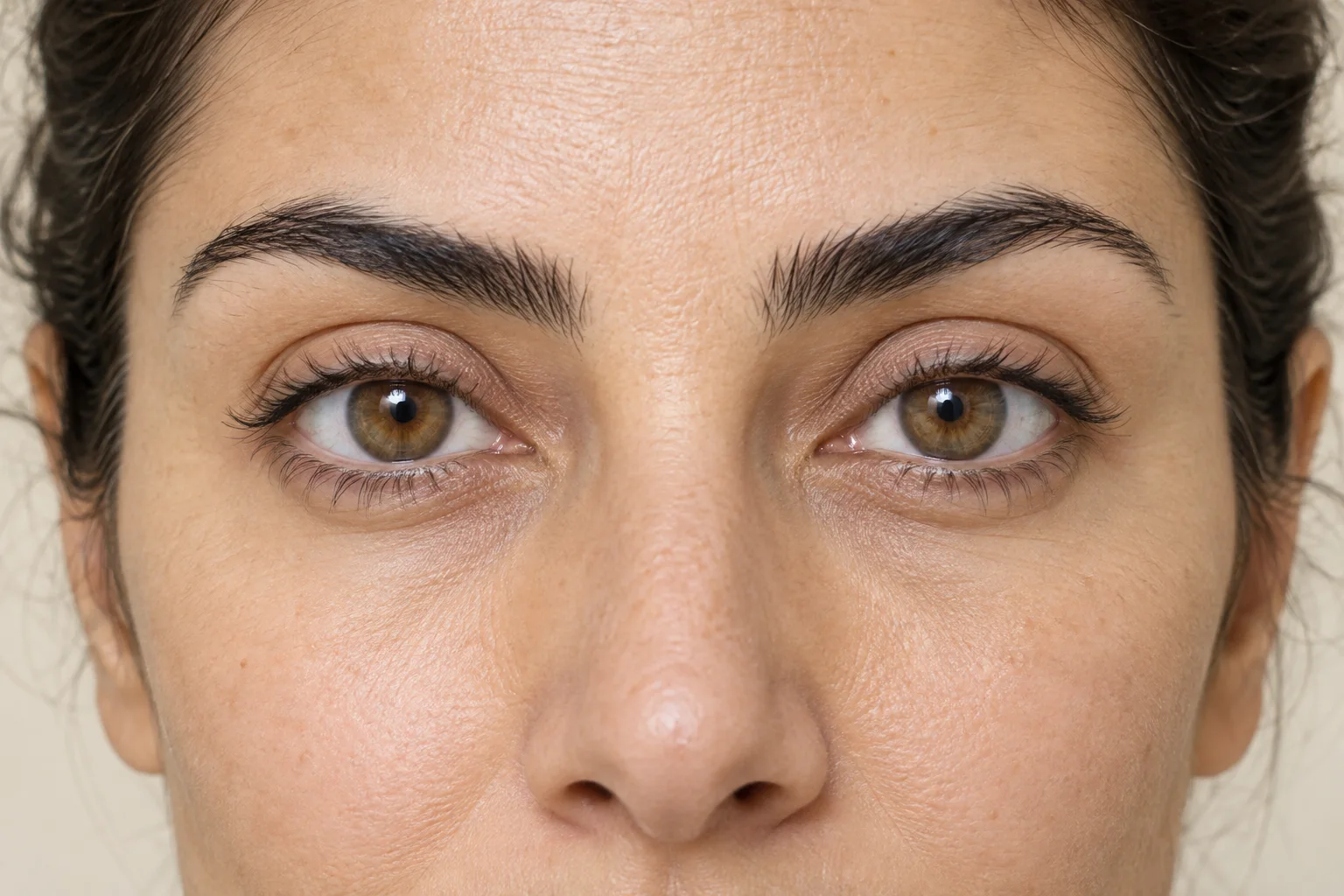
Brown eyes are the most common eye color in the world: more than half of all people have them, according to the American Academy of Ophthalmology. The color comes from plenty of melanin, the dark pigment in skin and hair, in the front layer of the iris, which absorbs most of the light that enters instead of scattering it back. Brown runs from light honey to nearly black, and up close most brown eyes show far more pattern than they get credit for.
How common are brown eyes worldwide?
Brown is the default for most of the world: across most of Africa, Asia, and much of the Americas, brown eyes are the norm, and the reason light colors stay rare is laid out in our green eyes guide.
- Over 50%of people worldwide have brown eyesAmerican Academy of Ophthalmology
- About 50%of people in the United States have brown eyesAmerican Academy of Ophthalmology
- 21% to 26%of Dutch adults in the Rotterdam Study had brown eyes, where light eyes dominateLiu et al., 2010
The American Academy of Ophthalmology links the spread of brown eyes to the sun: high levels of melanin help protect the eyes, hair, and skin from the sun's rays, and brown eyes are more common in hot regions (AAO).
What makes eyes brown?
Every iris has a dark back layer. What differs from eye to eye is the front layer, the stroma, a web of fibers with pigment cells in it. In a brown iris those cells are full of melanin; in a blue iris they hold very little. The number of pigment cells is about the same in both, and it is the amount of pigment inside them that differs (Sturm and Larsson, 2009).
Brown irises also hold more of the dark form of melanin, eumelanin, compared with the red-yellow form than lighter irises do (Wakamatsu et al., 2008). Pigment that dense absorbs light before the fibers can scatter it, so the blue effect never shows, and the more melanin there is, the darker the brown (AAO).
- Light enters the iris.
- A little warm brown light comes back; there is no blue scatter to see.
- The front layer is packed with melanin, mostly the dark form, which absorbs most of the light near the surface.
- Hardly any light gets as far as the dark back layer.
Is brown dominant? How brown eyes are inherited
The school rule that brown always beats blue is too simple. Darker colors do tend to win, so brown usually beats green and green often beats blue, and two brown-eyed parents are more likely to have a brown-eyed child; but a child's eye color is not a blend of the parents' colors, and other results happen (AAO).
A single region of chromosome 15, which holds the genes OCA2 and HERC2, accounts for about 74% of the variation in eye color in the research Sturm and Larsson reviewed (2009). Many smaller effects make up the rest, which is why brothers and sisters can end up with different shades of brown, or one with brown eyes and one with hazel.
What brown eyes look like up close
From across a room, brown eyes read as one solid color. Up close, in good light, a brown iris has as much structure as any other.
- Collarette. The wavy ridge partway out, often lighter than the rest.
- Crypts. Small pits where the front layer is thinner.
- Contraction furrows. Curved folds near the rim, made as the iris opens and closes.
- Freckle (nevus). A small dark dot where pigment has collected.
All four are very common (Sturm and Larsson, 2009). Cleveland Clinic estimates that about 1 in 10 people have freckles in their eyes, and advises contacting a provider if one changes in size or color (Cleveland Clinic).
Shades of brown eyes
Brown is a whole family. Two of its ends have their own guides.
- Light brownHoney to caramel
- Medium brownWarm and even
- ChocolateDeep, with red in it
- Dark brownNear-black indoors
Makeup and colors for brown eyes
Eyeshadow
Brown eyes suit nearly every shade, so pick by mood. Navy and plum add contrast and make brown look richer; bronze, gold, and copper warm it; emerald makes any amber in the iris show.
Eyeliner
Black liner makes brown eyes look deeper; navy or plum liner makes them look lighter and warmer. Both work, which is not true for every eye color.
Lashes and brows
Black mascara is the classic choice. Brows matched to your hair, not darker, keep the frame even.
Clothes near your face
Strong, cool colors like cobalt, emerald, and plum make brown eyes stand out against them. Camel, chocolate, and cream echo the iris for a warm, tonal look.
CobaltEmeraldPlumCamelChocolateColor seasons for brown eyes
Medium brown eyes fit both warm and cool seasons. Warm brown with golden skin points to True Autumn or Soft Autumn; cool, cocoa brown with rosy skin points to True Summer or Soft Summer.
- Warm and soft
True Autumn
Also called Warm AutumnGolden or copper coloring that comes alive in spice tones. - Soft and warm
Soft Autumn
Golden but muted, with colors like dried herbs and clay. - Cool and soft
True Summer
Also called Cool SummerPink or rosy skin, ash hair, and blue-based mid-tones. - Soft and cool
Soft Summer
Low contrast, smoky eyes, and dusty, blended color.
Frequently asked questions
Are brown eyes healthier than light eyes?
Each has trade-offs. The American Academy of Ophthalmology says people with brown eyes have lower rates of some eye diseases, including eye cancer, but cites a study in which they were about twice as likely to develop cataracts (AAO).
Can brown eyes get lighter?
A little, in some people: in one long twin study, 9% of the mothers had irises that lightened by two or more steps on a 15-step color scale over the study's follow-up (Bito et al., 1997). One eye turning lighter than the other is different; see when to see an eye doctor.
Why do my brown eyes look green in the sun?
If the outer edge turns green or olive in sunlight, your eyes may be hazel rather than brown. Try the daylight test in our hazel guide.