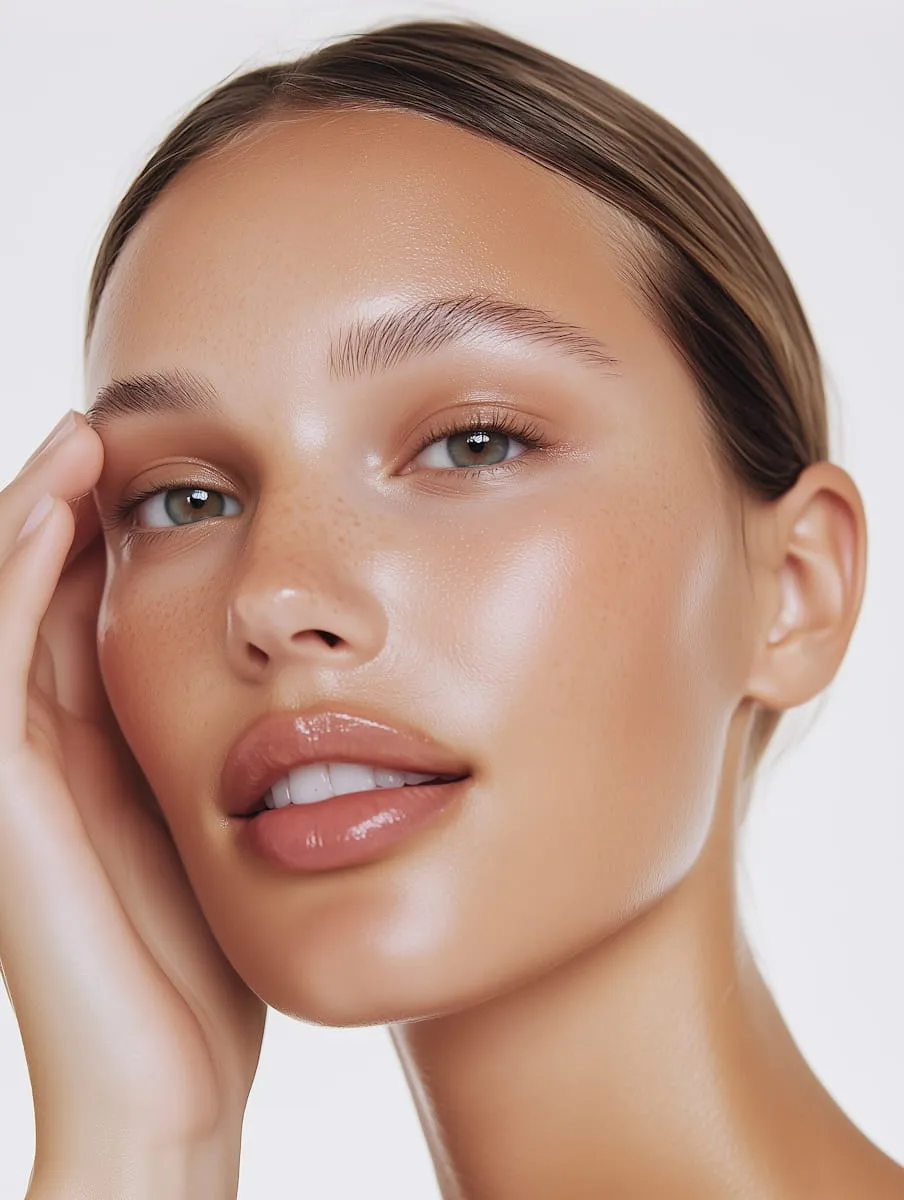
Eye shapes, opening
Almond eyes: what they look like and how to tell
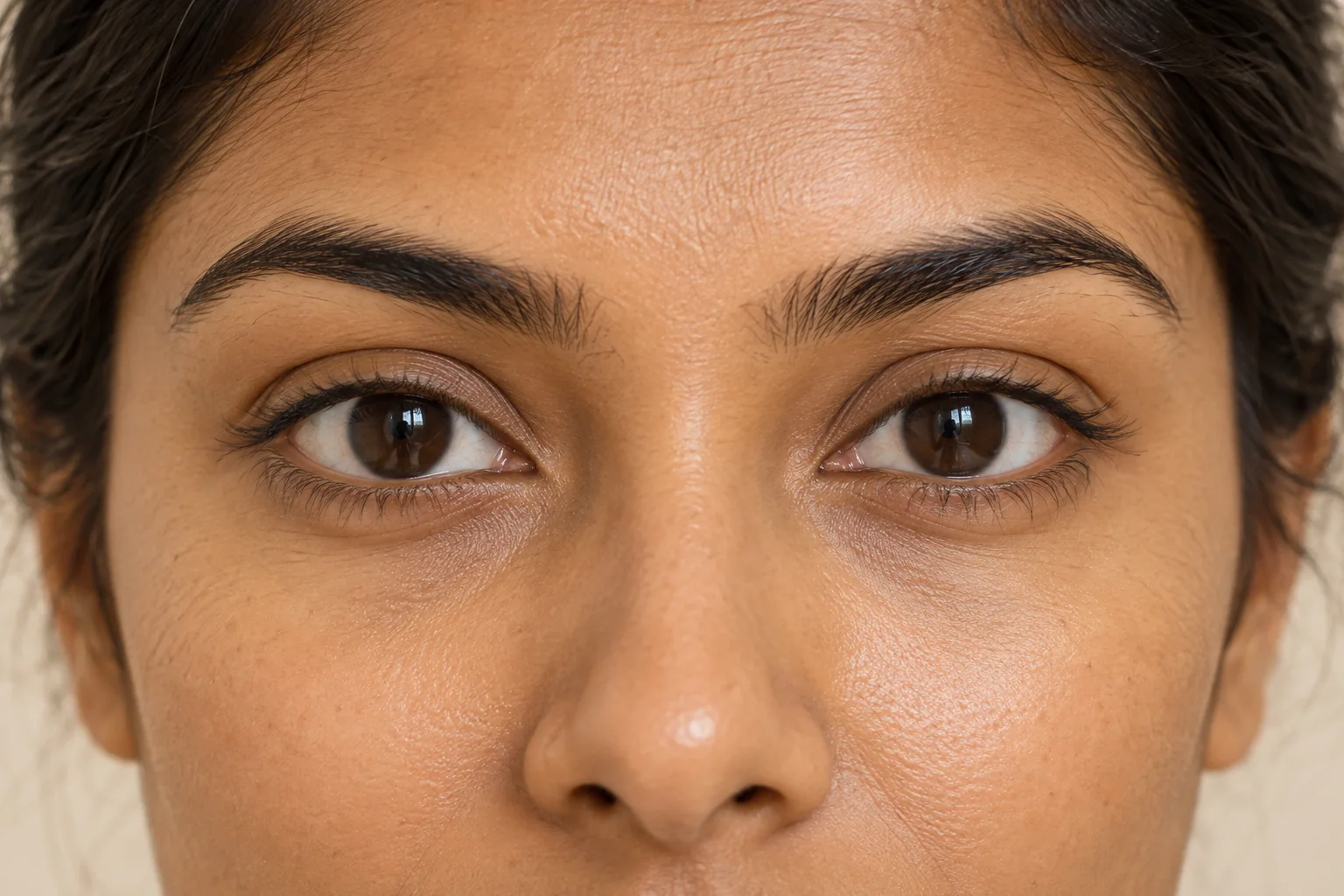
Almond eyes are wider than they are tall, with an upper lid that arches gently and a lower lid that curves a little less, so the opening tapers to a point at both corners. The giveaway is the iris: the upper lid covers a sliver of its top and the lower lid touches or just covers its bottom, so no white shows above or below it. Almond is the reference shape most makeup advice is written for, which makes nearly every technique an option.
How to tell if you have almond eyes
Look straight into a mirror in daylight, with your face relaxed and your chin level, and check these:
- Your eye opening is clearly wider than it is tall, about three times as wide.
- Looking straight ahead, you cannot see white above or below the colored part of your eye.
- Both corners come to a point rather than rounding off.
- The highest point of your upper lid sits near the middle of the eye, over or just inside the pupil.
- Your outer corners sit about level with your inner corners, or a little higher.
How almond eyes vary
Almond is a range, not a single outline. Long, narrow almond eyes sit at one end and fuller ones that are almost round sit at the other, and the same person can read differently with a relaxed face and with a smile, because the cheeks push the lower lid up.
Almond describes the opening only, so it combines freely with the other readings. An almond eye can have a visible crease, a hooded fold, or no crease at all, and it can tilt up, down, or sit level. That is why you will see "hooded almond" or "upturned almond" used as full descriptions.
Your two eyes rarely match exactly. A difference of a few hundredths in their openings is normal, and the detector shows each eye's reading so you can see it.
Almond vs round vs upturned eyes
Almond vs round
Look at the iris. On round eyes you can see the whole circle, often with white below or above it, and the opening is tall for its width. On almond eyes the lids cut across the top and bottom of the iris.
Almond vs upturned
Both are long and tapered, so check the corners. Draw an imaginary line from your inner corner to your outer corner: if it climbs clearly toward your temple, you have upturned eyes. If it runs about level, you are a classic almond.
Makeup for almond eyes
Eyeliner
Almond eyes can wear almost any line, so choose by the effect you want. A thin line tight to the upper lashes defines without changing the shape; a wing that follows the angle of your lower lid, extended upward toward the tail of the brow, adds lift. Keep the wing short if your eyes are already long.
Eyeshadow
Use the classic placement: a light shade on the lid, a medium matte shade blended into the crease, and a deeper shade in a sideways V at the outer corner. Because your crease is usually visible, the crease shade shows exactly where you put it.
Mascara and lashes
Curl and coat from root to tip, a little heavier at the outer third to lengthen the shape. Full strip lashes suit almond eyes because the lid has room for them.
What to skip
- Rimming the whole eye in dark liner on a small almond eye: closing the inner corners shortens it.
- Very long wings on long eyes: past a certain point they drag the look sideways.
An everyday look, step by step
- Sweep a neutral matte shade across the lid and into the crease.
- Pat a soft shimmer on the center of the lid, over the iris, where the light hits first.
- Press a deeper matte into the outer V and blend it up toward the end of the brow.
- Line the upper lashes and flick the end up along the angle of your lower lid.
- Curl your lashes and add two coats of mascara, the second only on the outer half.
Brows and glasses for almond eyes
Brows
Brows with a soft arch over the outer third of the iris echo the almond curve. Avoid a very high, sharp arch, which can make a balanced eye look surprised.
Glasses
Most frame shapes suit almond eyes. Aim for frames whose top rim follows your brow line and that are about as wide as your face at the temples; round and oval frames soften a long eye, and rectangles sharpen it.
Common combinations
Each eye shape describes one part of the eye, so most almond eyes come with other traits too. These pairings come up most often:
Hooded almond eyes are one of the most common combinations: an almond opening with a fold of skin over the crease. Follow the hooded rules for shadow placement and the almond rules for liner.
Most monolid eyes have an almond-shaped opening. Liner and lash advice for almond eyes works, but shadow goes higher, because there is no crease to blend into.
Upturned almond eyes have the lifted outer corner many people try to draw on with a wing. Follow the lower lid with your liner to keep it.
Check your eye shape from a photo
The detector measures each eye's height square to the line between its corners and divides it by the eye's width. Openings under 0.40 read almond, and so does a slightly taller one if the lower lid still covers the bottom of the iris. Measured adults average a height of about 8.4 mm on a width of about 27 mm, close to 0.31 (Fry et al., 2017); the face model traces the lids along the lash lines, so relaxed eyes usually read a little higher, around 0.33 to 0.35, and most land on the almond side.
Frequently asked questions
Are almond eyes rare?
No. Almond is the shape most adult eyes fall into when you compare height with width, which is why makeup guides use it as the reference. There are no reliable figures for how common any eye shape is, because there is no medical standard for the categories.
Can you have almond eyes and hooded eyes?
Yes. Almond describes the shape of the opening and hooded describes the lid above it, so the two often come together. If a fold of skin hides your crease when your eyes are open, use the hooded eye rules for shadow.
How do I know if my eyes are almond or round?
Look straight into a mirror and check whether you can see white above or below the colored part of your eye. If the lids cut across the iris, your eyes are almond; if the whole circle shows with white around it, they lean round.
Do almond eyes look good with winged liner?
Almond eyes are the easiest shape for a wing, because the tapered corner gives a natural angle to follow. Draw the wing as an extension of your lower lash line, angled toward the tail of your brow.