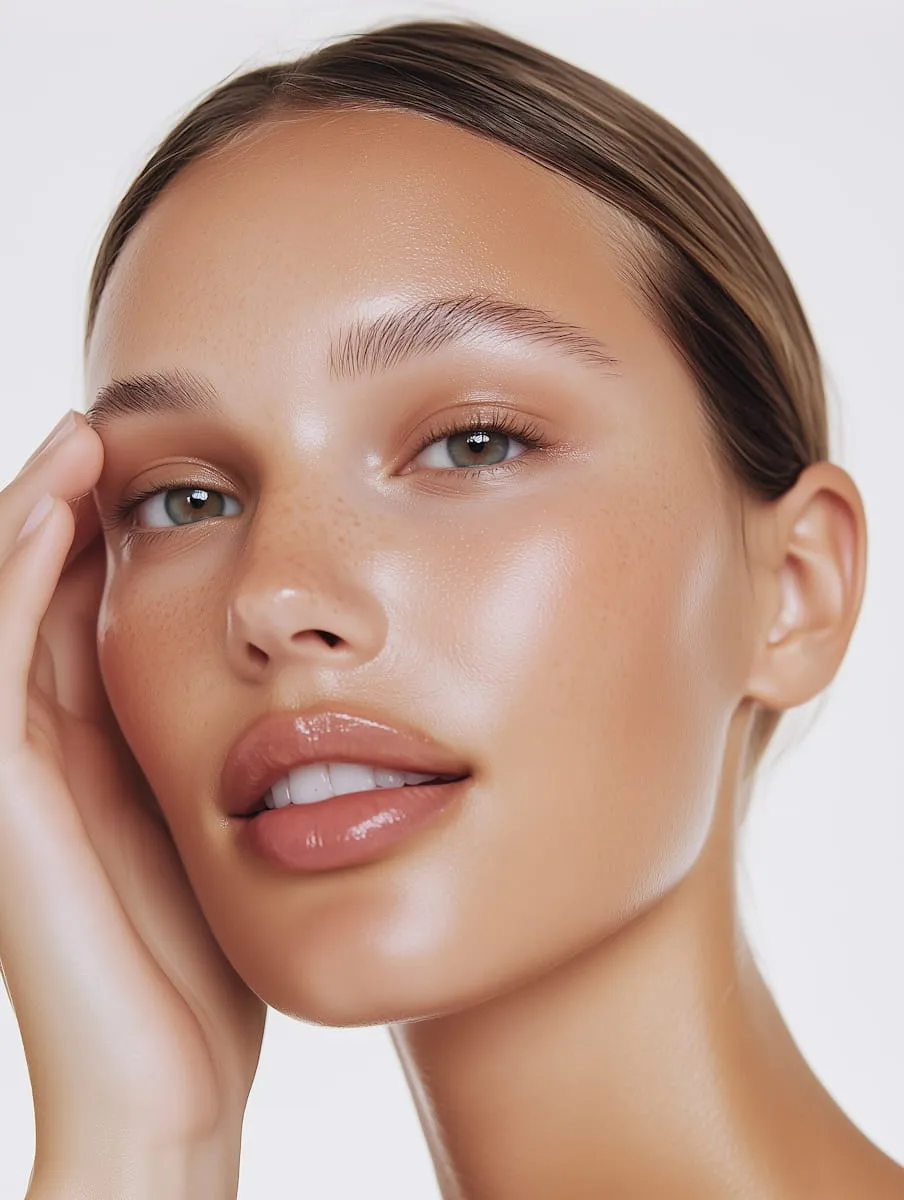
Eye shapes, combination
Hunter eyes: what they are, and what can change
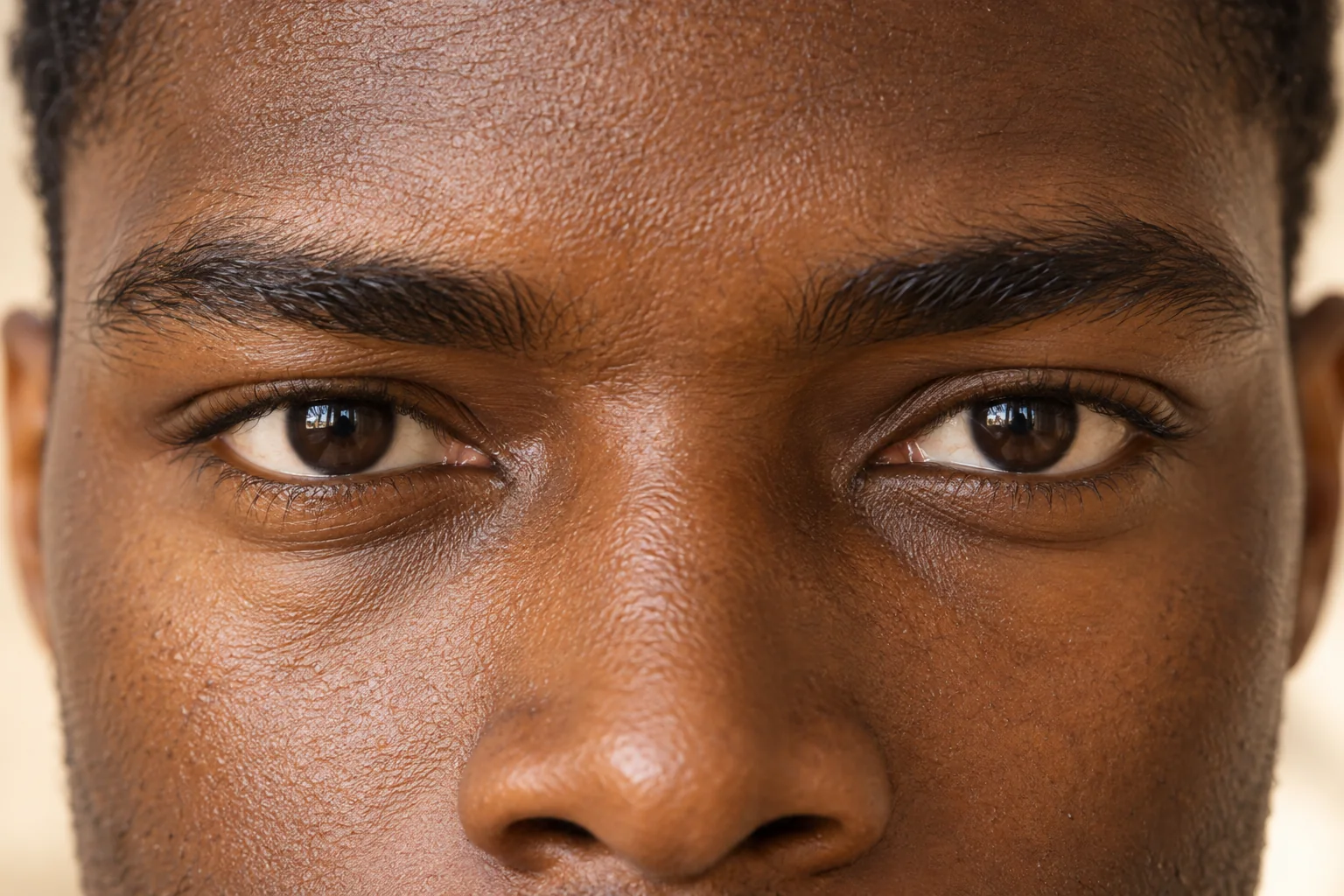
Hunter eyes is a term from online looksmaxxing communities for a set of features that tend to come together: deep-set eyes under a strong, low brow, a positive canthal tilt (outer corners a little higher than the inner ones), very little visible upper eyelid, and a fairly straight lower lid. It is not a medical or anatomical category, and most of what creates it is bone structure. The opposite is often called prey eyes: round, open eyes with lots of lid showing and a level or downward tilt.
How to tell if you have hunter eyes
Look straight into a mirror in daylight, with your face relaxed and your chin level, and check these:
- From the side, your brow bone sits clearly in front of your eyes.
- With your eyes open and relaxed, little or none of your upper lid shows between your lashes and your brow.
- Your outer corners sit a little higher than your inner corners.
- Your lower lid runs fairly straight rather than curving down.
- Your brows sit low and fairly straight, close to the eyes.
How hunter eyes vary
The features behind hunter eyes are mostly set by bone: a projecting brow ridge, the depth of the eye sockets, and where the outer corner of the eye is anchored. A strong brow ridge is more common in men, which is why the term comes up mostly in discussions of male faces.
Tilt is the most measurable part, and averages differ between groups: in one photo study, the outer corner sat on average about 2 to 3 degrees above the inner corner in non-Latino white adults and about 8 degrees in East Asian adults (Fry et al., 2017). A positive tilt on its own is common; hunter eyes are the combination.
Photos exaggerate or hide it. Tipping the chin down makes the eyes look more upturned and the lids more covered, and tipping it up does the opposite (Vaca et al., 2021). Many "hunter eyes" photos are taken from slightly above with the chin lowered.
Hunter vs deep-set vs upturned eyes
Hunter vs deep-set
Every hunter eye is deep-set, but not every deep-set eye is a hunter eye: deep-set eyes can be round, level, or downturned, with a high brow and plenty of lid.
Hunter vs upturned
Upturned eyes share the positive tilt, but they can sit at any depth and show plenty of lid. Hunter eyes add depth, a low brow, and a covered lid.
Grooming and makeup for a hunter eye look
Eyeliner
Tightlining the upper waterline with a dark pencil darkens the lash line without adding visible makeup, which mimics the shadowed, low-lid look. A short, thin line at the outer third, angled slightly up, adds tilt; this is the idea behind the fox eye trend.
Eyeshadow
A soft matte brown or taupe blended just above the lid and out toward the end of the brow deepens the area under the brow and adds a sense of depth. Keep it subtle; visible shadow reads as makeup rather than structure.
Mascara and lashes
Defined, dark lashes at the root frame a narrow opening. For a natural look, a clear or brown mascara on the top lashes is enough.
What to skip
- Shimmer on the lid: it brings the lid forward, which is the opposite of the look.
- Brows lifted high or arched: hunter eyes rely on a low, straight brow.
An everyday look, step by step
- Brush brows straight and slightly down, trimming only stray hairs above the line.
- Tightline the upper waterline with a dark brown pencil.
- Blend a soft taupe just above the lid, out toward the end of the brow.
- Add a fine, short line at the outer third, angled up.
- Finish with brown mascara on the upper lashes.
Can you get hunter eyes?
Mostly not without surgery, because the features come from bone: how far your brow ridge projects, how deep your eye sockets are, and where your outer corner is anchored. Being honest about that saves money and risk.
What does change things: body fat, because lower facial fat makes the brow and cheekbones look more defined and the eyes more set back; sleep and fluid, because puffy lids show more lid and look rounder; brow grooming, because a low, straight, full brow narrows the lid space you see; and photos, because camera height and a slightly lowered chin change apparent tilt.
What does not: there is no evidence that mewing, facial exercises, eye taping, or squinting change the tilt or depth of your eyes. Squinting tightens the lower lid for a moment, which is why the look appears in photos, and stops when you relax.
Surgical options exist, including canthoplasty to raise the outer corner, brow procedures, and fat grafting, but they are elective operations on healthy eyes. Cosmetic canthoplasty in particular has a known list of complications, including a misshapen outer corner, the corner slipping back to where it was, exposed pink lining at the corner, and a lower lid that turns outward (Kim et al., 2016). Anyone considering it should see a board-certified oculoplastic surgeon, not a clinic selling a look.
Hunter eyes vs prey eyes
Prey eyes is the term the same communities use for the opposite set: round, open eyes, plenty of visible lid, a level or downward tilt, and a higher brow. They are often described as friendly, youthful, and approachable, and they are just as common in faces people find attractive.
Research on tilt is limited. One study found judges preferred female faces with a slightly increased tilt over unedited ones (Bashour and Geist, 2007), but no study has shown that hunter eyes are attractive on their own, apart from the face around them.
Brows and glasses for hunter eyes
Brows
Brows are the biggest lever you control. A full, low, fairly straight brow that sits close to the eyes narrows the visible lid and adds to the hunter look. Over-plucking the underside or a high arch does the opposite.
Glasses
Frames with a straight, strong top rim, such as rectangles, browlines, and square wayfarers, echo a low, straight brow. Round frames soften the look.
Common combinations
Each eye shape describes one part of the eye, so most hunter eyes come with other traits too. These pairings come up most often:
Hunter eyes are the combination of deep-set and upturned, plus a low brow and little visible lid.
A fold of skin that covers the lid can create the "little lid shows" part of the pattern, especially with a low brow.
Hunter eyes almost always have a long, narrow almond opening rather than a round one.
Check your eye shape from a photo
The detector measures the parts a photo can: your tilt (above +5 degrees reads positive, class II in the classification of Lee, Choung, and Choung, 2020), and your opening (a long, narrow almond opening). It asks you about depth, which a front photo flattens. If your tilt is positive, your opening is almond, and you say your eyes are deep-set, your result notes the hunter eyes pattern. The canthal tilt calculator measures the tilt alone, in more detail.
Frequently asked questions
What are hunter eyes?
A looksmaxxing term for deep-set eyes with a positive canthal tilt, little visible upper lid, a low and straight brow, and a fairly straight lower lid. It is a description, not a medical category.
Can you get hunter eyes naturally?
Not in the bone structure that creates them. Lower body fat, good sleep, and low, straight, groomed brows can make the look stronger, but no exercise, mewing, or taping has been shown to change eye tilt or depth.
Are hunter eyes attractive?
Some people find them striking, and one study found a slightly increased eye tilt was preferred in female faces. No study shows hunter eyes are attractive on their own, and round, open eyes are just as common in faces people rate highly.
How do I know if I have hunter eyes?
Check four things: a positive tilt, deep-set eyes under a strong brow, little visible upper lid, and a fairly straight lower lid. The eye shape detector measures your tilt and opening from a photo and asks about depth.