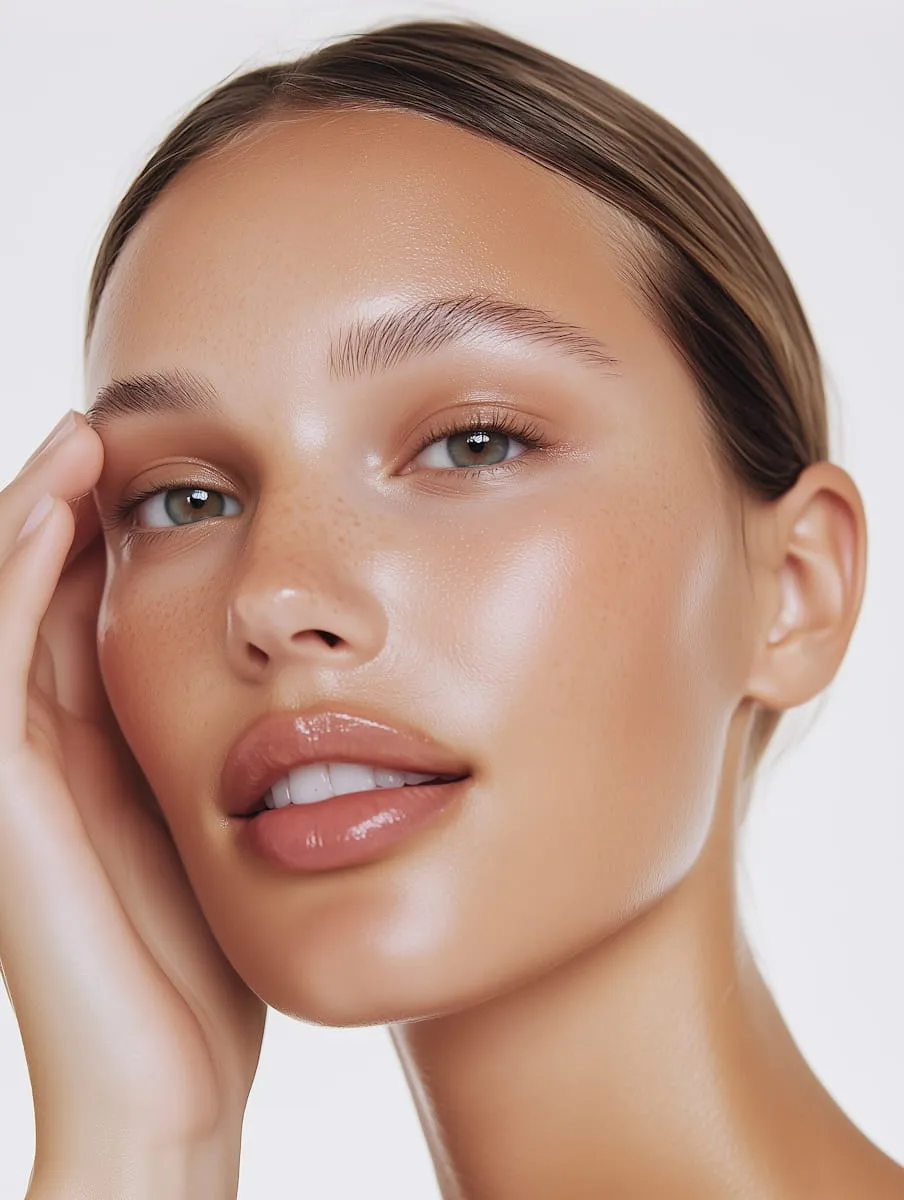
Eye shapes, depth
Protruding eyes: how to tell, and makeup that balances them
Protruding eyes, often called prominent eyes, sit forward of the brow bone and cheek, so a large, rounded lid shows between the lashes and the crease and it catches the light. As a lifelong feature it is simply a shape: it often runs in families, and many prominent eyes are also round. Makeup uses matte, deeper shades on the lid to sit it back, which is the opposite of the advice for deep-set eyes.
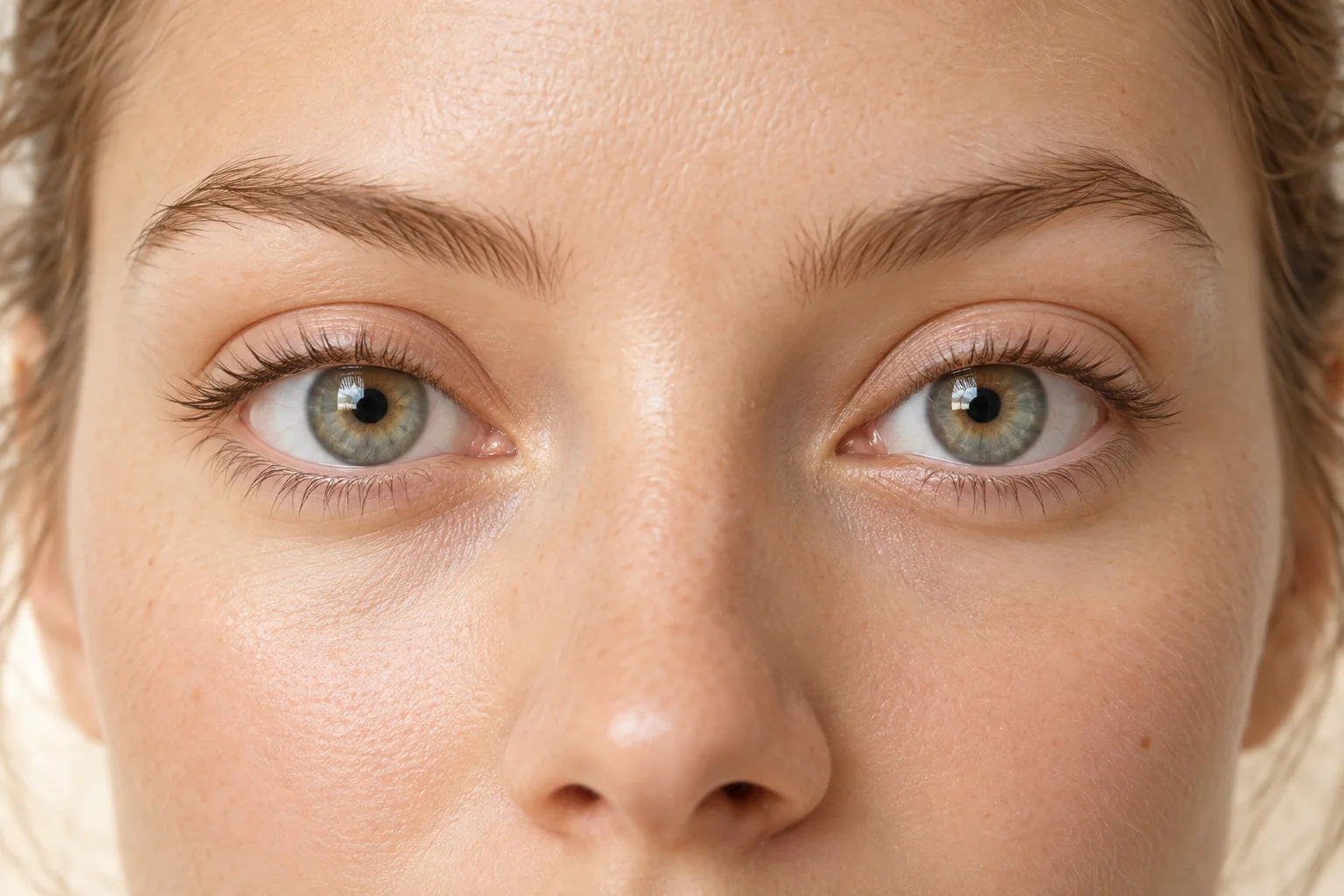
How to tell if you have protruding eyes
Look straight into a mirror in daylight, with your face relaxed and your chin level, and check these:
- From the side, your eyelids sit level with or in front of your brow bone.
- A large area of lid shows between your lashes and your crease.
- Your lids catch the light and look rounded, especially in photos with flash.
- You often see a little white below or above the iris.
How protruding eyes vary
Prominent eyes run in families and are shaped by the bones around the eye: a flatter brow ridge and shallower sockets let the eye sit further forward, and the lids look larger and rounder as a result.
Eyes that start to bulge, or that look more prominent than they used to, are different. The most common cause is thyroid eye disease, an autoimmune condition that swells the tissue behind the eye, and a sudden change, bulging in one eye, pain, redness, or double vision needs a doctor promptly (Cleveland Clinic).
Prominent eyes can have any opening or tilt. The most common pairing is with a round opening, which shows the most white of any combination.
Protruding vs round vs deep-set eyes
Protruding vs round
Round eyes describe the outline from the front; prominent eyes describe how far forward they sit. A round eye at an average depth has a normal amount of lid; a prominent eye shows a large, curved lid.
Protruding vs deep-set
Opposites on the same check. Deep-set eyes sit behind the line from brow to cheek and their lids fall into shadow; prominent eyes sit in front of it and their lids catch the light.
Makeup for protruding eyes
Eyeliner
A medium-thick line along the upper lashes reduces the visible lid and frames the eye. Tightlining the waterline adds definition. Smudged liner on the outer lower lash line balances white that shows below the iris.
Eyeshadow
Matte, medium-to-deep shades on the lid make it recede; blend the deepest one across the lid and up into the crease. Keep shimmer and highlighter off the lid, which already catches the light, and use them only at the inner corner if at all.
Mascara and lashes
Volume at the root frames the eye. Mascara on the lower lashes, especially the outer half, balances a large upper lid.
What to skip
- Shimmer or glitter across the lid: it makes a forward lid look larger.
- A thin line with nothing on the lower lashes: it leaves the white below the iris unframed.
An everyday look, step by step
- Prime the lid and set it with a matte powder.
- Blend a medium matte shade across the whole lid and into the crease.
- Deepen the outer corner and blend it softly upward.
- Line the upper lashes in a medium-thick line and tightline the waterline.
- Smudge a soft brown under the outer half of the lower lashes and coat top and bottom lashes.
When prominent eyes need a doctor
Eyes you have always had are a shape. A change is a symptom. See a doctor if your eyes start to look more prominent, if one eye bulges more than the other, or if bulging comes with redness, pain, grittiness, a staring look, double vision, or blurred vision.
Thyroid eye disease is the most common cause of bulging eyes, and early treatment matters for comfort and vision (Cleveland Clinic). It can show up before other thyroid symptoms, so mention it even if your thyroid tests have been normal.
Brows and glasses for protruding eyes
Brows
A fuller, well-defined brow balances a large lid and draws attention upward. Fill gaps and keep the brow at its natural height or slightly lower at the tail.
Glasses
Frames with a substantial top rim and darker or tortoiseshell color sit visually in front of the eye and reduce the lid area you see. Lenses for nearsightedness make eyes look smaller, which some people with prominent eyes find balancing.
Common combinations
Each eye shape describes one part of the eye, so most protruding eyes come with other traits too. These pairings come up most often:
Round and prominent together show the most lid and white. Matte shadow and soft lower liner balance both.
Prominent, wide-set eyes look striking. Bring deeper color toward the inner corners.
A prominent eye with a downward tilt reads soft. Lift the outer corner with matte shadow angled up.
Check your eye shape from a photo
Depth is not something a front-facing photo can measure, so the detector asks you to check your profile. If your eyes sit forward of your brow bone, your result reads protruding. From the photo it also measures whether white shows around your iris, which often goes with prominent eyes.
Frequently asked questions
What causes protruding eyes?
Lifelong prominent eyes come from facial structure, such as shallow eye sockets and a flatter brow ridge, and often run in families. Eyes that start to bulge later are most often caused by thyroid eye disease (Cleveland Clinic).
Are protruding eyes and bulging eyes the same?
In everyday talk they overlap. In medicine, bulging or proptosis means an eye pushed forward from its normal position, often by swelling behind it. A prominent eye you were born with is a shape, not a condition.
What eyeshadow suits prominent eyes?
Matte, medium-to-deep shades across the lid make it recede. Keep shimmer off the lid and use it only at the inner corner.
Can protruding eyes be reduced?
Makeup and frames change how prominent eyes read. When bulging comes from thyroid eye disease, medical treatment and sometimes surgery can reduce it; for a lifelong prominent eye, surgery to change it is rarely done.