Tone & undertone
Skin undertones: warm, cool, neutral, and olive explained
Not sure if you have warm, cool, or neutral undertone skin? Learn what undertone means, five quick tests, and why the vein test alone can mislead you.
Key takeaways
- Skin tone is how light or deep your skin is; undertone is the subtle warm, cool, neutral, or olive cast beneath it.
- No single test is reliable, so run three or four and go with the majority.
- Vein color depends on how skin scatters light, how deep the vein sits, and the lighting, so treat the vein test as a weak clue.
- Redness, a tan, or warm indoor light can make your undertone look different from what it is.
- A free undertone test that combines a quiz with a photo check gives you a clearer answer than any one trick.
Your skin undertone is the subtle color beneath the surface of your skin. There are three main types: warm undertone skin (yellow, golden, or peachy), cool undertone skin (pink, red, or bluish), and neutral undertone skin (a balance of both), plus olive, a muted green-yellow that many people miss. To tell which you have, look at your bare face in daylight and compare how gold and silver, and pure white and cream, look against it.
Then check your veins, but do not rely on them alone. The most reliable answer comes from running several tests and going with the majority, which is exactly what our free test does for you.
Free toolSkin tone and undertone testSee how light or deep your skin is, and if you are warm, cool, neutral, or olive.- Light, cool
- Light, neutral
- Light, warm
- Medium, cool
- Medium, warm
- Medium, olive
- Deep, cool
- Deep, warm
What is skin undertone?
Skin tone and undertone are two different things, and mixing them up is the main reason people buy the wrong foundation.
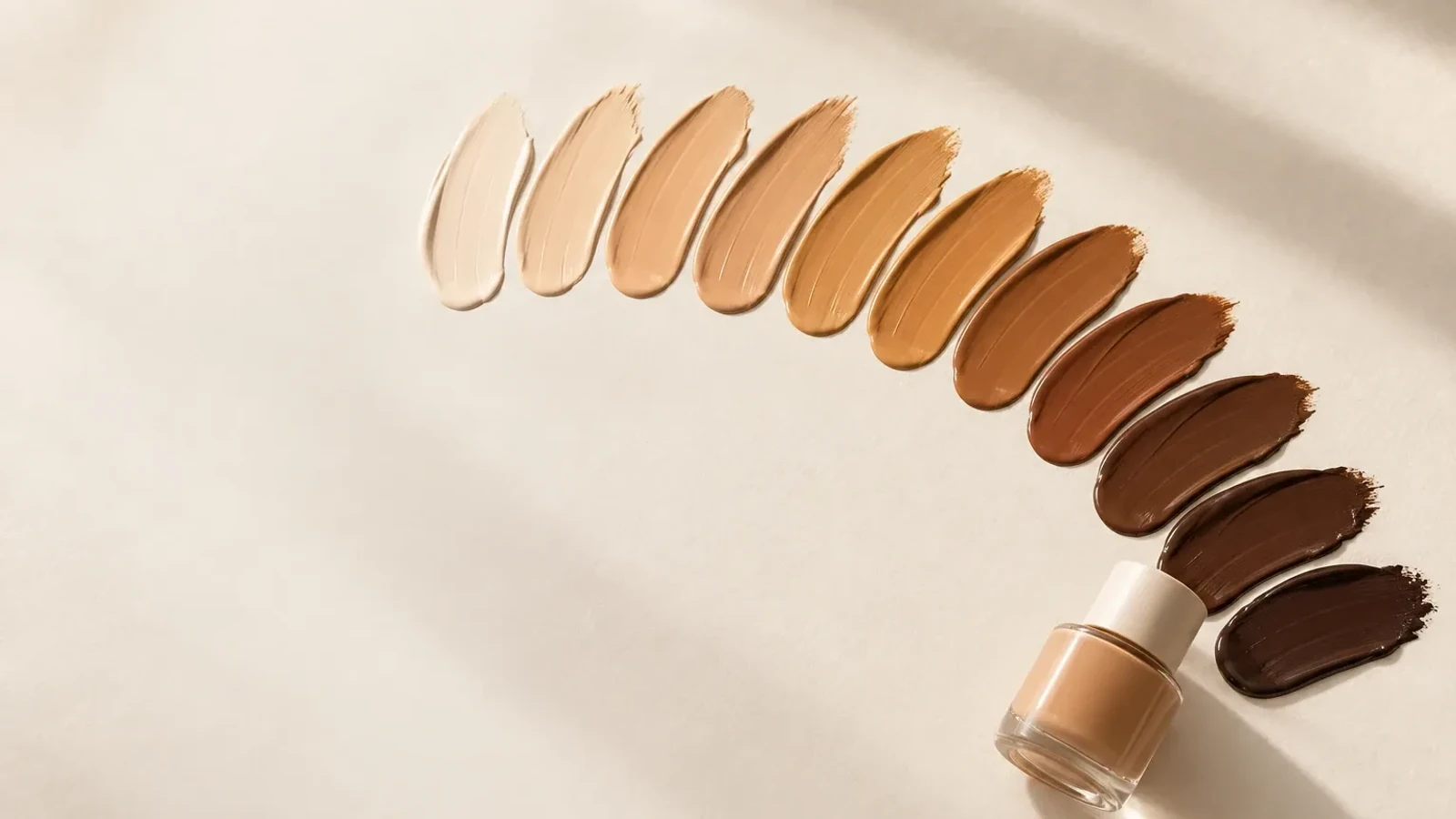
Skin tone (also called surface tone or depth) is how light or deep your skin is: fair, light, medium, tan, or deep. It changes with sun exposure, and it can look different from day to day because of redness, breakouts, or dark spots.
Undertone is the hue underneath that surface color. It is what makes two people with the same depth look different in the same foundation. It stays fairly stable, which is why it is the better guide for choosing colors.
| Skin tone | Undertone | |
|---|---|---|
| What it describes | How light or deep your skin is | The warm, cool, neutral, or olive cast beneath |
| Examples | Fair, light, medium, tan, deep | Golden, peachy, pink, rosy, olive |
| Changes with a tan? | Yes | Not really |
| Used for | Foundation depth | Foundation undertone, clothing, jewelry, hair color |
Where does undertone come from? DermNet explains that skin color comes mainly from two forms of melanin, brown-black eumelanin and yellow-red pheomelanin, plus the red of hemoglobin in small surface blood vessels and a little yellow from dietary carotenoids. Undertone is the overall cast that this mix produces. If you want to see where your depth sits on a broader scale, our skin tone chart lays out the common names from fair to deep.
Warm undertone skin vs cool, neutral, and olive
Warm undertone skin (yellow undertone skin)
Warm undertone skin has a golden, yellow, or peachy cast. It tends to glow in gold jewelry and look healthy in earthy colors like camel, rust, and olive green. In cool, icy shades it can look a little washed out. Most people who search for yellow undertone skin fall here, unless the yellow looks muted or slightly green, which points to olive.
Cool undertone skin (pink undertone skin)
Cool undertone skin has a pink, rosy, red, or bluish cast. Silver and platinum usually flatter it, along with jewel tones like sapphire, emerald, and true red. Golden foundations tend to look orange or yellow on cool skin. A pink undertone is not the same as redness, though, and the difference matters (see below).
Neutral undertone skin
Neutral undertone skin sits between warm and cool, with neither pink nor yellow standing out. Both gold and silver look good, and most colors work. Neutral foundation shades (often labeled N) usually match well. Many people who get mixed results on every test are neutral.
Olive undertone
Olive is a muted yellow with a slight green or grey cast. It is often filed under warm or neutral, but very golden foundations look brassy on it and pink ones look chalky. If that sounds familiar, our full guide to the olive skin tone covers how to confirm it and which shades work.
How to determine your skin undertone: 5 tests
Before you start, wash your face, skip makeup, and stand near a window in natural daylight, out of direct sun. Avoid warm yellow bulbs and colored walls, which tint everything. Then run each test and note whether it points to warm, cool, neutral, or olive.
1. The vein test (and why it is unreliable on its own)
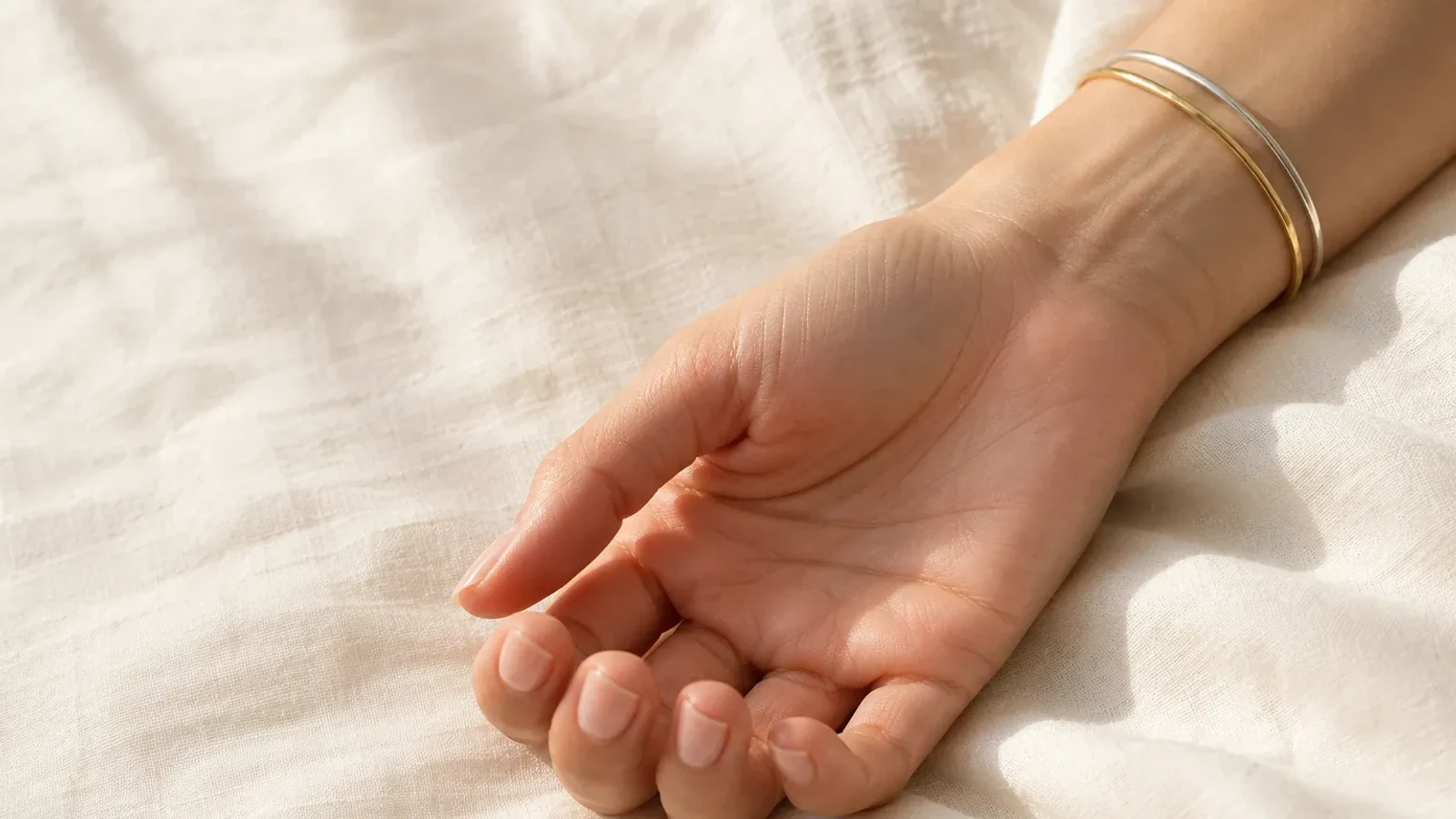
Look at the veins on the inside of your wrist. Greenish veins are said to mean warm, blue or purple veins cool, and a mix neutral.
The problem is that veins do not look blue because of the color of the blood inside them. A classic optics study in Applied Optics found that the color you see depends on how skin scatters and absorbs different wavelengths of light, how deep and wide the vein is, how oxygenated the blood is, and how your eyes perceive color. Skin thickness, vein depth, and lighting all change the result, and on deeper skin the veins can be hard to see at all. Treat this test as one weak clue, never the answer.
2. The jewelry test
Hold a gold piece and a silver piece against your face or neck, one at a time. If gold makes your skin look brighter and more even, that points to warm. If silver does, that points to cool. If both look good, you are likely neutral. Olive skin often looks good in gold but does not get the same healthy glow that clearly warm skin does.
3. The white paper test
Hold a sheet of pure white printer paper (or a plain white T-shirt) next to your bare face. Against stark white, warm skin looks more yellow or golden, cool skin looks more pink or rosy, and neutral skin looks neither. Olive skin often looks slightly green or grey. If your face looks dull against pure white but better against cream or ivory, that leans warm or olive.
4. The sun reaction test
People often say that if you burn easily you are cool and if you tan easily you are warm. This test mostly tells you something else: how much melanin your skin makes, which is what the Fitzpatrick scale measures. DermNet’s phototype guide describes types from “always burns, does not tan” to “never burns”. A fair, warm-toned person can still burn, and a medium, cool-toned person can tan easily.
Use the sun reaction as a tiebreaker at most. If you want to know your sun type for sunscreen planning, try our free Fitzpatrick skin type test instead.
5. The foundation stripe test
This is the most practical test, because it uses the thing you are actually trying to match. Swatch three foundation shades of the same depth on your jaw: one warm (W or golden), one neutral (N), and one cool (C or rosy). Wait 10 minutes, then check in daylight. The stripe that disappears tells you your undertone.
| Test | Warm | Cool | Neutral | Olive |
|---|---|---|---|---|
| Veins | Greenish | Blue or purple | Mixed | Greenish or mixed |
| Jewelry | Gold flatters | Silver flatters | Both work | Gold works, sometimes both |
| White paper | Skin looks golden | Skin looks pink | Neither stands out | Skin looks green-grey |
| Foundation stripe | Golden disappears | Rosy disappears | Neutral disappears | Neutral or olive disappears |
Why your results might disagree
If your answers are split, one of these is usually the cause.
Redness on top of your undertone. Sensitivity, irritation, rosacea, or a recent sunburn can make skin look pink even when the undertone is warm or olive. Check skin that is less prone to flushing, like your jawline or the side of your neck. If redness is the main thing you see, our guide on how to reduce redness on the face is a better next step than a cooler foundation.
A tan. Tanning adds melanin and can make cool skin look warmer for a while. Compare against skin that sees less sun.
Yellowing from diet. Eating large amounts of carrots, sweet potato, or pumpkin can tint skin yellow-orange, especially the palms and the creases beside the nose. DermNet describes this as harmless and reversible, and it is not an undertone. If the whites of your eyes look yellow, see a doctor, because that points to jaundice instead.
Lighting and filters. Warm bulbs push everything golden, and phone cameras often apply automatic color correction. Daylight from a window is the only fair light for this.
What to do with your result
Once you know your undertone, use it to narrow choices rather than to set strict rules.
- Foundation: match the letter code (W, N, C, or O where offered) and then adjust depth.
- Jewelry: go with the metal that won your jewelry test, or wear both if you are neutral.
- Clothing: warm skin tends to suit earthy, golden colors; cool skin suits jewel tones and icy shades; neutral skin can wear most things; olive skin suits rich, muted colors.
- Hair color: ask your colorist to work with your undertone, for example golden or caramel tones on warm skin and ash or cool brown on cool skin.
If you have run the tests and still are not sure, take our skin undertone test. And if you want to look past color to how your skin is actually doing, a selfie-based AI skin analysis shows your skin type, tone, and 14 skin traits in one report.
Sources
Frequently asked questions
Can your skin undertone change?
Your undertone stays fairly stable. Your surface tone changes with tanning, redness, and dark spots, which can make the undertone harder to read, so retest in daylight on untanned skin if your old foundation shade stops matching.
Can you have a cool undertone with dark skin?
Yes. Undertone and depth are separate. Deep skin can have a cool red or blue-leaning undertone, a warm golden one, a neutral balance, or an olive cast, just like fair skin.
Should I check my undertone on my face or my wrist?
Check your face, jaw, and neck, because that is where foundation goes. The inner wrist is often lighter and less sun-exposed than your face, so it can point you to the wrong shade.
Does undertone matter for skin care?
Not much. Undertone matters for color matching in makeup, clothing, and hair. For choosing a cleanser, moisturizer, or treatment, your skin type and concerns matter far more.
This article is general education, not medical advice. GoodSkin is a cosmetic tool and does not diagnose skin conditions. If something hurts, spreads, bleeds, or changes quickly, see a dermatologist.