Tone & undertone
Dark circles under eyes: causes, types, and what actually helps
Dark circles under eyes come from pigment, visible blood vessels, or shadows. Learn which type you have and how to get rid of dark circles of each kind.
Key takeaways
- Dark circles come in three types, often mixed: brown pigment, blue or purple blood vessels showing through thin skin, and shadows from hollows or bags.
- A gentle stretch test and a change of lighting tell you which type you have, and the type decides what will help.
- Pigment fades slowly with daily sunscreen, vitamin C, niacinamide, or a retinoid. Vascular circles improve with sleep, allergy care, and cold. Shadows need makeup or a procedure.
- A peach corrector suits light skin, while medium and deep skin usually need apricot, orange, or red-orange.
- Most dark circles are harmless, but a dark circle or swelling under just one eye should be checked by a doctor.
Dark circles under eyes usually come from one of three things, or a mix of them: extra pigment in the skin (brown), blood vessels showing through thin skin (blue, purple, or pinkish), or a shadow cast by a hollow or a puffy lower lid. They’re rarely a sign of illness. How to get rid of dark circles depends on the type: pigment fades slowly with sunscreen and brightening ingredients, vascular circles respond to sleep, allergy care, and cold, and shadows need makeup, better lighting, or a procedure.
That’s why one person swears by an eye cream that does nothing for their friend. This guide explains the three types, two quick tests to tell which you have, what works for each, how to color correct for your skin tone, and the honest limits of creams.
What causes dark circles under eyes?
The skin under your eyes is some of the thinnest on your body, so anything beneath it, or any change in its color, shows more than it would elsewhere. Cleveland Clinic lists the most common causes:
- Genetics. Dark circles often run in families.
- Aging. Skin thins and loosens, so vessels show more and hollows (tear troughs) form.
- Sun exposure. Sun boosts melanin production, which darkens the area.
- Eye rubbing, eczema, and allergies. Inflammation and rubbing dilate vessels and can leave pigment behind.
- Sleep loss. Tired skin looks paler, so the vessels underneath stand out.
- Lifestyle. Stress, heavy drinking, smoking, and dehydration can all make circles look worse.
Cleveland Clinic also notes that dark circles are more common in people with darker skin tones, where extra pigment around the eyes is often part of the picture.
The 3 types of dark circles
Dermatologists sort dark circles into types because each responds to different treatment. A 2016 review in the Journal of Clinical and Aesthetic Dermatology describes the classification most often used: pigmented (brown), vascular (blue, pink, or purple), structural (skin-colored, but shaded), and mixed.
Pigmented dark circles (brown)
Extra melanin in the skin gives a brown or gray-brown tone, often spreading onto the upper lid or toward the cheek. It’s common in medium and deep skin tones, and it gets darker with sun, rubbing, and irritation.
Vascular dark circles (blue, purple, or pinkish)
Here the color comes from blood vessels showing through thin, translucent skin. It tends to look blue or purple on light skin, is often most obvious at the inner corner, and gets worse when you’re tired, run down, or have allergies.
Structural dark circles (shadows)
The skin itself isn’t darker. A hollow under the eye (the tear trough) or a bag above it casts a shadow, and the shadow reads as a dark circle. These usually get more noticeable with age as the under-eye area loses volume and the fat pads shift forward. If a bulge above the shadow is the main issue, our guide on how to get rid of eye bags covers what changes it.
Most people have a mix, such as some pigment plus a tear trough shadow.
How to tell which type you have
Check in natural daylight, without makeup, facing a window.
The stretch test
Place a finger on your cheekbone and gently pull the under-eye skin down and slightly outward, just enough to stretch it flat. Then watch the color:
- It stays the same: mostly pigment. The 2016 review notes that true pigmentation keeps its appearance when stretched.
- It fades or disappears: mostly a shadow from structure.
- The purple or blue gets more obvious: mostly vascular. The same review describes vascular circles looking more violet on stretching.
The light test
Look straight into a window, then tilt your chin up toward an overhead light. If the darkness shrinks a lot when light hits it head-on, it’s mostly shadow. Pigment and vessels look about the same however the light falls.
| Type | What you see | What helps most |
|---|---|---|
| Pigmented | Brown or gray-brown that stays the same when stretched | Sunscreen, vitamin C, niacinamide, a retinoid, no rubbing |
| Vascular | Blue, purple, or pinkish that gets more obvious when stretched | Sleep, cold, allergy care, caffeine for a short-term lift |
| Structural | A shadow that fades when stretched or lit head-on | Concealer in the hollow, filler or surgery |
How to get rid of dark circles: what works for each type
For pigmented dark circles
Pigment fades slowly, so plan on at least 2-3 months of steady use before you judge anything.
- Daily sunscreen, right up to the under-eye area. This matters more than any eye cream, because sun keeps restarting pigment production. A mineral sunscreen (zinc oxide or titanium dioxide) is less likely to sting near the eyes. Sunglasses help too.
- Vitamin C. A 2024 review of eye cream ingredients found vitamin C creams have been shown to increase under-eye brightness.
- Niacinamide. The same review groups it with caffeine and vitamin E as ingredients shown to reduce pigmentation around the eyes. It’s gentle and pairs well with almost anything.
- A gentle retinoid. Retinoids speed up skin turnover and support collagen, which may help both pigment and thin skin over months, though studies on the under-eye area are limited. Start twice a week, keep it on the bone below the eye rather than on the lid, and skip it if you’re pregnant or breastfeeding.
- Stop rubbing. Rubbing and untreated eczema around the eyes keep adding pigment. If your eyelids itch or flake, that’s worth treating in its own right.
- Prescription lighteners. A dermatologist may suggest hydroquinone or other prescription creams for stubborn pigment. The 2016 review notes hydroquinone usually takes 5-7 months to show its effect, and it needs medical supervision for long-term use.
Our guide to dark spots on the face goes deeper on how these brightening ingredients compare.
For vascular dark circles
- Sleep and a raised pillow. Cleveland Clinic recommends at least seven hours of sleep and raising your head with an extra pillow to stop fluid pooling under the eyes.
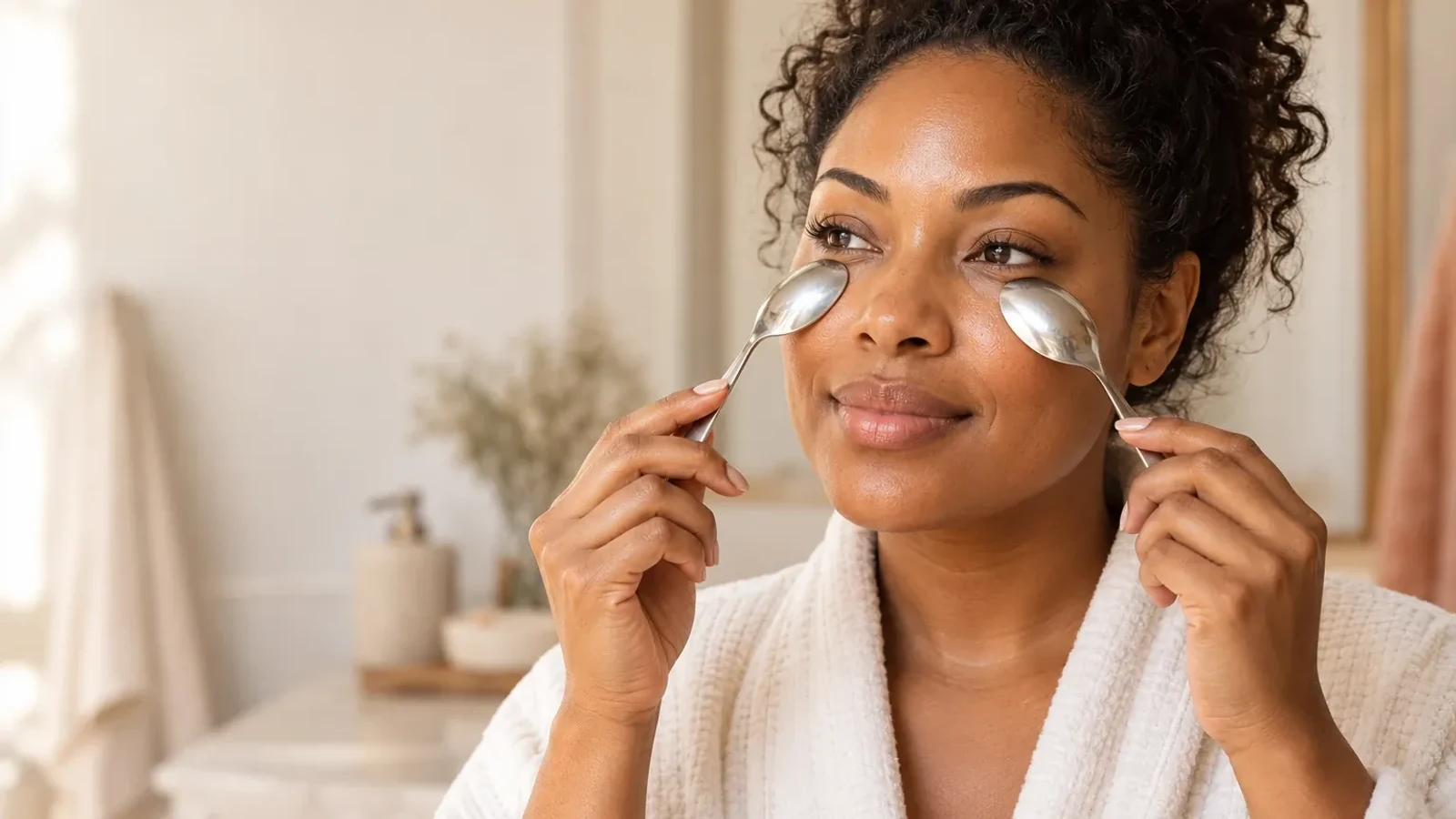
- Cold. A cold compress, chilled spoons, or a gel mask from the fridge narrows dilated vessels for a few hours.
- Caffeine. Caffeine products may narrow vessels a little. The evidence is small: the 2024 review cites a study in 11 women where 3% caffeine pads reduced under-eye darkness after a month. Keeping the product in the fridge adds the benefit of cold.
- Allergy care. Congestion from hay fever or dust mite allergy darkens the under-eye area, and rubbing itchy eyes adds to it. Ask a pharmacist about an antihistamine if this sounds familiar.
- Vitamin C, longer term. In a small study described in the 2016 review, a vitamin C lotion lightened dark circles over six months, mainly by thickening the skin so that congested blood showed through less, not by reducing pigment.
For structural dark circles
No cream can fill a hollow. What helps:
- Better lighting and placement. Overhead light deepens shadows, which is why they look worst in bathroom mirrors and elevator selfies.
- Concealer in the hollow only. Apply a thin layer just in the darkest groove, not across the whole under-eye, and blend outward.
- Treat puffiness if it’s part of the shadow. A bag above a hollow makes the shadow deeper, so morning puffiness makes structural circles worse.
- Professional options. Filler and eyelid surgery are covered below.
Color correcting dark circles by skin tone
Concealer alone often turns gray over dark circles. A corrector in the opposite color cancels the darkness first, and the right shade depends on how deep your skin is:
- Fair to light skin: a light peach or pink-peach corrector for blue or purple circles.
- Light-medium and olive skin: peach to apricot. Olive skin often shows grey-green shadows, and peach neutralizes them.
- Medium to tan skin: apricot to orange.
- Deep skin: orange to red-orange. A peach shade can look ashy on deep skin.
Use a thin layer only on the darkest part, let it set for a minute, then pat a concealer that matches your skin (or one shade lighter at most) on top. A concealer much lighter than your skin can make the area look gray again. Your undertone matters as well as your depth, since a warm concealer on cool skin or a pink one on olive skin will stand out. Our guide to warm, cool, and neutral undertones explains the difference, and the free test below checks your tone and undertone in a couple of minutes.
Free toolSkin tone and undertone testSee how light or deep your skin is, and if you are warm, cool, neutral, or olive.Professional treatments for dark circles
If home care isn’t enough, a board-certified dermatologist can match a treatment to your type:
- Chemical peels for pigment. The 2016 review flags post-inflammatory hyperpigmentation (new dark marks) as the main risk, which matters most on medium and deep skin.
- Lasers. Pigment lasers target melanin, and vascular lasers target visible vessels. Results vary, and some lasers can worsen discoloration on darker skin, so choose someone experienced with your skin tone.
- Tear trough filler for structural shadows. Hyaluronic acid filler fills the hollow so it casts less shadow. The review notes high satisfaction, though some people noticed darker pigmentation afterward, and filler placed too close to the surface can show through with a bluish tint.
- Eyelid surgery (blepharoplasty) removes or repositions fat when a bag is what casts the shadow.
- Platelet-rich plasma (PRP) has been tried, but the evidence is limited to small studies so far.
The honest limits
Dark circles are hard to erase completely. The 2016 review notes that they respond less well to standard treatments, partly because several causes usually overlap. The 2024 review adds that very few clinical trials have tested eye creams on the under-eye area specifically, so many product claims go beyond the evidence.
Realistic goals: lighter, not gone. Pigment can fade noticeably over months with sunscreen and steady care. Vascular circles get better and worse with sleep and allergies. Structural shadows need makeup or a procedure. If genetics gave you dark circles, the aim is managing them, not a perfect blank canvas. To see where the rest of your skin stands, a selfie-based AI skin analysis shows pigmentation alongside 13 other traits.
When should you see a doctor about dark circles?
Sources
Frequently asked questions
Are dark circles genetic?
Often, yes. Cleveland Clinic lists a family history as one of the main reasons people have them. Inherited traits like thin under-eye skin, more pigment around the eyes, and the shape of your eye socket all play a part, which is why some children have dark circles too.
Why are my dark circles worse in the morning?
Fluid settles around your eyes while you lie flat, so the area looks puffier and casts more shadow, and congested blood vessels show more. Both usually ease within an hour or two of getting up.
Do cucumber slices or tea bags help dark circles?
They can help for a short time, mainly because they're cold. Cleveland Clinic notes that chilled tea bags also contain caffeine, which may narrow blood vessels a little. Neither will fade pigment or fill a hollow.
What is the best eye cream for dark circles?
There's no single best one, because it depends on your type. For brown pigment, look for vitamin C, niacinamide, or a gentle retinoid, plus daily sunscreen. For blue or purple circles, a chilled caffeine gel gives a short-term lift. No cream can fill a hollow.
This article is general education, not medical advice. GoodSkin is a cosmetic tool and does not diagnose skin conditions. If something hurts, spreads, bleeds, or changes quickly, see a dermatologist.