Tone & undertone
Dark spots on face: what causes them and how to fade them
Dark spots on face usually come from sun, old breakouts, or melasma. Learn which ingredients fade them, how long it takes, and when to see a dermatologist.
Key takeaways
- Most dark spots on the face are sun spots, marks left by breakouts or irritation (post-inflammatory hyperpigmentation), or melasma.
- Daily broad-spectrum SPF 30 or higher comes first, because without it no fading product can keep up.
- Vitamin C, niacinamide, azelaic acid, and retinoids are the best-supported options you can buy yourself, and you need 8-12 weeks of steady use to judge them.
- Hydroquinone and oral tranexamic acid belong under a doctor's guidance, and any spot that changes, itches, or bleeds needs a dermatologist.
Dark spots on face are patches where your skin has made extra melanin, the pigment that gives skin its color. The most common causes are sun damage (sun spots), marks left behind by acne or irritation (post-inflammatory hyperpigmentation), and hormone-linked patches called melasma. To get rid of dark spots on face, start with daily sunscreen, add one or two proven brightening ingredients, and give them at least 8-12 weeks.
The right plan depends on the type of spot, and a few spots shouldn’t be treated at home at all. Here’s how to tell them apart and what actually works.
What causes dark spots on face?
Sun exposure, inflammation, and hormones can all switch melanin production up in one area. Doctors call the result hyperpigmentation. Hyperpigmentation on face skin usually shows up as a flat spot or patch that’s darker than the skin around it.
| Type | What it usually looks like | Common triggers | Who gets it most |
|---|---|---|---|
| Sun spots (solar lentigines) | Flat, tan to dark brown, well-defined spots on the cheeks, nose, and forehead | Years of UV exposure | Adults with lighter skin, more with age |
| Post-inflammatory hyperpigmentation (PIH) | Flat brown, gray, or dark marks where a pimple, rash, burn, or scratch was | Acne, picking, eczema, irritating products | Anyone, but it’s more common and lasts longer in medium to deep skin tones |
| Melasma | Larger, blotchy, often symmetrical patches on the cheeks, forehead, chin, or upper lip | Sun, pregnancy, birth control pills | Women, especially with medium to dark skin tones |
This table is a guide, not a diagnosis. Only a dermatologist can tell you for sure what a spot is.
Sun spots (solar lentigines)
Often called age spots or liver spots (they have nothing to do with your liver), sun spots on face skin come from years of UV exposure and appear on the parts of your face that get the most sun. They tend to multiply with age and rarely fade on their own.
Post-inflammatory hyperpigmentation
PIH is the mark left after inflammation: a breakout, an eczema flare, a bug bite, a burn, or a product that irritated your skin. It’s flat, not a scar, and it fades slowly once the inflammation stops. The deeper your skin tone, the more likely PIH is and the longer it tends to last. The best prevention is treating breakouts early and not picking. If your marks are pink or red rather than brown, our guide on how to reduce redness on face is a better starting point.
Melasma
Melasma causes larger tan, brown, or gray-brown patches, usually on both sides of the face. It’s most common in women with medium to dark skin tones, often starts during pregnancy or after starting birth control pills, and gets worse with sun exposure. It’s harder to treat than the other two and often comes back, so it’s worth getting a proper diagnosis.
How to get rid of dark spots on face: start with sunscreen
Every fading ingredient is fighting new pigment that sunlight keeps triggering. Without daily protection, you’re running in place.
- Use a broad-spectrum SPF 30 or higher every morning, including cloudy days.
- For melasma and PIH, choose a tinted sunscreen with iron oxides. The American Academy of Dermatology notes that iron oxide helps protect against visible light, which can also darken spots.
- Reapply every two hours when you’re outdoors, and add a wide-brimmed hat.
Ingredients that fade dark spots, and how good the evidence is
Vitamin C
Vitamin C is an antioxidant that interferes with pigment production and adds some protection against UV damage under your sunscreen. Look for L-ascorbic acid (commonly 10-20%) or a more stable derivative, applied in the morning before SPF. Results depend heavily on the formula, and pure vitamin C breaks down with light and air, so choose opaque, airtight packaging and toss it if it turns dark orange.
Niacinamide
Niacinamide (vitamin B3) works differently: it slows the transfer of pigment into your skin cells. In a small 2002 study, a 5% niacinamide moisturizer significantly reduced facial hyperpigmentation compared with a plain moisturizer after four weeks. It’s gentle, fits into most routines, and suits sensitive skin. Look for 2-5%.
Azelaic acid
Azelaic acid calms inflammation and reduces excess pigment, which makes it a strong pick for marks left by acne and for anyone who also deals with redness. Over-the-counter products usually contain around 10%, and prescription versions are stronger. The AAD lists it among the ingredients that can help fade dark spots.
Tranexamic acid
Tranexamic acid is mainly used for melasma. The best evidence is for the oral form, which needs a prescription. A 2023 meta-analysis found that oral tranexamic acid significantly improved melasma scores, while topical versions didn’t show a clear advantage over standard treatment. The AAD advises telling your dermatologist if you’ve ever had a blood clot before taking it. Topical serums are low risk to try, but keep your expectations modest.
Retinoids
Retinoids (retinol, adapalene, and prescription tretinoin or tazarotene) speed up skin cell turnover, so pigmented cells shed sooner, and they help prevent the clogged pores that lead to new marks. Start two or three nights a week and build up slowly, because irritation can itself cause new darkening, especially in deeper skin tones. Avoid retinoids if you’re pregnant or trying to conceive. They also help with texture and fine lines, which we cover in fine lines vs wrinkles.
Hydroquinone: only with medical guidance
Hydroquinone is one of the most effective lightening agents, but it’s no longer a do-it-yourself option. The FDA says there are no legally marketed over-the-counter skin lightening products in the US, and it has received reports of rashes, facial swelling, and ochronosis, a skin discoloration that may be permanent, linked to hydroquinone products. A dermatologist may prescribe it for limited periods and monitor how your skin responds.
The AAD also warns that some imported lightening creams have been found to contain hidden steroids or mercury. Buy from reputable sources, and never put bleach on your skin.
A simple fading routine
- Morning: gentle cleanser, vitamin C serum, moisturizer, tinted SPF 30 or higher.
- Evening: gentle cleanser, niacinamide or azelaic acid, moisturizer. Add a retinoid two or three nights a week once your skin is used to the rest.
Introduce one new active at a time, about two weeks apart, so you can tell what’s helping and what’s irritating.
How long does it take for dark spots to fade?
Patience is the hardest part. Most ingredients need 8-12 weeks of consistent use before you can judge whether they’re working, because pigmented cells have to work their way up and out as your skin renews itself.
Full fading takes longer. According to the AAD, a spot a few shades darker than your natural skin color usually fades within 6-12 months once the cause is gone, while pigment that sits deeper can take years. Melasma treatment often takes 3-12 months to show results and can return with sun exposure or hormonal changes.
Take photos in the same light every few weeks. Daily mirror checks will convince you nothing is changing.
In-office treatments for dark spots
If creams haven’t done enough after a few months, a board-certified dermatologist can offer:
- Chemical peels to remove pigmented surface cells
- Lasers and intense pulsed light (IPL), often the most effective option for sun spots
- Cryotherapy (freezing) for individual sun spots
- Microneedling, sometimes combined with topical treatment, for melasma
Lasers and peels can trigger new hyperpigmentation, especially in medium to deep skin tones, so choose someone experienced with your skin type. Knowing how your skin reacts to sun helps that conversation; our free Fitzpatrick skin type test takes a couple of minutes.
Know your baseline
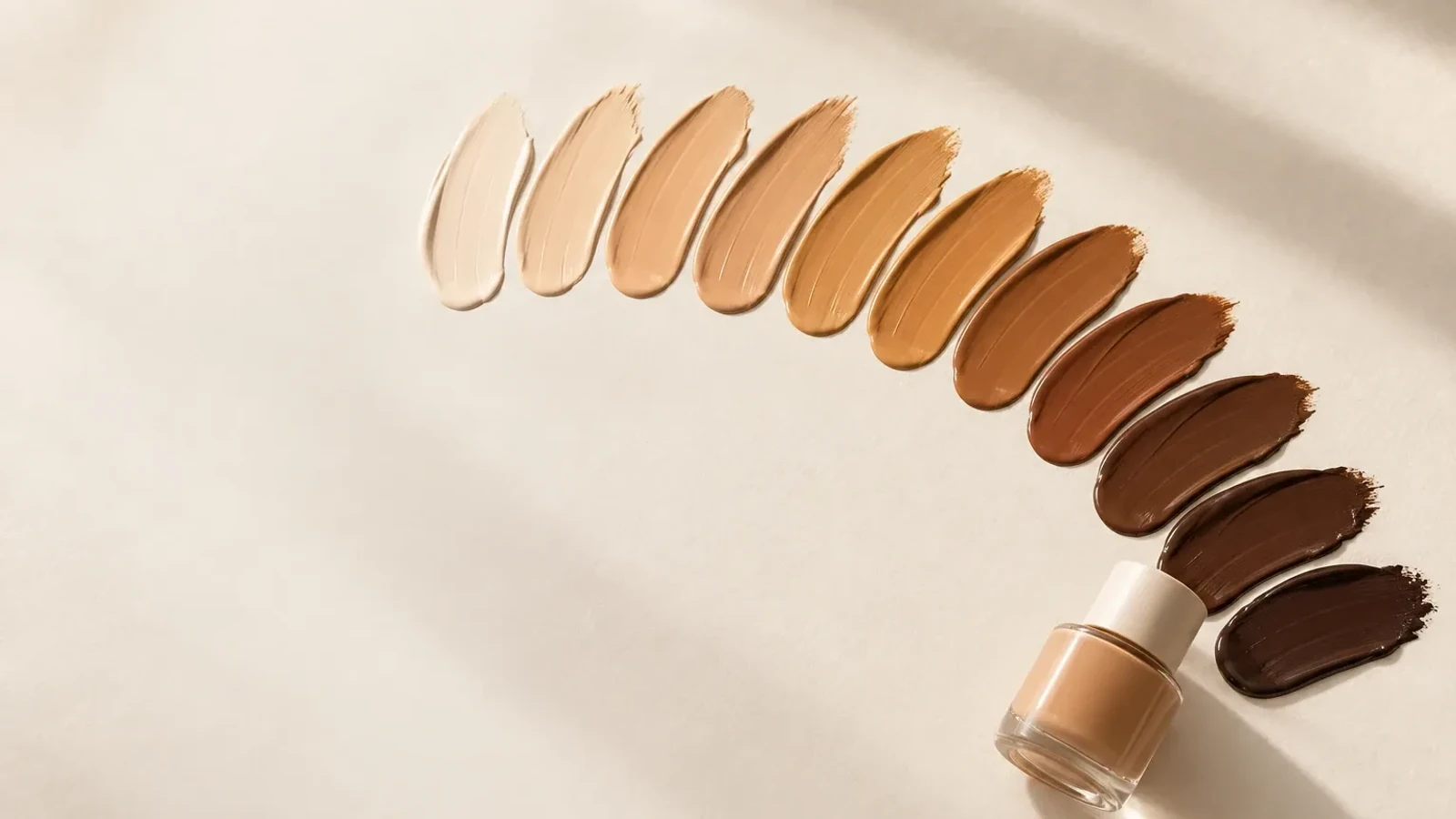
Dark spots look different on every skin tone, and so does the risk of new marks after irritation. Our skin tone chart helps you place your tone. To follow your spots over months rather than guessing, an AI skin analysis can score visible dark spots and pigmentation so you can compare like with like. It’s a cosmetic tool, though: anything that changes, bleeds, or worries you goes to a dermatologist.
Sources
- American Academy of Dermatology: How to fade dark spots in darker skin tones
- PubMed: The effect of niacinamide on reducing cutaneous pigmentation and suppression of melanosome transfer
- PubMed: Efficacy of Oral, Topical, and Intradermal Tranexamic Acid in Patients with Melasma: A Meta-Analysis
- FDA: FDA works to protect consumers from potentially harmful OTC skin lightening products
- American Academy of Dermatology: What to look for: ABCDEs of melanoma
Frequently asked questions
Can dark spots on the face go away on their own?
Marks from breakouts or irritation often fade slowly once the cause stops, usually within 6-12 months if they're only a few shades darker than your skin. Sun spots rarely fade without treatment, and melasma tends to come and go.
Does lemon juice fade dark spots?
It's not a good idea. Lemon juice is acidic and irritating, and citrus juice on skin in sunlight can cause a painful rash with blisters, which can leave new dark marks behind.
Is vitamin C or niacinamide better for dark spots?
Both have evidence, and they work in different ways, so many people use vitamin C in the morning and niacinamide at night. If your skin is sensitive, niacinamide is usually the easier one to tolerate.
What is the fastest way to get rid of dark spots on face?
In-office treatments like lasers, intense pulsed light, and peels usually work faster than creams for sun spots, but they cost more and can cause new darkening in some skin tones. A dermatologist can tell you which option suits your spots and your skin.
This article is general education, not medical advice. GoodSkin is a cosmetic tool and does not diagnose skin conditions. If something hurts, spreads, bleeds, or changes quickly, see a dermatologist.