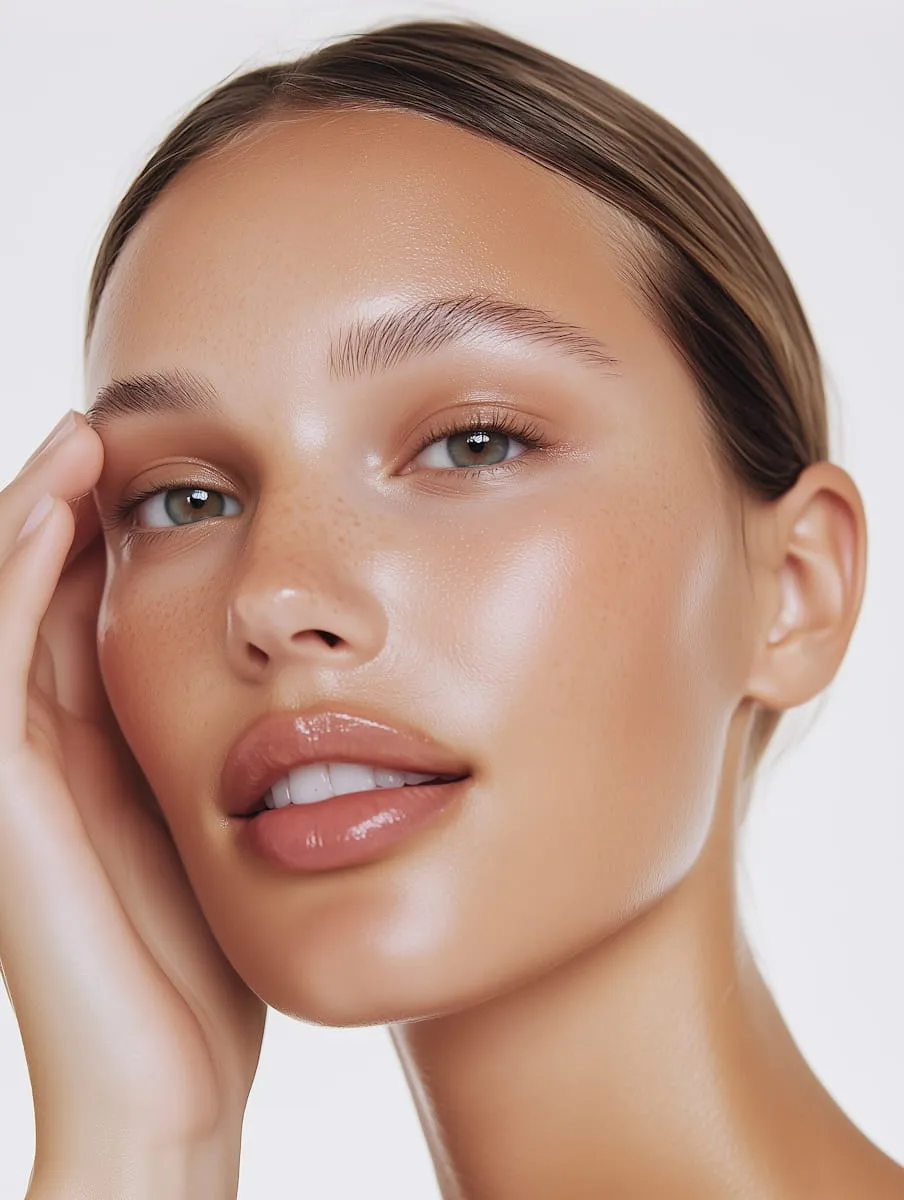
Fitzpatrick skin type test: find your type, I to VI
Ten questions from the classic dermatology questionnaire. Find your Fitzpatrick type and how much sun protection your skin needs.
Answers stay in your browser. Nothing is saved or sent.
Your Fitzpatrick skin type
Type III
Score 0 out of 40
Sun protection for your type
The Fitzpatrick scale chart: types I to VI
The Fitzpatrick scale was created in 1975 by Harvard dermatologist Thomas B. Fitzpatrick to estimate how skin responds to ultraviolet light. It was first built for fair skin and later expanded to six types. Today it is used to judge sunburn risk and to choose safe settings for lasers, peels, and light treatments.
| Type | Reaction to sun | Typical skin | Daily sunscreen |
|---|---|---|---|
| Type I | Always burns, never tans | Very fair, often with red or blond hair, light eyes, and freckles | SPF 50 |
| Type II | Usually burns, tans with difficulty | Fair, often with light hair and eyes | SPF 50 |
| Type III | Sometimes burns mildly, tans gradually | Light beige, with any hair or eye color | SPF 30 to 50 |
| Type IV | Rarely burns, tans easily | Light brown or olive | SPF 30 |
| Type V | Very rarely burns, tans very easily | Brown | SPF 30 |
| Type VI | Never burns | Deeply pigmented dark brown to black | SPF 30 |
Swatches are approximate and only illustrate the range. Your type comes from how your skin reacts to sun, not from color alone.
How the Fitzpatrick test is scored
The questionnaire has three parts: genetic traits (eye, hair, and skin color, freckles), how your skin reacts to sun, and your recent tanning habits. Each answer scores 0 to 4, for a total from 0 to 40. In this version, 0 to 6 is type I, 7 to 13 type II, 14 to 20 type III, 21 to 27 type IV, 28 to 34 type V, and 35 or more type VI.
Different clinics use slightly different cutoffs, and self-reported tanning is subjective. Treat your result as a strong estimate, and let a dermatologist confirm it before any laser or peel.
Fitzpatrick type vs skin tone and undertone
Your Fitzpatrick type describes sun reaction. Your skin tone describes surface color, and your undertone describes the subtle warm, cool, or neutral hue underneath. They are related but answer different questions. If you are choosing makeup, the skin tone and undertone test is the more useful tool.
Why it matters for dark spots and treatments
Higher Fitzpatrick types burn less but are more likely to develop dark marks after acne, irritation, or aggressive treatments. That is why providers pick laser settings and peel strengths by type. If you are working on dark spots on your face, daily sunscreen is the step that protects your progress at every skin type.
Sources
Frequently asked questions
What is the Fitzpatrick skin type scale?
It is a classification created by dermatologist Thomas Fitzpatrick in 1975 that sorts skin into six types (I to VI) based on how it reacts to sun: how easily it burns and how well it tans.
Is the Fitzpatrick scale the same as skin color?
Not exactly. It measures sun reaction, which is related to skin color but not identical. Two people with similar skin tones can burn very differently, and the scale was not designed to describe the full range of skin colors.
Why do dermatologists use Fitzpatrick types?
They help estimate sunburn and skin cancer risk, choose safe settings for lasers and peels, and predict how likely skin is to darken after inflammation (post-inflammatory hyperpigmentation).
How accurate is an online Fitzpatrick test?
A questionnaire like this one gives a useful estimate, but answers about tanning are subjective. Before a laser or chemical peel, your provider should assess your skin type in person.
More free tools
Your best skin starts with one scan
Download GoodSkin, take a selfie in good light, and see where your skin stands today.


Scan with your phone camera