Skin tone guide, Fitzpatrick II to III
Light skin tone: undertones, best colors, makeup, and hair
A light skin tone is light beige skin with visible warmth or pinkness, one step deeper than fair and lighter than medium. It can burn at first but usually tans gradually, and it can lean cool, neutral, warm, or olive. Light skin roughly matches Fitzpatrick types II and III, and its deeper end is what many people call light medium skin.

What is light skin?
By a window, a light skin tone reads as beige, sand, or light peach rather than ivory. You can see warmth or pinkness in it without looking hard, and a summer tan shows as a clear shift to a golden or light olive beige.
Light skin is common in people of European, East Asian, Middle Eastern, Latin American, and mixed heritage. Hair is often light brown to black, though golden blondes and redheads with light skin are common too.
Tap any swatch to copy its hex code.
- Fitzpatrick type
- II to III burns at first, then tans
- Closest Monk shades
- 3 to 4 of 10
What is a light medium skin color?
Light medium is the deeper end of light skin, where it starts to blend into medium: a light beige or light golden color that tans easily in summer. Foundation lines often call it light-medium. If shades labeled light look a touch pale on you and medium ones a touch heavy, you are here, and it is worth testing both in daylight.
Light skin undertones
Depth is only half of your skin tone. Underneath it, light skin can lean cool, neutral, warm, or olive, and that undertone decides which colors, foundations, and metals look most natural. Here is how each one looks at this depth.
- Cool undertone
Rosy beige
Light beige with pink in the cheeks. Rose, berry, and blue-reds look fresh; very golden bronzer can look muddy.
- Neutral undertone
Neutral beige
Neither pink nor golden stands out. Most true reds and soft jewel tones work, and N shades match easily.
- Warm undertone
Golden beige
A sunny, golden or peachy cast that tans to gold. Coral, apricot, and warm greens are easy wins.
- Olive undertone
Light olive
A muted beige with a green-yellow cast. Earthy reds, forest green, and teal suit it better than pastel pink.
More on olive skin
Not sure which is yours? Compare gold and silver, or bright white and cream, next to your bare face by a window, or let the undertone test read it from a selfie. Our guide to skin undertones explains every check.
Best colors for light skin
Choose your undertone to see the clothing colors that tend to flatter light skin. Each swatch shows your skin above a neckline of the color, the way it sits when you wear it.
Rosy beige, pink, red, or blue castBlue-based color from rose and lavender to cobalt and navy, with spruce as the cool green.
Neutral beige, neither pink nor goldenA balanced, versatile set: a true red, dusty pink, jade, and periwinkle, grounded with taupe and navy.
Golden beige, golden, peach, or yellow castClear, sunny warm color: coral, apricot, golden yellow, kelly green, and warm aqua, with camel as the neutral.
Light olive, muted green-gray castEarthy, rich color: terracotta, forest green, teal, and aubergine, with camel and cream as neutrals.
Colors that wash light skin out, and what to wear instead
Instead of
sand beige, wear jadeBeige in the same depth as your skin flattens your face into your clothes. Jade gives contrast without shouting.
Instead of
pastel yellow, wear golden yellowPale yellow can blend into golden light skin. If you love yellow, a deeper golden yellow holds its own.
Instead of
khaki, wear forest greenKhaki sits close to light olive skin and can make it look sallow. Forest green keeps the earthy feel with more depth.
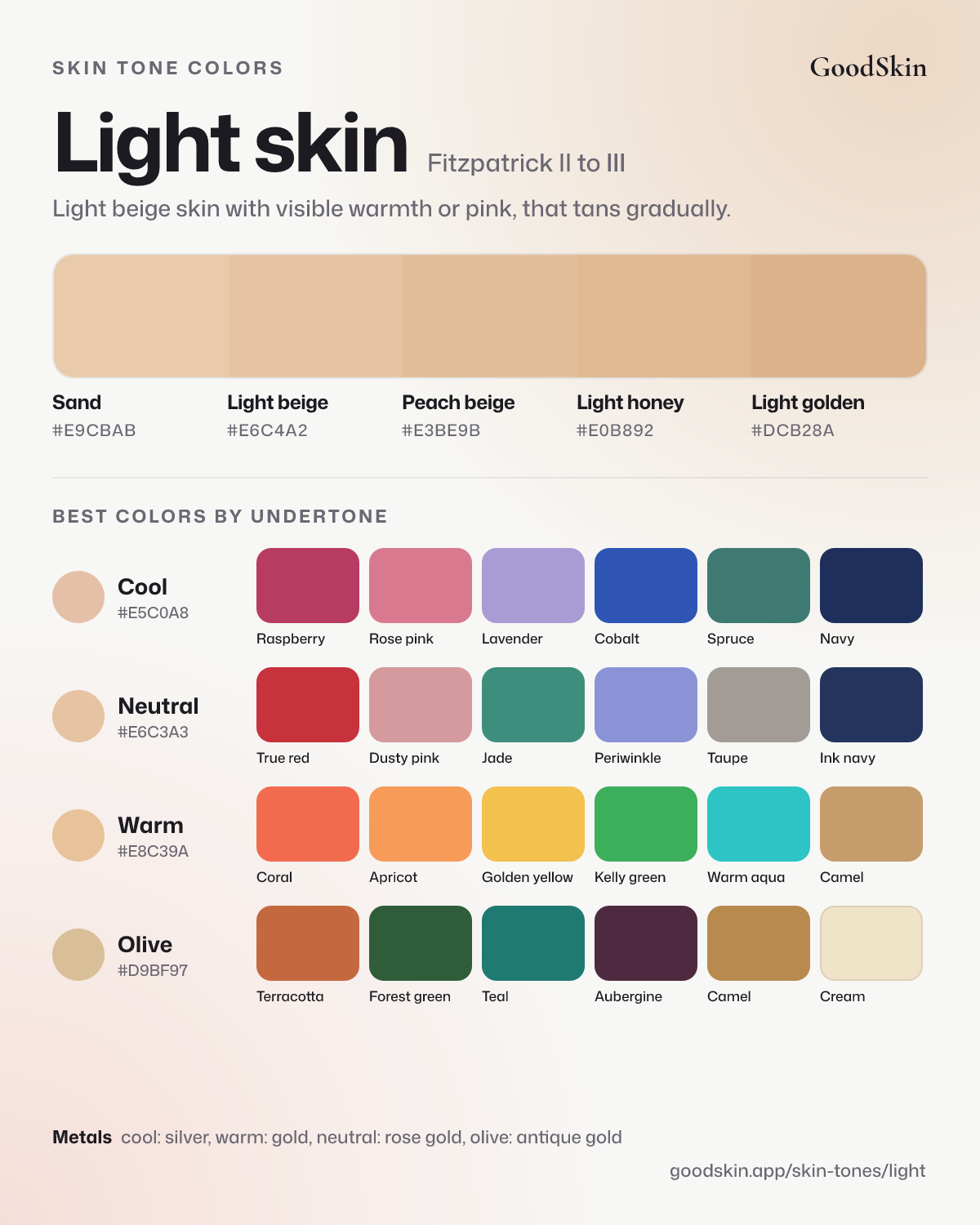
Save the light skin colors
The skin swatches and all four undertone palettes on one card, with hex codes. Keep it on your phone and hold it next to clothes when you shop, near a window if you can.
Download the colorsMakeup for light skin
Foundation
Your shades sit at the end of the light range and the start of light-medium, so try both. Match the undertone letter first (C, N, W, or O), then the depth, and swatch on your jaw by a window. Light skin often looks a shade deeper in summer than in winter, so many people keep two foundations and mix them in spring and autumn.
Foundation by undertone
- Cool
- Neutral
- Warm
- Olive
Most brands mark undertone with a letter after the shade number: C for cool, N for neutral, W for warm, and O for olive where they offer it.
Blush
- Peach
- Warm pink
- Apricot
Peach and apricot glow on warm light skin; a warm pink suits cool and neutral. Powder and cream both work.
Bronzer
- Soft tan
- Golden bronze
A soft tan or golden bronze, one to two shades deeper than your skin and no more.
Lipstick
- Peachy nude
- Rose
- Coral red
- Raspberry
Peachy nude, rose, coral red, and raspberry cover every undertone. Choose nudes a touch pinker or peachier than your lips, not beige.
Best hair colors for light skin
- Honey blondeWarm light skin looks sunlit with honey, especially as highlights.
- Caramel balayageCaramel ribbons over a brown base add warmth without a full color change.
- Soft chestnutA medium brown with a touch of red suits neutral and warm light skin.
- Ash brownRosy light skin looks polished with an ash or neutral brown.
Hair colors to skip
- Platinum: can wash out light skin unless your coloring is cool and very light.
- Blue-black: too much contrast for most light skin, and harsh against warm undertones.
Whatever you choose, test it first: the NHS advises testing hair dye at least 48 hours before you use it.
Gold or silver for light skin?
Light skin can wear both delicate and bolder pieces. Pick the metal by undertone: silver for rosy light skin, yellow gold for golden, rose gold or mixed metals for neutral, and antique gold for light olive. Warm stones like citrine and peridot suit golden light skin; sapphire and amethyst suit rosy light skin.
Sun care for light skin
Usual Fitzpatrick type
II to III
Burns at first, then tans
Whatever your depth, the American Academy of Dermatology recommends a broad-spectrum, water-resistant sunscreen with SPF 30 or higher, reapplied about every two hours outdoors. For light skin, add these:
- Tanning without burning still means UV damage, so keep up your sunscreen once your summer color arrives. The Skin Cancer Foundation is clear that lighter skin carries a higher risk.
- Lips burn too. A lip balm with SPF is the easiest habit to add.
- If you get dark spots, try a tinted sunscreen. The iron oxide in it also helps block visible light, which can darken skin.
Common skin concerns for light skin
Every skin tone can have any skin concern, but some show up more often, or more visibly, at each depth. These are the ones worth knowing for light skin.
Sun damage that builds slowly
Light skin often tans after a burn, so it is easy to feel protected once you have color. You are not: lighter skin that burns easily carries a higher skin cancer risk than darker skin, and a tan does not change that.
Uneven tone and sun spots
Freckles, sun spots, and patches of uneven color build up with years of sun. Daily sunscreen prevents new spots, and ingredients like vitamin C, azelaic acid, and retinoids can fade existing ones over months.
Redness
Light skin still shows redness from irritation, heat, and rosacea, especially if you flush easily. If redness lingers, our guide to reducing redness on your face helps, and a dermatologist should see redness that comes with bumps, burning, or visible vessels.
See a board-certified dermatologist about any spot, rash, or color change that is new, growing, or worrying you.
Color seasons for light skin
Light skin spreads across several seasons. Golden light skin leans Light Spring or True Spring, rosy light skin with soft coloring leans Soft Summer, and light olive skin often fits Soft Autumn.
Want a full palette for your coloring? Try the free seasonal color analysis.
Frequently asked questions
What does a light skin tone look like?
Light beige, sand, or light peach, with visible warmth or pinkness. It is deeper than ivory fair skin and usually tans gradually after an initial burn.
Is light medium skin light or medium?
It sits on the border. If light foundation shades look slightly pale and medium ones slightly heavy, you are light medium, and you may need a different shade in summer and winter.
What colors look best on a light skin tone?
It depends on your undertone: blue-based colors like rose and cobalt for cool, coral and kelly green for warm, true red and jade for neutral, and terracotta and forest green for olive.
Should light skin wear gold or silver?
Pick by undertone: silver for rosy light skin, yellow gold for golden, rose gold or both for neutral, and antique gold for light olive.