
Acne & breakouts
How to get rid of whiteheads, fast and for good
How to get rid of whiteheads: patch the ripe ones, then use adapalene and salicylic acid for 6-8 weeks to stop new ones. Causes, nose tips, and what to skip.

Key takeaways
- "Whitehead" means two things: a closed clogged pore (a closed comedone) and the white top of an inflamed pimple (a pustule). They need different handling.
- For a pimple that has come to a head, leave it alone, cover it with a hydrocolloid patch, and use a thin layer of benzoyl peroxide. It usually settles within days.
- To stop whiteheads coming back, use adapalene 0.1% over the whole area every night, plus a leave-on salicylic acid, and give it 6-8 weeks.
- Squeezing pushes the contents deeper and raises the risk of infection, dark marks, and scars.
- Hormones, oily or pore-clogging products, and friction from phones, helmets, and hair are the usual triggers. Dirt isn't one of them.
How you get rid of whiteheads depends on which kind you have. A whitehead that has come to a head (a white or yellow pus-topped pimple) usually settles within days if you leave it alone, cover it with a hydrocolloid patch, and dab on a thin layer of benzoyl peroxide. The tiny, skin-colored whiteheads that never come to a head (closed comedones) need a retinoid such as adapalene 0.1% and a leave-on salicylic acid for 6-8 weeks.
For both kinds, the fastest way to make a whitehead worse is to squeeze it. Here’s how to tell them apart, what causes whiteheads, the treatments that work, and what to do about whiteheads on your nose.
What are whiteheads?
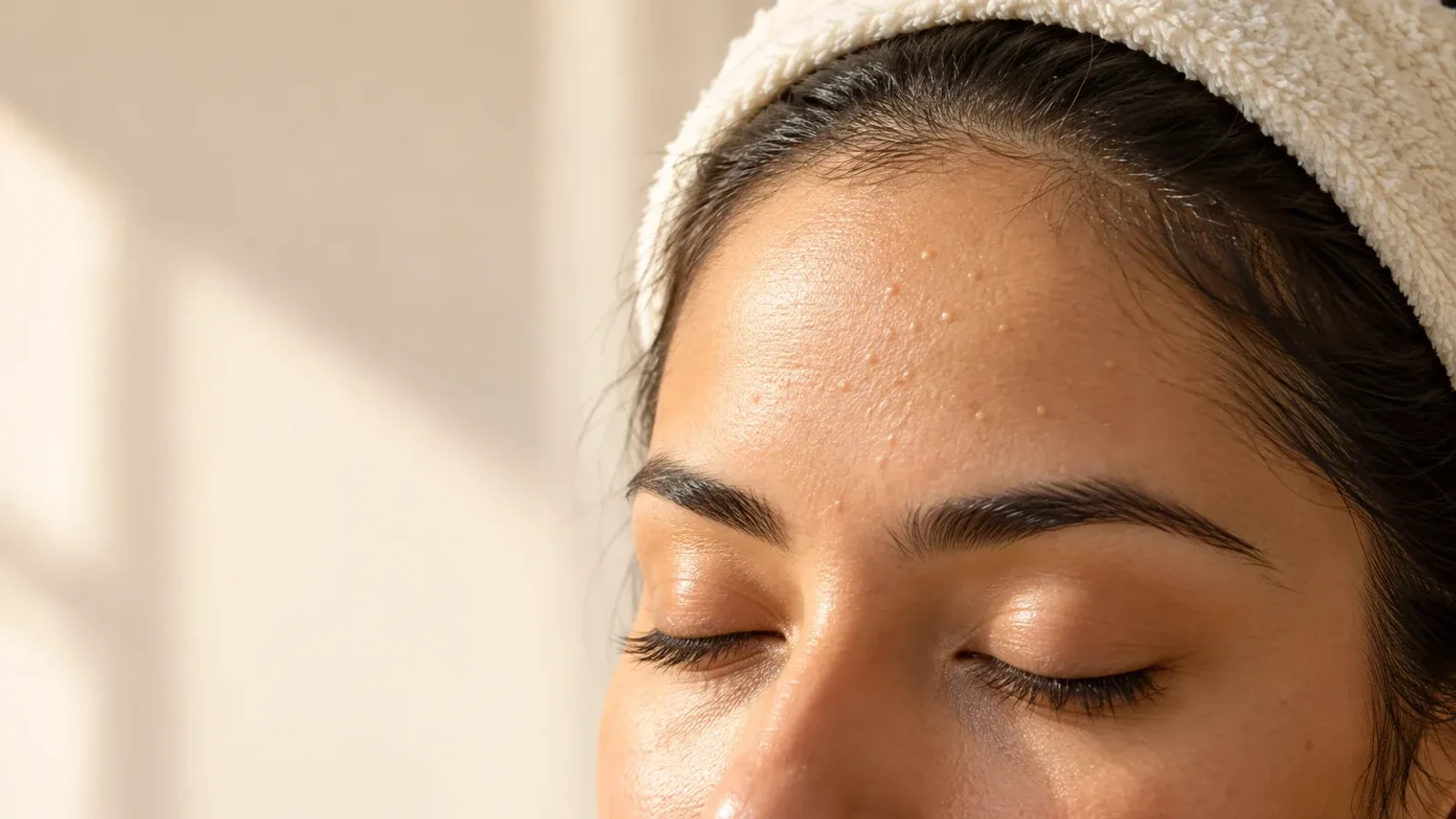
A whitehead is a pore that has filled with oil and dead skin cells and closed over at the surface. Cleveland Clinic describes them as closed bumps that look white or yellowish, most common on the nose, chin, and forehead, and also on the neck, chest, back, and shoulders. They’re a mild form of acne, and they’re not contagious.
They aren’t only a teenage problem. Cleveland Clinic notes that 10-20% of adults have whiteheads too, and some people get them for the first time as adults.
Whitehead vs pimple: which one do you have?
Dermatologists use “whitehead” for a closed comedone: a clogged pore with skin over the top and no inflammation. Most people also use the word for the white top of a pimple, which is a pustule, an inflamed follicle filled with pus. Both look white. They behave very differently.
| Closed whitehead (closed comedone) | Pus-topped pimple (pustule) | |
|---|---|---|
| What it is | A clogged pore sealed under skin | An inflamed follicle filled with pus |
| Looks like | Tiny skin-colored or white dome | White or yellow center on a red base |
| Red or sore? | No | Usually, yes |
| How long it lasts | Weeks to months if untreated | Usually days to a week or two |
| What helps | Retinoid, salicylic acid | Benzoyl peroxide, a patch, patience |
Many people have both at once, because an irritated closed whitehead can become a pustule. If yours are mostly the flat, stubborn kind, our guide to closed comedones goes deeper on them.
What causes whiteheads?
Whiteheads form when a pore makes extra oil and the cells lining it shed in sticky clumps, so a plug forms and skin closes over it. Androgen hormones drive the oil, and acne bacteria thrive in the plug. Several everyday things push the process along:
- Hormone changes. The NHS lists puberty, periods, pregnancy, and menopause, along with conditions such as polycystic ovary syndrome.
- Greasy or pore-clogging products. Heavy creams, oily makeup, and hair products that reach your face all add to the plug. The pore clogger checker marks the likely culprits in any ingredient list.
- Pressure and friction. Phones, helmets, sunglasses, and pillowcases all press on the same patches of skin. Cleveland Clinic suggests cleaning anything that regularly touches your face.
- Squeezing and scrubbing. Damaging the pore lining makes new clogs more likely.
- Some medicines. Steroids and a few other drugs can cause acne. Ask your doctor before you stop anything.
- Diet, possibly. Cow’s milk and high-glycemic foods are linked to more acne in some studies, though the evidence is still limited.
What doesn’t cause whiteheads is a dirty face. Scrubbing harder or washing more than twice a day only irritates skin, which the AAD says can make acne worse.
How to get rid of whiteheads fast
These steps are for a whitehead that has already come to a head. Nothing safely makes a closed, flat whitehead disappear overnight.
- Keep your hands off it. A pustule left alone usually settles within days. Squeezed, it can turn into a deeper, redder spot that lasts longer.
- Cover it with a hydrocolloid patch. The patch absorbs fluid, protects the spot, and stops you picking. In a small 2006 trial of 20 people with mild-to-moderate acne, a hydrocolloid dressing reduced redness and overall severity more than plain tape over a week. That’s one small study, so treat patches as a helpful cover, not a cure. They work best on spots that have opened or come to a head.
- Use a thin layer of benzoyl peroxide. A 2.5-5% gel or wash reduces acne bacteria. The AAD recommends benzoyl peroxide or salicylic acid for pus-filled pimples and warns that using too much irritates the skin more.
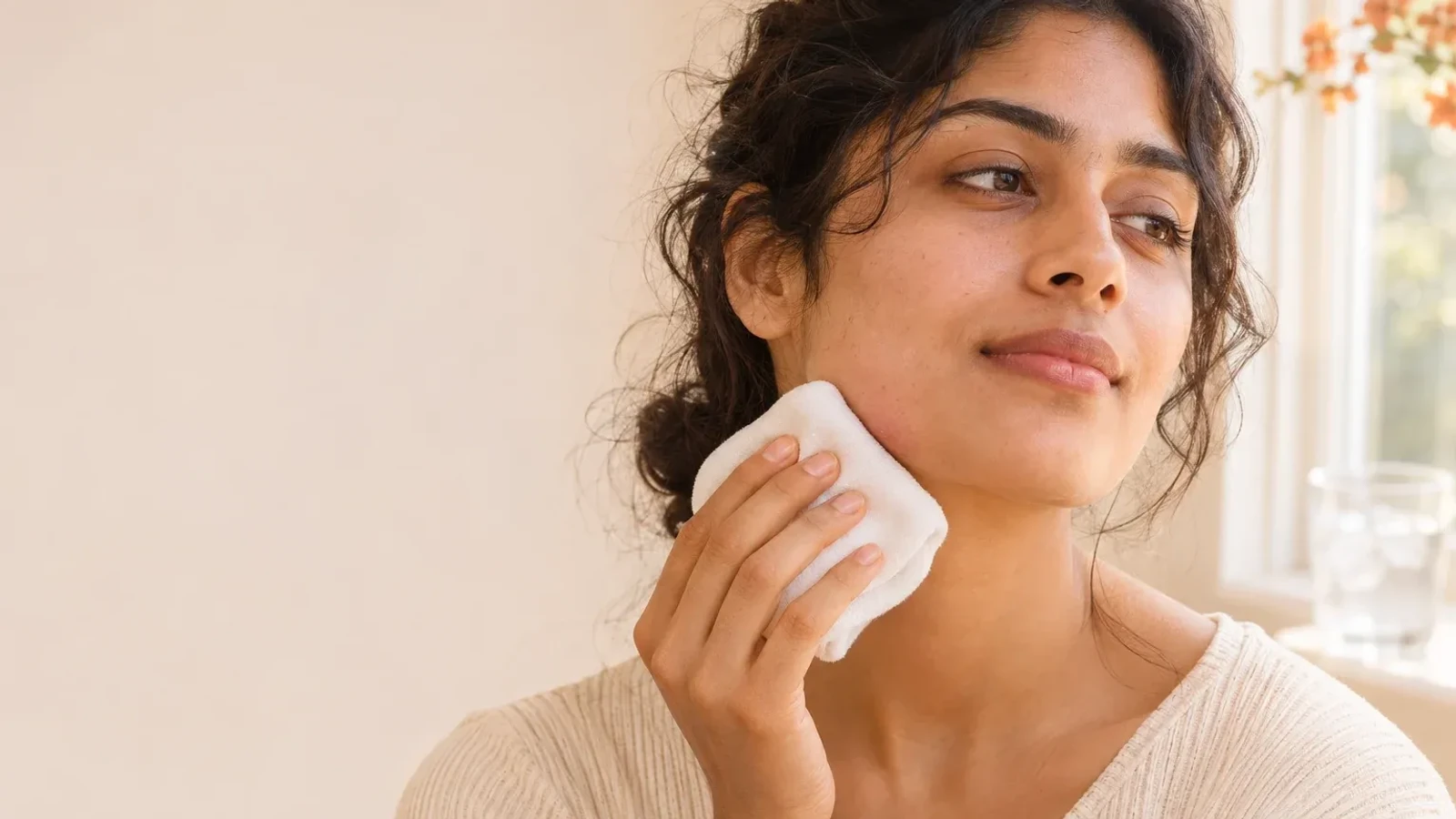
- Try a warm compress for a sore spot that hasn’t come up yet. The AAD suggests a clean washcloth soaked in hot water, held on for 10-15 minutes, three times a day.
Skip the kitchen remedies. Toothpaste, lemon juice, rubbing alcohol, and undiluted tea tree oil irritate the skin around the spot and can leave a red or dark mark that outlasts the pimple.
How to get rid of whiteheads for good
Fast fixes deal with today’s spot. To stop new whiteheads forming, you have to change how your pores shed. Apply these over the whole area where you break out, not just on the spots, because that’s where tomorrow’s whiteheads are already forming.
1. Adapalene or another retinoid
For whiteheads and blackheads, the American Academy of Dermatology recommends a retinoid, and adapalene is available without a prescription in the US as a 0.1% gel. Use a pea-sized amount on dry skin at night, every other night for the first 2-3 weeks, then nightly. Expect some dryness at first and wear sunscreen every morning. Don’t use retinoids if you’re pregnant, trying to conceive, or breastfeeding.
A few extra spots in the first weeks are common as plugs that were already forming come up. Our guide to skin purging explains how to tell that from a reaction.
2. Salicylic acid
Salicylic acid dissolves in oil and loosens the plug inside the pore. A leave-on toner, serum, or gel with 0.5-2% does more than a cleanser you rinse off after a minute. Start a few times a week and use it on different nights from your retinoid until your skin has adjusted.
3. Benzoyl peroxide, if you also get red spots
If your whiteheads regularly turn into pustules, add a benzoyl peroxide wash in the morning. The AAD suggests pairing it with a retinoid. It bleaches fabric, so use white towels and pillowcases.
4. Azelaic acid, if your skin is sensitive
Azelaic acid unclogs pores more gently than a retinoid, calms redness, and helps fade the dark marks old spots leave behind. It’s a good choice if retinoids sting.
| Treatment | Use it for | When you’ll see a change |
|---|---|---|
| Hydrocolloid patch | A single spot that has come to a head | Overnight to a few days |
| Benzoyl peroxide 2.5-5% | Red, pus-topped spots | Days for single spots, 6-8 weeks for prevention |
| Adapalene 0.1% | Stopping new whiteheads forming | 6-8 weeks, best at 3 months |
| Salicylic acid 0.5-2% | Loosening plugs, oily skin | 6-8 weeks |
| Azelaic acid | Sensitive skin, leftover marks | 6-8 weeks or more |
The AAD advises giving any acne treatment 6-8 weeks before you judge it, and says full clearing can take 3-4 months. The AAD also lists switching treatments every week or so among the habits that keep acne going.
How to get rid of whiteheads on your nose
The nose is packed with oil glands, so whiteheads there are common and quick to return. A few nose-specific points:
- Check they’re really whiteheads. Flat gray or yellowish dots spread evenly across the nose are usually sebaceous filaments, a normal part of every pore. Whiteheads are raised and scattered. In adults over 40, soft yellowish bumps with a small dent in the middle may be sebaceous hyperplasia, which acne treatments don’t fix.
- Put salicylic acid on the nose and the creases beside it, even if your cheeks can only take it twice a week.
- Skip pore strips for whiteheads. Strips can only grip plugs that are open at the surface, like blackheads. A closed whitehead stays put, and the adhesive irritates the skin around it.
- Keep your glasses and phone clean. Nose pads and screens press oil and makeup into the same spots every day.
Not sure how oily your T-zone really is? The free skin analysis checks shine on your forehead, nose, and chin from a selfie, privately in your browser, which helps you decide how often to use salicylic acid.
Free toolFree skin analysisCheck redness, shine, and tone evenness from a selfie, privately in your browser.Should you pop whiteheads?
No. The AAD warns that squeezing pushes material deeper into the skin, which increases inflammation, pain, and the chance of scarring, and Cleveland Clinic adds that it can introduce bacteria. A closed whitehead has no opening, so pressure forces the plug sideways into the skin. On medium and deep skin tones, a squeezed spot often leaves a dark mark that lasts for months.
If a spot is large, painful, and you need it gone before an event, a dermatologist can drain it safely or inject it with a small dose of cortisone to bring the swelling down quickly.
A simple routine for whiteheads
Morning: gentle cleanser (a benzoyl peroxide wash if you get red spots), light non-comedogenic moisturizer, broad-spectrum SPF 30 or higher.
Evening: gentle cleanser, adapalene on some nights and salicylic acid on others, then moisturizer.
Add one product at a time, a couple of weeks apart, so you can tell what’s helping and what’s irritating. For the full step-by-step version, including diet and the habits around your routine, see our guide on how to get clear skin.
When should you see a dermatologist?
Whiteheads are common, harmless, and very treatable. Pick one proven treatment, use it across the whole area, keep your hands off, and give it two months. To see the change rather than guess at it, compare photos taken in the same light, or track your acne score over time with GoodSkin’s AI skin analysis.
Sources
- Cleveland Clinic: Whiteheads
- American Academy of Dermatology: How to treat different types of acne
- American Academy of Dermatology: 10 skin care habits that can worsen acne
- American Academy of Dermatology: Tips to treat a deep, painful pimple
- Chao et al. A pilot study on treatment of acne vulgaris with Acne Dressing. J Cosmet Sci, 2006
- NHS: Acne
Frequently asked questions
Why do I keep getting whiteheads in the same spot?
A pore that has been squeezed or inflamed before is more likely to clog again, and a habit like resting your chin on your hand or holding your phone to one cheek keeps hitting the same area. A bump that refills in the same place for months may be a small cyst, which a dermatologist can remove.
Do whiteheads go away on their own?
Single pus-topped spots usually settle within days to a week or two. The small, flat, skin-colored kind can linger for weeks or months, and new ones keep forming until you treat the cause with a retinoid or salicylic acid.
Do pimple patches work on whiteheads?
On a whitehead that has come to a head or opened, yes: a hydrocolloid patch absorbs fluid and stops you picking. On flat, closed whiteheads under the skin, there's nothing for the patch to absorb, so it does little.
Are whiteheads and milia the same thing?
No. A whitehead is a clogged pore and a form of acne. Milia are hard, pearly cysts of trapped keratin with no opening, usually around the eyes, and acne treatments and squeezing don't move them.
This article is general education, not medical advice. GoodSkin is a cosmetic tool and does not diagnose skin conditions. If something hurts, spreads, bleeds, or changes quickly, see a dermatologist.