Pores & texture
How to get rid of blackheads: what works and how long it takes
How to get rid of blackheads: salicylic acid and adapalene clear them in 6-8 weeks. Plus how to tell blackheads from sebaceous filaments, and what to skip.

Key takeaways
- Blackheads are pores plugged with oil and dead skin cells. The dark tip is pigment and reflected light, not dirt, so scrubbing won't clear them.
- Many of the gray dots on a nose are sebaceous filaments, which are normal and refill no matter what you do. Check which you have before you treat.
- A leave-on salicylic acid and an over-the-counter retinoid such as adapalene 0.1% are the most reliable treatments. Give them 6-8 weeks.
- Pore strips, squeezing, and scrubs make your nose look clearer for a day or two, and squeezing can leave marks and scars.
- If blackheads are still there after about 3 months of steady care, a dermatologist can extract them safely or prescribe something stronger.
To get rid of blackheads, use a leave-on salicylic acid (BHA) product and an over-the-counter retinoid such as adapalene 0.1%, wash gently twice a day, and give it 6-8 weeks. Those two ingredients loosen the plug of oil and dead skin inside the pore and stop new plugs from forming. Squeezing, pore strips, and scrubbing only empty the pore for a few days, and they can leave marks.
Before you start, check that what you’re seeing really are blackheads. A lot of the “blackheads on the nose” people try to clear are sebaceous filaments, which are a normal part of your skin and come back whatever you do. This guide shows you how to tell them apart, then covers each treatment, the honest truth about pore strips and extraction, and how long it all takes.
What are blackheads?
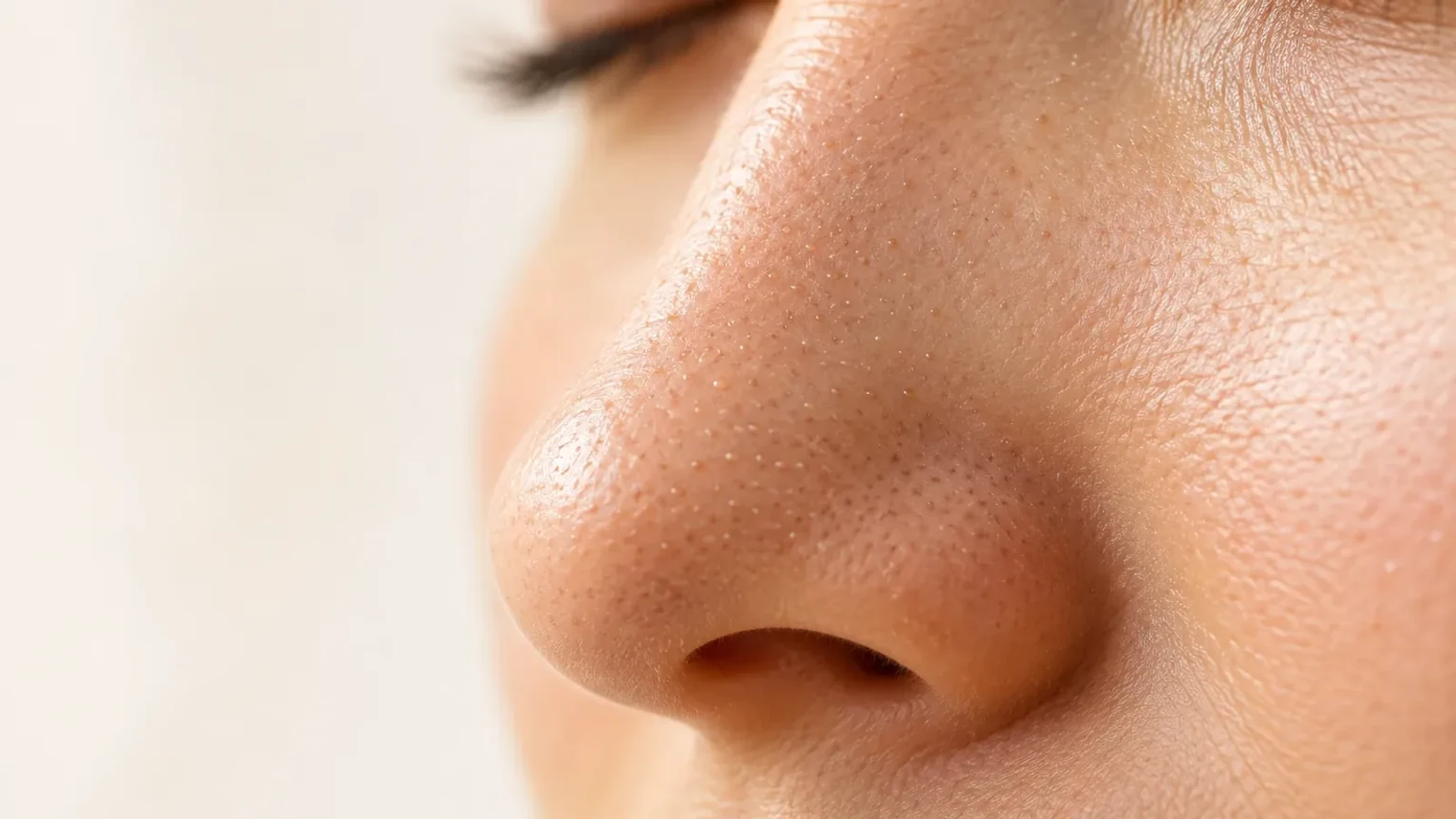
A blackhead (an open comedone) is a pore that has filled up with oil and dead skin cells but stayed open at the surface. It’s a mild form of acne. The American Academy of Dermatology explains the difference simply: if the clogged pore stays open you see a blackhead, and if it closes over you see a whitehead.
The dark tip isn’t dirt. DermNet says blackheads are black because of pigment (melanin) at the surface, and Cleveland Clinic adds that the way light reflects off the plug makes it look darker still. That’s why washing harder never fixes them.
Blackheads form when a pore makes more oil than usual, the cells lining it shed too quickly and stick together, or both. Hormones (androgens), humidity, heavy or oily skin and hair products, and picking at your skin all make clogs more likely. If your skin runs oily in general, our guide to why your face gets so oily explains what drives oil production.
Blackheads or sebaceous filaments? Check this first
Sebaceous filaments are thin columns of oil and cells that line every pore and carry sebum to the surface. Everyone has them, and on the nose they’re often mistaken for blackheads. They aren’t clogs, so they can’t be “cleared,” only made less visible. Look at your nose in daylight, from a normal distance:
- Color. Filaments are gray, tan, or yellowish. True blackheads are distinctly black or dark brown.
- Pattern. Filaments form an even grid of similar dots across both sides of the nose. Blackheads are scattered and uneven, a few here and there.
- Height. Filaments sit flat with the skin. Blackheads are often slightly raised and can be larger.
- What comes out. A filament gives a thin, pale, waxy strand. A blackhead gives a firmer plug with a dark tip.
If your dots are pale, flat, and evenly spread, read our guide to sebaceous filaments vs blackheads instead. Many of the same products help, but your expectations should be different. Most people have both: an even grid of filaments with a few real blackheads scattered among them.
How to get rid of blackheads: the treatments that work
1. Salicylic acid (BHA)
Salicylic acid is a beta hydroxy acid that dissolves in oil, so it can get into the pore and loosen the mix of sebum and dead cells. Cleveland Clinic notes that it dissolves the dead skin cells that clog follicles. Look for 0.5-2% in a leave-on toner, serum, or gel. A cleanser with salicylic acid is better than nothing, but it’s rinsed off within a minute.
Start every other day. If your skin doesn’t sting or flake after two weeks, move to daily use. It’s the most forgiving place to start, and the easiest to fit into any routine.
2. Adapalene or another retinoid
Retinoids are the treatment dermatologists lean on most for blackheads, because they change how the pore lining sheds so plugs stop forming in the first place. The AAD recommends a retinoid to unclog pores and points out that one, adapalene, is sold without a prescription. In the US that’s adapalene 0.1% gel. In the UK and some other countries, the NHS lists adapalene and tretinoin as prescription treatments.
How to use it:
- Apply a pea-sized amount to clean, dry skin at night, covering the whole area where you get blackheads, not just single spots.
- Use it every other night for the first 2-3 weeks, then nightly if your skin is comfortable.
- Expect some dryness, flaking, or stinging at first. A plain moisturizer on top helps.
- Wear sunscreen every morning, since retinoids make skin more sensitive to sun.
- Don’t use a retinoid if you’re pregnant, trying to get pregnant, or breastfeeding.
You might see a few extra spots in the first month as clogs that were already forming come to the surface. Our guide to skin purging explains how to tell that from a reaction.
Don’t start salicylic acid and a retinoid in the same week. Add one, wait two or three weeks, then add the other on alternate nights.
3. Benzoyl peroxide, if you also get pimples
Benzoyl peroxide works mainly on acne bacteria, so it matters most when your blackheads come with red, inflamed spots. The AAD suggests a benzoyl peroxide wash alongside a retinoid for that mix. A 2.5-5% wash, left on for a minute or two and rinsed, is gentler than a strong leave-on cream. It bleaches towels and pillowcases, so use white ones.
4. Clay masks for a quick reset
Clay (kaolin or bentonite) soaks up surface oil, so blackheads and filaments look emptier and your nose looks matte for a day or so. It doesn’t change how pores clog, so think of it as a pre-event step. Once or twice a week on the T-zone is plenty. More often than that tends to dry your skin out.
5. Oil cleansing: good for makeup, not a cure
Oil cleansers and balms are great at dissolving sunscreen and makeup, and some people find their skin feels clearer with them. But there’s no research showing they clear blackheads, and the little “grits” people collect after long oil massages don’t prove anything. If you like oil cleansing, follow it with a gentle water-based cleanser and choose a non-comedogenic formula.
The treatments at a glance
| Treatment | What it does | When you’ll see a change |
|---|---|---|
| Salicylic acid 0.5-2% (leave-on) | Loosens the plug inside the pore | 6-8 weeks |
| Adapalene 0.1% or another retinoid | Clears existing plugs and stops new ones forming | 8-12 weeks |
| Benzoyl peroxide wash 2.5-5% | Reduces acne bacteria, mainly helps pimples | 6-8 weeks |
| Clay mask, 1-2 times a week | Absorbs surface oil | Same day, lasts a day or two |
| Professional extraction | Empties existing blackheads | Right away |
How to get rid of blackheads on your nose
The nose has some of the largest, busiest oil glands on your face, which is why blackheads on the nose are so common and so stubborn. A few nose-specific tips:
- Treat the whole nose and the creases beside it, not just the tip. Blackheads often sit in the fold where the nose meets the cheek.
- Put salicylic acid on the nose even if the rest of your face can’t take it daily. Many people with combination skin use BHA on the T-zone and a gentler routine on the cheeks.
- Go gentle with rubbing. Scrubbing the nose irritates the skin, and irritated skin looks redder with more obvious pores.
- Keep heavy products off it. Rich creams, hair oils, and pomades that travel onto the face can feed clogs. DermNet lists oily pomades and certain cosmetic ingredients among the triggers.
- Wear sunscreen. Sun damage loosens the skin around pores, which makes them look larger. Our guide on how to make pores look smaller covers that side of it.
Do pore strips work?
Partly, and briefly. A pore strip’s adhesive grips the tops of blackheads and sebaceous filaments and pulls them out, which is why the used strip looks so satisfying. Your nose genuinely looks clearer for a day or two.
What strips don’t do is stop the pore from clogging again. The pore refills within days to weeks, because nothing about how it sheds has changed. Strips can also irritate the skin, especially if you use them often.
If you enjoy them, use one occasionally on clean, damp skin and peel slowly. Skip them on skin that’s sunburned, irritated, or using a retinoid, since the adhesive can lift off the top layer of skin along with the plugs.
Should you extract blackheads?
Professional extraction
For deep or stubborn blackheads, extraction by a dermatologist or trained medical aesthetician is the safest way to empty them. Cleveland Clinic explains that a professional using a comedo extractor can remove the whole blackhead and lower the chance of it coming back. The AAD also lists comedo extraction as an option when blackheads persist after 6-8 weeks of treatment.
Extracting blackheads at home
The safest advice is to leave them alone. Squeezing can push the plug deeper, break the pore wall, and cause inflammation, infection, or scarring, and the NHS warns that picking spots can leave scars. On medium and deep skin tones, squeezed spots often leave dark marks that last months.
If you’re going to do it anyway, limit the damage:
- Only try on a blackhead that is clearly dark, raised, and close to the surface. Leave anything red, sore, or flat alone.
- Do it after a warm shower, with clean hands wrapped in tissue. Never use your nails.
- Press gently from both sides. If nothing comes out after two tries, stop.
- Skip metal extractor tools and pore vacuums at home. It’s easy to press too hard and bruise or scar the skin.
What not to do
- Don’t scrub. The AAD points out that the black dots aren’t dirt and that scrubbing makes acne worse.
- Don’t try kitchen remedies. Toothpaste, lemon juice, baking soda, and undiluted essential oils irritate the skin without clearing pores.
- Don’t layer every active at once. Salicylic acid, a retinoid, and an exfoliating scrub on the same night is a recipe for a red, peeling nose.
- Don’t over-wash. Washing more than twice a day strips your skin and doesn’t clear pores any faster.
- Don’t skip moisturizer. Dry, irritated skin heals more slowly. A light, non-comedogenic moisturizer is fine for oily skin.
How long does it take to get rid of blackheads?
Plan on 6-8 weeks before you judge a new routine. That’s the timeline the AAD gives for acne treatments, and DermNet notes it can take several weeks to months before you see a worthwhile improvement. Retinoids are the slowest to start and the best at keeping blackheads away, so expect 2-3 months for their full effect.
Blackheads also come back when you stop, because the things that cause them (your oil glands, hormones, and pore shape) don’t go away. Most people need to keep a lighter version of their routine going, such as salicylic acid a few nights a week, to keep the results.
To see whether it’s working, compare photos taken in the same light every couple of weeks rather than checking a magnifying mirror every day. GoodSkin’s AI skin analysis scores pores from one selfie, and Premium keeps your scan history so you can see the trend.
A simple routine for blackheads
Morning
- Gentle cleanser
- Light, non-comedogenic moisturizer
- Broad-spectrum sunscreen, SPF 30 or higher
Evening
- Gentle cleanser (a benzoyl peroxide wash if you also get pimples)
- Salicylic acid on some nights, adapalene on others
- Moisturizer
- Clay mask on the T-zone once a week, if you like
How hard you can push this depends on how oily your skin is. A shiny T-zone usually handles daily salicylic acid, while drier skin may only tolerate it twice a week. The free skin analysis below checks shine on your forehead, nose, and chin from a selfie, privately in your browser.
Free toolFree skin analysisCheck redness, shine, and tone evenness from a selfie, privately in your browser.When should you see a dermatologist about blackheads?
For a wider look at blackheads, whiteheads, and the clogs that turn into pimples, see our guide to what clogged pores look like and how to clear them.
Sources
Frequently asked questions
Do blackheads go away on their own?
Some do. Cleveland Clinic notes that blackheads close to the surface are more likely to clear by themselves than deep ones, and many people find they fade in early adulthood. Treating them speeds things up and stops new ones forming.
Can you get rid of blackheads overnight?
No. A clay mask or pore strip can empty some pores for a day, but the plug forms again unless you change how the pore sheds. Real clearing takes several weeks of salicylic acid or a retinoid.
Does toothpaste get rid of blackheads?
No. Toothpaste isn't made for skin, and ingredients like menthol, baking soda, and fragrance can sting and irritate, which makes pores look worse. A salicylic acid spot treatment does the same job properly.
Does diet cause blackheads?
Diet isn't the main cause, but it may play a small part for some people. DermNet lists milk products and high-sugar, high-glycemic foods among the factors linked to comedones. If you notice a pattern, cutting back is low risk, but don't expect it to replace skin care.
This article is general education, not medical advice. GoodSkin is a cosmetic tool and does not diagnose skin conditions. If something hurts, spreads, bleeds, or changes quickly, see a dermatologist.