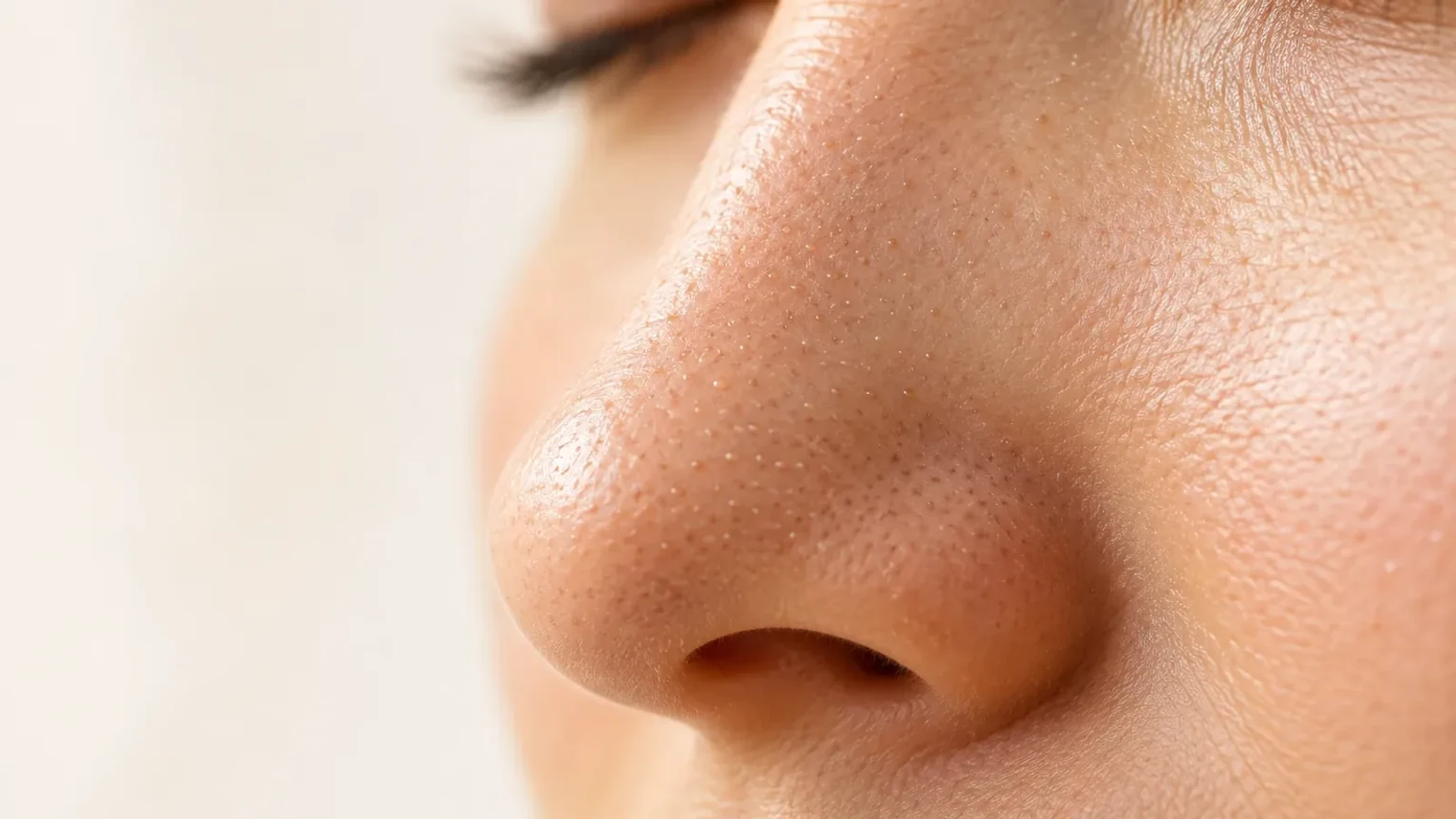
Pores & texture
Milia: what those tiny white bumps are and how to get rid of them
Milia are tiny, hard white bumps of trapped keratin. What causes them, how they differ from whiteheads, why not to squeeze, and how milia removal works.
Key takeaways
- Milia are tiny, hard, white or yellowish cysts filled with keratin, a skin protein. They are harmless, not contagious, and not a type of acne.
- About 40-50% of newborns have milia, and they clear on their own within a few weeks without any treatment.
- In adults, milia under the eyes are often linked to heavy creams, sun damage, or skin injury, and many fade within a few months.
- Milia have no opening, so squeezing doesn't work and can scar. A dermatologist can remove them in minutes with a sterile needle or blade.
- Lighter eye products, a retinoid on the rest of the face, and daily sunscreen help prevent new ones.
Milia are tiny, hard, white or yellowish bumps, usually 1-2 mm across, that form when keratin (a protein in your skin) gets trapped just under the surface. They’re most common around the eyes, on the cheeks, and on the nose. Milia are harmless, they aren’t acne, and they often clear up on their own within a few weeks to a few months.
If they don’t, a dermatologist can remove them quickly and safely. What you shouldn’t do is squeeze them, because there’s nothing to squeeze out through the surface. This guide covers what milia are, the different types (including milia in babies), how to tell them from whiteheads, why they show up under the eyes, and how to get rid of them.
What is milia?
A single bump is called a milium, and several are milia. DermNet describes a milium as a small cyst containing keratin, which shows up as a pearly-white bump just under the skin. The UK’s Primary Care Dermatology Society notes they are typically 1-2 mm, round, uniform, and white to yellow, and most common on the eyelids and cheeks.
They form when dead skin cells don’t shed the way they should and get sealed in under a thin layer of new skin. Unlike a clogged pore, a milium has no opening to the surface. That’s why milia feel firm, like a tiny grain of sand under the skin, and why they don’t respond to squeezing the way a spot does.
Milia aren’t caused by poor hygiene and aren’t contagious. They don’t hurt or itch, and they don’t turn into anything more serious.
Types of milia
Primary milia
Primary milia form on their own, without any damage to the skin. They’re common in newborns and also show up in children, teenagers, and adults, usually around the eyelids, forehead, and cheeks.
Secondary milia
Secondary milia form after the skin has been damaged or treated. According to Cleveland Clinic, triggers include burns, rashes, blisters, sun exposure, heavy creams or ointments, and long-term use of steroid creams. DermNet adds skin procedures like dermabrasion and some blistering skin conditions. You might notice a crop of milia a few weeks after a burn, a strong peel, or laser resurfacing as the skin heals.
Milia in babies (neonatal milia)
Milia are one of the most common things you’ll see on a newborn’s face. Cleveland Clinic and DermNet both put the figure at about 40-50% of newborns. They usually appear on the nose, cheeks, and chin, and babies can also have similar tiny white bumps on the gums or the roof of the mouth.
Neonatal milia clear on their own within a few weeks, with no treatment. Wash your baby’s face gently with water, pat it dry, and don’t squeeze the bumps or put adult creams or oils on them. Milia are present at birth, while baby acne (small red bumps or pus spots) tends to appear around two weeks after birth, which is one way to tell them apart.
Rarer types
A few uncommon forms are worth knowing about because they need a doctor’s input:
- Milia en plaque: milia clustered on a raised patch of skin. Cleveland Clinic notes it most often affects women aged 40-60.
- Multiple eruptive milia: groups of milia on the face, upper arms, or upper body, which can be itchy.
- Juvenile milia: milia linked to certain inherited conditions, present at birth or appearing later.
Milia vs whitehead: how to tell
Milia and whiteheads both look like small white dots, so they’re easy to mix up. A whitehead is a closed comedone, a pore plugged with oil and dead skin, and it’s a mild form of acne. Milia aren’t acne at all.
| Milia | Whitehead | |
|---|---|---|
| What it is | A tiny cyst of trapped keratin | A pore plugged with oil and dead skin |
| How it feels | Hard, like a grain of sand | Soft or slightly squishy |
| Color | Pearly white or yellowish | White or skin-colored |
| Where it shows up | Eyelids, under the eyes, cheeks, nose | Forehead, chin, cheeks, anywhere oily |
| Is there a pore opening? | No | It’s inside a pore |
| Does squeezing work? | No, it stays put | Sometimes, but it can scar |
| Is it acne? | No | Yes |
| What helps | Patience, gentle exfoliation, professional removal | Salicylic acid, a retinoid |
The biggest clue is location. Hard white dots on or under the eyelids, where there’s very little oil, are much more likely to be milia. For whiteheads, blackheads, and other true clogs, see our guide to what clogged pores look like.
What causes milia under the eyes?
Milia under the eyes are especially common, for a few reasons:
- The skin is thin. Eyelid skin is some of the thinnest on your body, so small bumps show more.
- Heavy eye creams. Rich creams and ointments are a known trigger for secondary milia, and the under-eye area is where many people layer the richest products. Thick balms, heavy occlusives, and very emollient eye creams used every night can all play a part. Our guide on whether Vaseline clogs pores covers occlusives in more detail.
- Sun damage. Years of sun exposure thicken the outer layer of skin and change how it sheds.
- Rubbing. Scrubbing off eye makeup or rubbing itchy eyes irritates the skin.
- Procedures. Lasers and peels around the eyes can leave milia behind as the skin heals.
If you notice milia under your eyes after starting a new eye cream, swap it for a lighter gel or lotion, use a thin layer, and keep it off the lash line. Existing milia may then fade over the following months.
Is it milia or something else?
A few other bumps on and around the eyelids can look similar:
- Syringomas are firm, harmless bumps of 1-3 mm that grow from sweat ducts, often in clusters on the lower eyelids. They’re usually skin-colored or yellowish rather than bright white, and a dermatologist treats them differently.
- Yellow, flat patches on the eyelids may be cholesterol deposits. The NHS advises seeing a GP if you have yellow lumps or patches around your eyes.
- A shiny, pearly bump that grows, bleeds, or crusts isn’t milia. DermNet describes the most common facial skin cancer, basal cell carcinoma, as a shiny or pearly nodule, so any single bump that changes needs a doctor’s check.
Why you shouldn’t pick or squeeze milia
With a pimple, pressure pushes the contents out through the pore. A milium has no pore, so squeezing just presses a hard cyst against the skin around it. To get it out, you’d have to cut the surface open.
That’s what dermatologists do, but with a sterile blade, good lighting, magnification, and a steady hand. At home, people tend to dig with nails, pins, or tools bought online, often a few millimeters from their eye. Cleveland Clinic warns that squeezing or scraping milia can cause scarring and infection. On medium and deep skin tones, picking also leaves dark marks that can last longer than the milium would have.
Milia removal: what a dermatologist does
Milia don’t need treatment, and many fade on their own. But if they bother you or have been there for months, removal is quick. DermNet and the PCDS describe these options:
- De-roofing (extraction). The top of the milium is opened with a sterile needle or blade, and the keratin is pressed or lifted out. It takes seconds per bump and leaves a tiny mark that usually fades quickly.
- Cryotherapy. Freezing with liquid nitrogen destroys the milium. It’s used carefully near the eyes, and on darker skin it can leave pale spots, so a dermatologist will weigh that up.
- Curettage or diathermy. Scraping or a fine electrical needle, mostly for stubborn or numerous milia.
- Prescription retinoids. For widespread milia, a dermatologist may prescribe a retinoid like tretinoin. DermNet notes topical retinoids may help when there are many lesions.
- Lasers, peels, or dermabrasion. These have been reported to help very extensive milia, but they’re rarely needed.
Milia en plaque is treated differently, sometimes with prescription creams or an oral antibiotic called minocycline, so the rarer types need a proper diagnosis first.
Can you get rid of milia at home?
You can help them along, but slowly. Cleveland Clinic says milia in adults can last a few weeks to a couple of months, and some types persist for months. While you wait:
- Try a gentle exfoliant on the rest of your face. Over-the-counter adapalene 0.1% gel (in the US) or a mild AHA or BHA product helps skin shed more normally, which can loosen milia on the cheeks and forehead over a few months. Cleveland Clinic lists adapalene and prescription tretinoin as options.
- Keep acids and retinoids off your eyelids. Under-eye skin is easily irritated. Apply them no closer than the bony rim around the eye, and stop if your skin stings or peels. Skip retinoids if you’re pregnant or breastfeeding.
- Lighten your products. Switch to a lighter moisturizer and eye cream and use less of it.
- Wear sunscreen. It protects against the sun damage that makes milia more likely.
A warm, damp washcloth or steam won’t dissolve milia, and scrubbing hard just irritates the skin around them. If you’ve seen no change after about three months, book a dermatologist rather than reaching for a needle. For other kinds of bumps and roughness, our guide on how to get rid of texture on your face covers the full list of causes.
How to prevent milia
You can’t always prevent primary milia, but these habits lower the odds of new ones:
- Match your moisturizer to your skin. Use a rich cream only where your skin is truly dry, and a lighter one elsewhere.
- Use a thin layer of eye cream. A rice-grain amount per eye is plenty. Pat it on the bone below the eye rather than right up to the lashes.
- Exfoliate gently and regularly. A retinoid or mild acid a few nights a week on the face, not a gritty scrub.
- Protect your skin from sun with daily SPF 30 or higher and sunglasses.
- Don’t use steroid creams on your face long term unless a doctor has told you to.
- Follow aftercare closely after peels or laser, and ask your provider about milia if they’re a known side effect for you.
Not sure whether your skin needs a rich cream or a light lotion? The free skin type quiz takes about a minute and helps you choose.
Free toolSkin type quizOily, dry, combination, normal, or sensitive in about a minute.When should you see a doctor about milia?
Most milia are a cosmetic nuisance, not a health problem. Lighter products, patience, and a quick professional extraction for the stubborn ones are usually all it takes. When you want a fuller picture of your skin’s texture and tone, a selfie-based AI skin analysis shows 14 traits in one report.
Sources
Frequently asked questions
Are milia contagious?
No. Milia are trapped skin protein, not an infection, so you can't catch them or pass them on, and they don't spread through touch, towels, or makeup.
Does milia removal leave a scar?
Professional removal usually leaves a tiny pinprick mark that fades within days to a couple of weeks. The risk of scarring is much higher when people pick or dig at milia themselves.
Can makeup cause milia?
It can contribute. Rich, heavy products used around the eyes are a known trigger, and so is rubbing the area hard to remove makeup. Lighter formulas and gentle removal lower the risk.
Do milia come back after removal?
A milium that has been properly emptied usually doesn't return in the same spot. New ones can form nearby if the cause, such as a heavy eye cream or ongoing sun damage, is still there.
This article is general education, not medical advice. GoodSkin is a cosmetic tool and does not diagnose skin conditions. If something hurts, spreads, bleeds, or changes quickly, see a dermatologist.