
Acne & breakouts
How to get rid of a pimple overnight: what really works by morning
You can't erase a pimple in one night, but you can shrink it and calm the redness by morning. Steps that work, what to skip, and when a cortisone shot helps.
Key takeaways
- No pimple disappears in one night, but the swelling and redness, which are most of what people see, can drop a lot by morning.
- Tonight: hands off, a gentle wash, ice wrapped in a cloth, then a thin dab of benzoyl peroxide (2.5% is enough) or salicylic acid, or a hydrocolloid patch on a spot with a head.
- Skip toothpaste, lemon juice, rubbing alcohol, undiluted tea tree oil, and squeezing. Each one tends to leave you with a redder spot in the morning.
- For one big, painful pimple before an important day, a dermatologist's cortisone shot is the only true quick fix: the AAD says it flattens most deep pimples within 48 to 72 hours.
- Deep, painful lumps with no head need a different plan from a whitehead, and pimples that keep coming back need a daily treatment over the whole area, not a nightly rescue.
You can’t make a pimple disappear in one night, but you can make it smaller, flatter, and much less red by morning, which is what people actually notice. Tonight, keep your hands off it, wash gently, and hold ice wrapped in a thin cloth on it for a few minutes. Then dab on a thin layer of benzoyl peroxide (2.5% is enough) or salicylic acid, or cover a pimple that has a head with a hydrocolloid patch. In the morning, ice it again and cover what’s left with a concealer that won’t clog pores. For one big, painful pimple before an important day, a dermatologist’s cortisone shot is the only true overnight fix.
Below is each step and why it works, which pimples shrink fast and which won’t, how to take down the redness, what to never put on a pimple, and how to stop the next one from showing up the night before something important.
Can you really get rid of a pimple overnight?
Not completely. Cleveland Clinic says most pimples last three to seven days, and deep ones can take a few weeks or longer. A dermatologist quoted in its guide to getting rid of a pimple puts it plainly: there are no instant fixes, but there are ways to shorten a pimple’s stay.
The good news is that a pimple is mostly swelling and redness on top of a small clogged pore, and the swelling and redness are what change fastest. Calm those overnight and the spot looks a lot smaller in the mirror and in photos, even though the clog underneath takes a few more days to clear. A whitehead can flatten almost completely under a patch. A deep, sore lump with no head can’t be fixed in a night, and it needs its own plan, which is further down.
How to get rid of a pimple overnight, step by step
- Hands off. Squeezing feels like the fastest fix and is the slowest. The AAD explains that popping often pushes the contents deeper into the skin, which adds inflammation, and that bacteria from your hands can cause an infection. It also makes acne more noticeable, so a popped pimple usually looks worse in the morning than one you left alone.
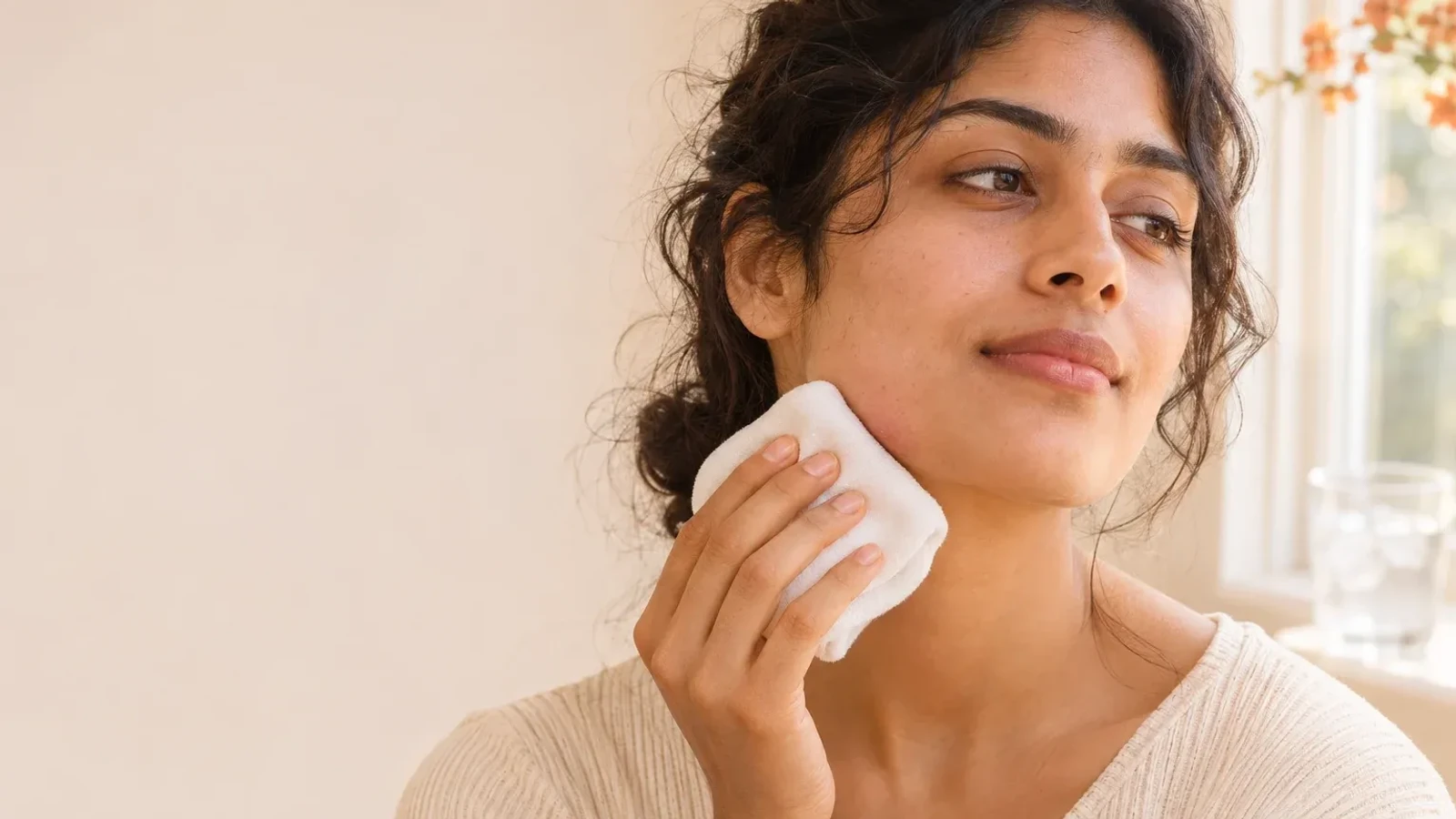
- Wash gently. Use a mild cleanser and lukewarm water, apply it lightly with your fingertips, then pat dry. Skip scrubs, cleansing brushes, and astringents tonight, since the AAD warns that scrubbing and drying products irritate acne-prone skin, and irritated skin turns red.
- Ice it, wrapped. Cold slows blood flow to the pimple, which brings down swelling and pain. Wrap an ice cube or a cold pack in a thin washcloth or a thick paper towel, because Cleveland Clinic warns that ice straight on the skin can burn it. Hold it on for a few minutes at a time, up to about 10 minutes, and stop if the skin goes numb or hurts more. The effect wears off quickly, so ice once tonight and again right before you leave in the morning.
- Dab on a thin layer of one spot treatment. Benzoyl peroxide kills the bacteria behind a red, inflamed pimple, and Cleveland Clinic’s dermatologist calls a dab of it the best way to make a zit go away fast. Higher isn’t better: in a 1986 study of 153 people, 2.5% benzoyl peroxide cleared red pimples as well as 5% and 10% and caused less peeling, redness, and burning than 10%. Salicylic acid (0.5-2% in drugstore products) loosens the plug of oil and dead skin, so it’s a good fit for whiteheads. Pick one for tonight. The AAD warns that using too much irritates the skin, and a red, flaky patch is harder to cover than the pimple. Benzoyl peroxide also bleaches fabric, so use a white or old pillowcase.
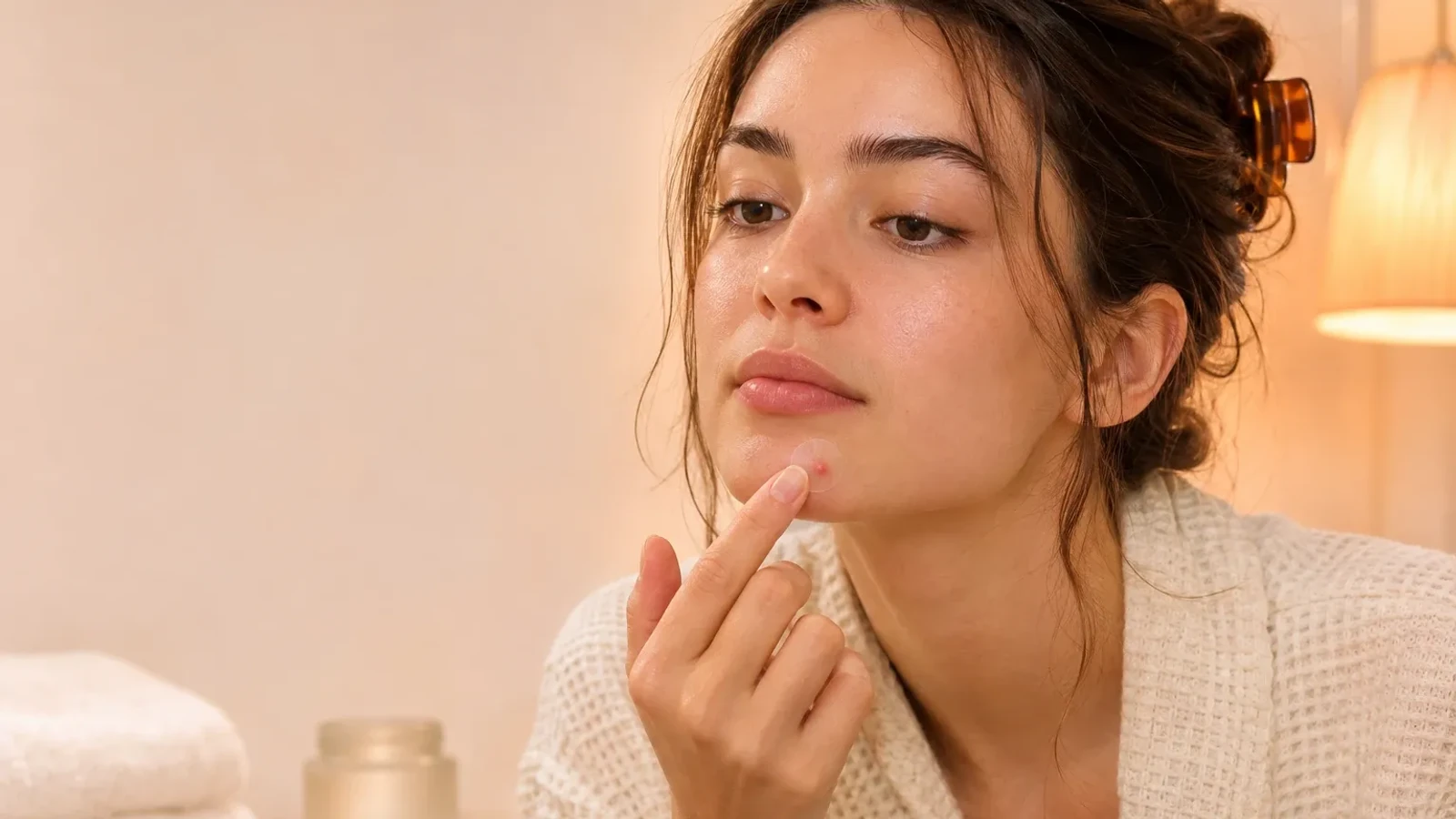
- Patch it if it has a head. A hydrocolloid pimple patch is a small clear sticker made of a wound-healing gel that soaks up fluid, protects the spot, and keeps your fingers off it. Cleveland Clinic says patches work best on a pimple with a white or yellow head or one that’s open, work less well on closed bumps, and that many are made to be worn overnight. Put it on clean, dry skin. If the spot is a closed red bump, the spot treatment from step 4 does more than a plain patch.
- Sleep on a clean pillowcase, hair off your face. Oil from hair products can clog pores along your hairline and forehead, which is why the AAD suggests washing pillowcases and anything else your hair touches. Tie your hair back so it stays off the spot overnight.
- In the morning, ice and cover. Peel off the patch, ice the spot again for a few minutes, and put on a light moisturizer. Then use a concealer labeled oil-free, non-comedogenic, or won’t clog pores, which is what the AAD suggests for acne-prone skin. Pat it on with a clean fingertip or a small clean brush rather than rubbing, and if the spot is very red, a thin layer of green-tinted color corrector underneath cancels out a lot of the red. On a pimple that’s open or crusted, wear a fresh thin patch instead of makeup. Take every bit of makeup off before bed.
Not sure your concealer or foundation is safe for breakouts? Paste its ingredient list into our free checker to see which ingredients are known to clog pores.
Free toolPore clogger checkerPaste any ingredient list and see which ingredients clogged pores in tests, and where they sit.Which pimples go down overnight and which don’t
How much a pimple shrinks by morning depends on how deep it sits. The AAD and Cleveland Clinic describe the types this way:
| Type | What it looks like | Best move tonight | By morning |
|---|---|---|---|
| Whitehead or pustule | A bump with a white or yellow center, often with a red ring | Hydrocolloid patch, or a dab of salicylic acid or benzoyl peroxide | Often much flatter and less red |
| Red bump with no head (papule) | A small, firm, tender red bump | Ice, then a thin layer of benzoyl peroxide | Less swollen and less red, still there |
| Deep, painful lump (nodule or cyst) | A sore lump under the skin that you feel more than see | Ice for the pain, no squeezing, and a plan for the next week | Still there. This one needs days, or a cortisone shot |
For whiteheads that keep coming back, our guide on how to get rid of whiteheads covers the daily routine that clears them. A deep, sore lump with no head is what most people call a blind pimple, and the AAD’s plan for it is warmth rather than ice: a warm, damp washcloth for 10-15 minutes three times a day, plus a thin layer of acne treatment, over several days. Big, painful, swollen lumps that feel like a cyst have their own guide: how to get rid of a cystic pimple fast.
How to get rid of redness from a pimple fast
Fresh redness comes from inflammation, so the fastest fix is the same cold that takes down the swelling: a wrapped ice cube for a few minutes, then a concealer and, if you need it, a green color corrector. That gets most red pimples through a morning.
What about hydrocortisone cream? It’s a mild steroid that does calm redness and swelling, which is why it shows up in so many overnight hacks. Cleveland Clinic says it should never be used to treat acne by itself unless a healthcare provider recommends it, only short term and alongside real acne treatment, because overuse can thin the skin, leave it blotchy, and weaken its defense against infection. It isn’t part of the AAD’s home advice for pimples, so ask a pharmacist or doctor before you try it.
Redness that stays after the bump has flattened is a different thing: a pink, red, or brown mark left by the inflammation. It isn’t an active pimple, so spot treatments won’t make it vanish overnight. The AAD says a dark spot a few shades darker than your skin usually fades within 6 to 12 months, that picking makes discoloration more likely, especially on darker skin, and that fading dark spots starts with daily sunscreen. Our guide to reducing redness on your face covers redness that has nothing to do with pimples.
What not to put on a pimple overnight
The most shared overnight hacks are also the ones most likely to leave you with a redder pimple in the morning.
- Toothpaste. It’s made for teeth, and Cleveland Clinic warns its ingredients are too harsh for skin, so you end up with a redder, more irritated pimple. The old idea was that triclosan in toothpaste killed bacteria, but no toothpaste sold in the US has contained it since 2019.
- Lemon juice. It’s on Cleveland Clinic’s list of remedies to skip because it irritates the skin. Citrus juice and sunlight are a bad mix, too: DermNet describes lime juice causing a burn-like rash in the sun that can leave dark marks for years.
- Rubbing alcohol, witch hazel, and other astringents. They dry and irritate the skin around the pimple, and both Cleveland Clinic and the AAD advise against them.
- Undiluted tea tree oil. Cleveland Clinic says a small amount of diluted tea tree oil may help some people, but some are allergic. A 2016 review found that most allergic reactions to it come from putting the pure oil on skin, and that oil which has oxidized, as in an old, often-opened bottle, is more likely to cause one.
- Hydrogen peroxide, apple cider vinegar, and crushed aspirin. All three are on Cleveland Clinic’s list of home remedies to skip.
- Needles, pins, and “extraction” tools. The AAD says only a dermatologist should drain a pimple, with sterile tools.
Already popped it?
Stop squeezing, wash your hands, and clean the spot gently with water or a mild cleanser. Then put a hydrocolloid patch on it. An opened pimple is exactly what these patches were made for: Cleveland Clinic says they soak up the fluid and protect the spot from infection and from more picking. In a small 2006 trial of 20 people with mild to moderate acne, a hydrocolloid dressing calmed redness and overall acne severity more than plain tape within a week. Leave the patch on overnight and put a fresh one on in the morning. If a scab forms, let it fall off on its own, because picking it is what turns a pimple into a mark that lasts for months.
The only true overnight fix: a cortisone shot
For one large, painful pimple before a wedding, an interview, or photos, a dermatologist can inject a small dose of diluted corticosteroid straight into it. The AAD says this flattens most acne nodules and cysts within 48 to 72 hours, and Cleveland Clinic’s dermatologist says it usually makes a visible difference within 24 hours. It also speeds healing and lowers the risk of a scar.
It’s for one or two big, deep spots, not a whitehead or a whole breakout. The AAD says dermatologists reserve it for a few severe breakouts and don’t recommend having it more than a few times, and DermNet lists the side effects: a small dent in the skin a few weeks later, or a lighter or darker patch, and these don’t always go away. Same-day appointments aren’t guaranteed, so call as soon as the lump starts, not the night before.
Pimples on your forehead overnight
Forehead pimples follow the same overnight steps, with one extra question: what’s touching your forehead? The AAD explains that oils in shampoos, conditioners, gels, waxes, and especially heavy pomades can cause tiny breakouts along the hairline and forehead. Tonight, wash the hairline along with your face, clip a fringe off your skin, and sleep on a clean pillowcase. For the longer fix, swap styling products for ones labeled oil-free, non-comedogenic, or won’t clog pores, and wash the caps, hats, and headbands your hair touches. The AAD says this kind of acne can take 4 to 6 weeks to clear once the product is gone. Our acne face map goes through what pimples in each area of the face can point to.
Several zits at once? Treat the whole area
If you wake up to a cluster of zits rather than one, dabbing each one won’t clear them overnight, and piling treatment onto every spot mostly irritates the skin between them. The AAD’s advice is to spread a thin layer of acne treatment over all of your acne-prone skin instead of only the spots you can see, so it also works on the next pimples before they show. Ice and conceal the most visible ones for the morning, and give the treatment time to work on the rest.
How to stop the next pimple from showing up
An overnight rescue gets you through one morning. Fewer pimples the night before something important comes from what you do every day:
- Wash twice a day, gently. The AAD says once when you wake up and once before bed, with your fingertips, plus after sweating. Washing more often than that dries and irritates the skin.
- Use one acne treatment over the whole area, every day. Benzoyl peroxide, salicylic acid, or adapalene (a retinoid sold without a prescription) spread thin over the skin where you break out. The AAD says to give it 6 to 8 weeks before judging it, and switching products every week is one of the habits it lists as making acne worse.
- Choose products that won’t clog pores. Moisturizer, sunscreen, makeup, and hair products labeled oil-free, non-comedogenic, or won’t clog pores. Remove your makeup every night, clean your brushes every week, and don’t share them.
- Moisturize. A light moisturizer made for acne-prone skin keeps benzoyl peroxide and salicylic acid from drying you out, which makes you more likely to keep using them.
- Keep your hands and phone off your face, and wash pillowcases, hats, and headbands often.
For the full routine and how long each treatment takes, see our guide on how to get clear skin. If 6 to 8 weeks of steady over-the-counter treatment hasn’t helped, a dermatologist can prescribe stronger options.
One night can’t erase a pimple, but it can take most of the swelling and redness away, and the habits above make the next one rarer and smaller. To see whether your breakouts are really calming down, GoodSkin’s AI skin analysis marks breakouts on your face and scores acne, redness, and 12 other traits from one selfie, so tonight’s scan and tomorrow morning’s sit side by side.
Sources
- Cleveland Clinic Health Essentials: A dermatologist's advice on how to get rid of a pimple
- Cleveland Clinic: Pimples
- Cleveland Clinic Health Essentials: How do pimple patches work?
- Cleveland Clinic Health Essentials: Home remedies for cystic acne
- Cleveland Clinic Health Essentials: Should you put toothpaste on a pimple?
- Cleveland Clinic Health Essentials: Hydrocortisone for acne
- American Academy of Dermatology: Pimple popping, why only a dermatologist should do it
- American Academy of Dermatology: Tips to treat a deep, painful pimple
- American Academy of Dermatology: Acne diagnosis and treatment
- American Academy of Dermatology: 10 skin care habits that can worsen acne
- American Academy of Dermatology: Can hair care products cause acne?
- American Academy of Dermatology: I have acne! Is it okay to wear makeup?
- American Academy of Dermatology: How to treat different types of acne
- American Academy of Dermatology: Back acne (benzoyl peroxide and fabrics)
- American Academy of Dermatology: How to fade dark spots
- NHS: Acne
- DermNet: Intralesional steroid injection
- DermNet: Phytophotodermatitis
- Mills et al. Comparing 2.5%, 5%, and 10% benzoyl peroxide on inflammatory acne vulgaris. Int J Dermatol, 1986
- Chao et al. A pilot study on efficacy treatment of acne vulgaris using a new method: Acne Dressing. J Cosmet Sci, 2006
- de Groot and Schmidt. Tea tree oil: contact allergy and chemical composition. Contact Dermatitis, 2016
Frequently asked questions
Do pimple patches work overnight?
On the right pimple, yes. Hydrocolloid patches soak up fluid and protect the spot, so they work best on a pimple with a white or yellow head or one that has opened. Many are made to be worn overnight. On a closed red bump or a deep lump there's little for them to absorb, though they still stop you from picking.
Does toothpaste get rid of a pimple overnight?
No. Toothpaste is made for teeth, and Cleveland Clinic warns its ingredients are too harsh for skin, so you're more likely to wake up with a redder, more irritated pimple. A thin dab of benzoyl peroxide or salicylic acid does the job toothpaste was supposed to do.
How do I get rid of the redness from a pimple fast?
Hold an ice cube wrapped in a thin cloth on it for a few minutes, then cover it with a concealer labeled oil-free or non-comedogenic. A green-tinted color corrector underneath cancels out a lot of red. Hydrocortisone cream does calm redness, but Cleveland Clinic advises against using it on acne by itself unless a doctor recommends it.
How long does a pimple last without treatment?
Cleveland Clinic says most pimples last three to seven days, while deep ones can take a few weeks or longer. Squeezing usually makes them last longer, and a pink or brown mark can stay for weeks after the bump itself is gone.
Should I put ice or a warm compress on a pimple?
Ice for a red, swollen pimple you want flatter by morning, because cold calms swelling and pain for a few hours. Warmth is the AAD's advice for a deep, painful pimple with no head, used for 10 to 15 minutes three times a day over several days, which is a slower plan than one night.
This article is general education, not medical advice. GoodSkin is a cosmetic tool and does not diagnose skin conditions. If something hurts, spreads, bleeds, or changes quickly, see a dermatologist.