

Hydration & oil
Combination skin: how to tell if you have it and what to do
Combination skin means an oily T-zone with normal or dry cheeks. Learn the five skin types, two at-home tests, and a routine that treats each zone.
Key takeaways
- Combination skin is oily in some areas, usually the T-zone (forehead, nose, and chin), and normal or dry in others, usually the cheeks.
- The bare-face test is the simplest way to find your skin type: wash, wait 30 minutes with nothing on, and notice where you shine and where you feel tight.
- Treat your face in zones, with lighter, oil-controlling products on the T-zone and a richer moisturizer on dry areas.
- Skin type can shift with the seasons, hormones, and age, so it is worth retesting once or twice a year.
Combination skin means your face has two skin types at once: usually an oily T-zone (forehead, nose, and chin) with normal or dry cheeks. The quickest way to confirm it is the bare-face test: wash, wait 30 minutes without applying anything, and notice where you shine and where you feel tight. Once you know your zones, you can treat each one properly instead of choosing a routine that only suits half your face.
If you want a fast answer before you read on, our free skin type quiz asks a few questions about how your skin feels and behaves and gives you a likely type in about a minute.
Free toolSkin type quizOily, dry, combination, normal, or sensitive in about a minute.What is combination skin?
Combination skin is a mix of oily and dry (or normal) areas on the same face. The American Academy of Dermatology describes it simply: your skin is dry in some spots and oily in others. The oily part is almost always the T-zone, the strip across your forehead and down your nose to your chin.
The pattern comes down to oil glands. Your forehead, nose, and chin have more sebaceous (oil) glands than your cheeks, so they produce more sebum. When the difference between zones is large enough that one product feels right on your nose but wrong on your cheeks, you have combination skin.
It is not a problem to fix. It is simply a skin type, and it usually responds well once you stop treating your whole face the same way.
The five skin types
Dermatologists generally describe five skin types. Here is a simple skin type chart to compare them.
| Skin type | 30 minutes after washing | What you tend to see | Common frustrations |
|---|---|---|---|
| Normal | Comfortable, not tight or greasy | Even surface, small pores | Few, mostly seasonal changes |
| Dry | Tight, sometimes itchy | Flaking, dullness, rough patches | Fine lines look deeper, makeup clings to flakes |
| Oily | Shiny all over | Visible pores, shine by midday | Blackheads, breakouts, makeup slides |
| Combination | Shiny T-zone, tight or normal cheeks | Larger pores on the nose, dry patches on the cheeks | One product rarely suits the whole face |
| Sensitive | May sting, burn, or turn red | Redness, reactive patches | Many products irritate |
Sensitive skin is the odd one out: it describes how reactive your skin is rather than how oily, so you can have sensitive combination skin or sensitive oily skin. Cleveland Clinic notes that sensitivity can show up with any oil level and is sometimes linked to conditions such as eczema or rosacea.
How to tell what skin type you have
There is no lab test for skin type. The two most useful methods take about 30 minutes and cost nothing (or very little).
The bare-face test
- Wash your face with a gentle, fragrance-free cleanser and lukewarm water.
- Pat dry with a clean towel. Do not apply toner, serum, moisturizer, or makeup.
- Wait 30 minutes. Try not to touch your face.
- Check how each zone feels and looks in a mirror near a window.
How to read it:
- Tight everywhere points to dry skin.
- Shiny everywhere points to oily skin.
- Shiny forehead and nose, but tight or normal cheeks points to combination skin.
- Comfortable everywhere points to normal skin.
- Stinging, itching, or redness suggests sensitive skin on top of whichever type you have.
Cleveland Clinic considers this “how does it feel” approach the better indicator of the two methods.
The blotting paper test
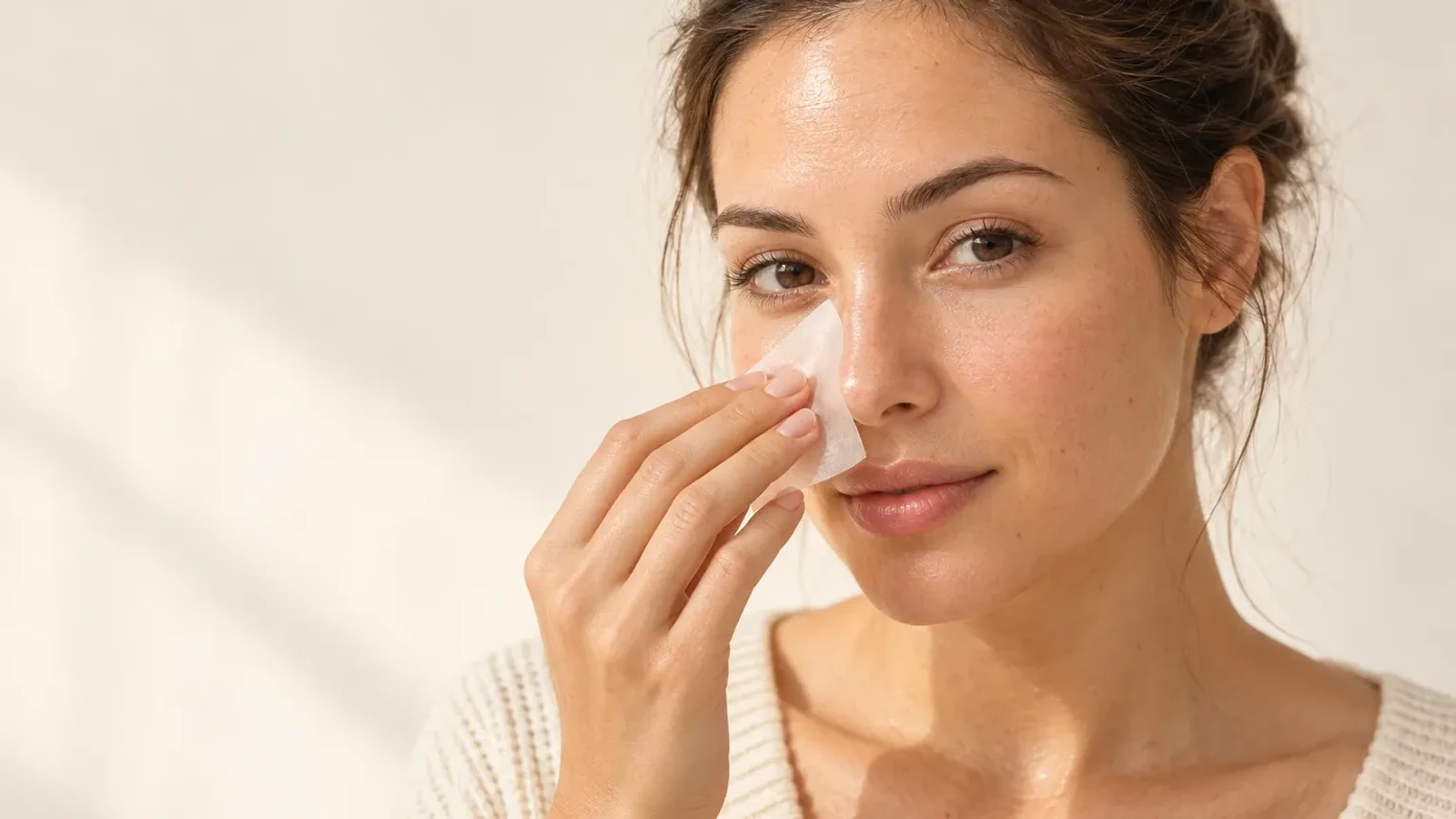
Wash and wait 30 minutes as above, then press a fresh blotting sheet onto each area for a few seconds: one on your forehead, one on your nose, and one on each cheek. Hold each sheet up to the light.
Using separate sheets matters here. A single sheet pressed all over your face blurs the result, while separate sheets show you exactly which zones are oily. Lots of oil on the forehead and nose sheets with little or none on the cheek sheets is the classic combination skin result.
What if your results are unclear?
Repeat the test on a different day, ideally not right after a workout, a hot shower, or a new product. If you are still unsure, the skin type quiz above can help by asking about how your skin behaves over a whole day, which a single 30-minute test can miss.
How to know if you have oily or dry skin (or both)
Most people can answer “what is my skin type” by watching their skin over an ordinary day.
Signs of oily skin: shine by lunchtime, makeup that slides or separates on the nose, visible pores, and frequent blackheads. If that describes your whole face, read our guide on why your face gets so oily.
Signs of dry skin: tightness after washing, flakes around the nose or eyebrows, a dull or rough feel, and foundation that clings to patches.
Signs of combination skin: both lists at once, split by zone. Your nose and forehead need blotting while your cheeks feel tight. Blackheads gather on the nose and chin while your cheeks stay clear but rough.
One trap: skin that feels tight but also looks shiny may be dehydrated rather than combination. Dehydration is a lack of water, not oil, and it can happen to any skin type. Our guide on dehydrated vs dry skin explains how to tell them apart.
Signs you have combination skin
You probably have combination skin if several of these sound familiar:
- Your T-zone looks shiny by midday, but your cheeks never do.
- Pores look larger on your nose and inner cheeks than on your outer cheeks.
- Blackheads collect on your nose and chin (see our guide to clogged pores).
- Your cheeks feel tight or flaky, especially in winter.
- Rich creams feel great on your cheeks but leave your forehead greasy.
- Oil-control products work on your nose but make your cheeks sting.
A combination skin routine that treats zones differently
The idea is simple: use gentle basics everywhere, then add targeted products only where each zone needs them. Dermatologist Rebecca Kazin, quoted by the AAD, tells some patients with combination skin to moisturize the dry spots and skip the oily areas entirely.
Zone-by-zone guide
| Step | T-zone (oily) | Cheeks (normal or dry) |
|---|---|---|
| Cleanser | Gentle foaming or gel cleanser | Same cleanser, no extra scrubbing |
| Exfoliant | 2% salicylic acid, 2-4 nights a week | Skip, or a mild lactic acid once a week |
| Moisturizer | Light gel or oil-free lotion, or skip | Cream with ceramides, glycerin, or hyaluronic acid |
| Sunscreen | Broad-spectrum SPF 30+ in a fluid or gel texture | Same sunscreen, a slightly richer formula is fine |
| Weekly mask | Clay mask on the T-zone only | Hydrating mask, or nothing |
| During the day | Blotting papers | Nothing needed |
Morning
- Cleanse with a gentle foaming or gel cleanser and lukewarm water. The AAD’s face washing advice is to wash twice a day and after sweating, using your fingertips rather than a scrub.
- Moisturize by zone. A thin layer of gel or oil-free lotion on the T-zone (or nothing, if you are very oily), then a cream on your cheeks.
- Sunscreen, broad-spectrum SPF 30 or higher, every day. Fluid, gel, or “matte” sunscreens usually sit best on an oily T-zone.
Evening
- Cleanse again. If you wear sunscreen or makeup, a gentle oil or balm cleanser first, followed by your regular cleanser, is fine for combination skin.
- Treat the T-zone. A 2% salicylic acid (BHA) product helps clear oil from inside pores. The AAD’s guide to controlling oily skin lists salicylic, glycolic, and lactic acid as ingredients that can reduce oiliness, with the caveat that they can be harsh. Start at 2 nights a week and build up.
- Moisturize by zone, the same way as the morning.
Niacinamide is a gentle, well-tolerated ingredient that many people with combination skin use all over. If you use a retinoid, apply it to the whole face but start slowly (2-3 nights a week), since dry cheeks are usually the first to get irritated.
Common combination skin mistakes
Treating your whole face as oily. Alcohol-heavy toners, strong scrubs, and drying acne washes can calm your nose while leaving your cheeks raw. Keep the strong stuff on the zones that need it.
Skipping moisturizer. Even oily areas benefit from some hydration. A light gel is usually enough, and your cheeks will need more than that.
Changing everything at once. If you start five products in a week and break out, you will not know which one caused it. Add one product at a time and give each one at least 4-6 weeks before judging it.
Assuming your type is permanent. Cleveland Clinic points out that skin type can change with seasons, hormones, stress, diet, and medication. Your routine should change with it, for example a richer cheek cream in winter and lighter layers in humid summers.
Track how your zones change
Combination skin is a moving target. The T-zone may be oilier in summer or before a period, and cheeks may get drier when the heating comes on. Noticing those patterns is easier when you track them rather than rely on memory.
A selfie-based AI skin analysis can help you see whether oiliness, hydration, and pores are trending in the right direction after a routine change. Scan in the same light each time so you are comparing like with like.
The bottom line on combination skin
Combination skin is common and very manageable. Find your zones with the bare-face or blotting paper test, keep your cleanser and sunscreen simple and shared, and save oil-control products for the T-zone and richer moisturizer for the areas that feel tight. If your pores are your main concern, our guide on how to shrink pores covers what actually makes them look smaller.
Sources
Frequently asked questions
Can combination skin turn into oily or dry skin?
Yes. Skin type can shift with the seasons, hormones, stress, medications, and age, so skin that is combination in summer may act more like dry skin in winter. Retest with the bare-face method whenever your skin starts behaving differently.
Is combination skin the same as dehydrated skin?
No. Combination skin describes how much oil different areas of your face make. Dehydration is a temporary lack of water that can affect any skin type, including oily skin, and it often shows up as tightness and shine at the same time.
Can you have combination skin and sensitive skin at the same time?
Yes. Sensitivity describes how easily your skin reacts, not how oily it is, so it can sit on top of any skin type. If products often sting, burn, or leave you red, choose fragrance-free formulas and add new products one at a time.
Can you have oily cheeks and a dry T-zone?
It is less common, but yes. Combination simply means different zones behave differently, so the usual pattern can be reversed. The same approach applies: richer care where you are dry, lighter care where you are oily.
This article is general education, not medical advice. GoodSkin is a cosmetic tool and does not diagnose skin conditions. If something hurts, spreads, bleeds, or changes quickly, see a dermatologist.